

Maddy summaryThe ACCESS Act of 2024 creates a federal grant program to help clinics and health care providers expand abortion and reproductive health services in states where abortion is legal (outside of life or health exceptions). It authorizes $200 million annually for fiscal years 2024-2028 to fund specific capacity-building activities, including facility expansions, hiring clinical staff, telehealth services, and culturally appropriate patient resources. Priority is given to providers in states experiencing the highest increases in out-of-state patients seeking abortion care. The bill directly supports health care entities serving patients who travel across state lines for services, aiming to reduce wait times and improve access for vulnerable communities.
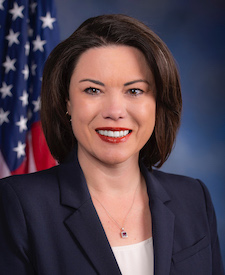
Rep. Angie Craig
Sponsored bills
Maddy summaryThis bill expands federal support for biorefinery development by creating new competitive grants to fund pilot and demonstration-scale facilities that produce advanced biofuels (like ultra-low-carbon bioethanol), renewable chemicals, and biobased products. Eligible entities, including companies and cooperatives, can apply for grants covering up to 60% of project costs, with funding prioritized based on criteria like environmental benefits, rural economic development potential, innovative feedstock use, and market viability. The legislation authorizes $100 million annually from 2024 through 2028 for these grants, while updating existing loan guarantee provisions to align with the new program structure. It directly affects developers of biorefinery technologies aiming to commercialize renewable biomass conversion processes.
Maddy summaryThe Farmers First Act of 2023 amends the Farm and Ranch Stress Assistance Network program to expand mental health support for farmers and ranchers. It increases annual funding from $10 million to $15 million for fiscal years 2024-2028, adds crisis lines to the program’s services, and expands referral options to connect individuals with certified community clinics, health centers, rural clinics, Federally Qualified Health Centers, and critical access hospitals. These changes directly affect agricultural workers facing mental health or substance use challenges by improving access to specialized care. The bill focuses on strengthening existing support infrastructure rather than creating new programs.
Maddy summaryHRES 977 is a symbolic resolution recognizing National Board Certified Teachers (NBCTs), with over 137,000 educators holding this credential nationwide. It supports designating National Board Certified Teacher Week, acknowledges NBCTs' role in improving student achievement (especially in high-need schools), and encourages schools and states to promote NBCT growth and provide support. The resolution highlights that NBCTs are linked to higher student learning gains, greater teacher retention, and increased earnings for students - though it does not create new policies or funding. It is a non-binding statement of appreciation, not a legislative change.
Maddy summaryHR 7056, the Access to Family Building Act, establishes federal rights for individuals to access assisted reproductive technology (ART) like IVF without unreasonable restrictions, directly affecting patients seeking fertility treatments and health care providers offering ART services. The bill prohibits states from imposing limitations on ART that are more burdensome than those for comparable medical procedures, fail to advance safety, or unduly restrict access, while allowing health and safety regulations that are necessary and least restrictive. It creates federal enforcement mechanisms, including lawsuits by the Attorney General or affected individuals to challenge violating state laws, and preempts conflicting state regulations. The bill explicitly preserves state authority over health/safety regulations and does not alter existing state insurance coverage laws for ART.
Maddy summaryHR 6964 limits how much federal transit agencies can pay upfront for new buses. It requires agencies to have a signed contract with the bus manufacturer, pre-approval, and meet existing rules before making any advance payment. The bill specifically caps advance payments at 20% of the total bus purchase price and prohibits payments without the manufacturer providing a financial guarantee. This directly affects transit agencies receiving federal funds for purchasing bus vehicles. The key change is imposing a strict 20% limit on upfront payments to reduce financial risk.
Maddy summaryThe Stronger Communities through Better Transit Act establishes a new federal grant program to improve public transportation service. It provides funding to urban areas, states, and Indian tribes to cover up to 50% of public transit operating costs (up to 80% in persistent poverty areas and 100% for Indian tribes), with requirements to report on service frequency, access to jobs, and conduct community surveys. The program mandates that a majority of funds must benefit underserved communities and areas of persistent poverty, defined as census tracts with high poverty rates or minority populations. Recipients must maintain their transit funding levels and report on improvements in access to essential services. The bill authorizes $20 billion annually for fiscal years 2024-2027.
Maddy summaryHR 5877 creates the USDA Express Guaranteed Farm Ownership Loan Program, allowing participating lenders to process farm ownership loan guarantees within 36 hours. It sets a $1 million annual loan limit per farm, with guarantees covering 75% of loans up to $750,000 and 50% for loans between $750,000-$1 million. Borrowers must use funds exclusively for agricultural production, and lenders must verify borrower creditworthiness before submission. The bill also establishes a similar express program for farm operating loans.
CONtinuity in Necessary Evaluative Crisis Treatment Act of 2024 or the CONNECT Act of 2024 This bill requires the Substance Abuse and Mental Health Services Administration to award grants to certain crisis centers for providing follow-up care to individuals who receive suicide prevention and crisis intervention services.
Maddy summaryThis bill increases loan limits for farmers under the Farm Service Agency. It raises the maximum farm ownership loan amount from $600,000 to $850,000 (and guaranteed loans from $1.75 million to $3.5 million), and operating loans from $400,000 to $750,000 (guaranteed from $1.75 million to $3 million). It also doubles the microloan cap from $50,000 to $100,000. Additionally, the bill creates a new process allowing distressed guaranteed loans to be refinanced into direct loans if borrowers can't resolve issues with lenders and the farm operation can become financially viable. These changes directly affect farmers and ranchers seeking credit through the Farm Service Agency.