

Maddy summaryThis resolution (HRES 1038) is a symbolic gesture honoring three Burnsville, Minnesota, first responders who died in the line of duty on February 18, 2024: Police Officers Paul Elmstrand and Matthew Ruge, and Firefighter/Paramedic Adam Finseth. It expresses the House’s condolences to their families, honors Sergeant Adam Medlicott (who was injured in the same incident), and recognizes all local law enforcement and first responders for their service. The resolution does not create new laws or policies but formally acknowledges their sacrifice through a non-binding expression of support. It specifically commemorates their heroic actions during a domestic call response in Burnsville.
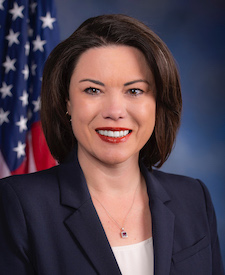
Rep. Angie Craig
Sponsored bills
Maddy summaryThe Increasing Access to Mental Health in Schools Act creates a federal grant program to increase mental health staff in low-income schools. It provides funding for partnerships between low-income schools (where at least 20% of students are from families below the poverty line) and graduate programs in school counseling, psychology, and social work. Grant funds can cover training costs, salary support for new mental health providers, recruitment of underrepresented students, and student loan repayment for mental health staff working in qualifying schools. The bill sets target ratios for staff-to-student ratios (like 1 counselor per 250 students) and requires annual reporting on program outcomes. The program is authorized for $200 million annually to address mental health staffing shortages in schools serving high-poverty communities.
Maddy summaryHRES 1032 is a symbolic resolution designating the week of February 26-March 1, 2024, as "Public Schools Week" in the U.S. House of Representatives. It expresses congressional support for public education, highlighting its role in preparing students and communities. The resolution has no legal effect or funding provisions - it solely serves as a formal expression of backing for public schools. It directly affects no individuals or entities but aims to raise awareness about public education. This is a non-binding gesture, not a policy change.
Ride-Along Resolution This resolution requires each Member of the House of Representatives to participate in one shift in a passenger seat of a law enforcement vehicle observing the work day of a local law enforcement officer in the congressional district of the Member once during each term as a Member. The Committee on House Administration must promulgate regulations to carry out this resolution. If the Committee on Ethics determines that a Member has not satisfied the requirement to participate in such a ride-along by the deadline, the committee must publish the name of the Member on a readily available, public list on the committee's website; and cause to be published in the Congressional Record information with respect to the failure of the Member to satisfy such requirement.
Maddy summaryHR 7307, the Health Care Workforce Innovation Act of 2024, establishes a new federal grant program to expand training for allied health professionals - such as medical assistants, community health workers, pharmacy technicians, and dental hygienists - in underserved communities and rural areas. Eligible applicants include Federally-qualified health centers and rural health clinics, which can use grants (up to $2.5 million per award for at least 3 years) to develop community-driven training partnerships with schools, vocational programs, and healthcare facilities. Funds support specific activities like apprenticeships, culturally competent training, and building career pathways for individuals from disadvantaged backgrounds, while prohibiting construction costs or replacing existing workforce funding. The program authorizes $100 million annually from 2025-2029 to address healthcare workforce shortages in areas lacking access to care.
Maddy summaryHRES 966 is a symbolic resolution condemning alleged sexual violence committed by Hamas during its October 7, 2023, attack on Israel. It specifically references eyewitness accounts, forensic evidence, and Hamas fighters' admissions of ordering gang rape, sexual mutilation, and assault against Israeli civilians. The resolution calls for international condemnation of such acts as weapons of war, urges nations to criminalize sexual violence, and supports investigations into Hamas' actions. As a non-binding resolution, it does not create new laws or directly affect any individuals but formally expresses the House's position on the issue.
Maddy summaryHR 7257, the GLRI Act of 2024, reauthorizes federal funding for the Great Lakes Restoration Initiative. It specifically adds $500 million annually for fiscal years 2027 through 2031 to the existing program under the Federal Water Pollution Control Act. This funding directly supports ongoing environmental restoration projects in the Great Lakes region, including pollution cleanup, habitat restoration, and invasive species management. The bill extends current funding levels for the next five years without altering program requirements or eligibility.
Maddy summaryThe JOBS Act of 2023 would expand Federal Pell Grant eligibility to cover certain short-term job training programs that prepare students for high-demand careers. It defines "eligible job training programs" as those offering 150-600 hours of instruction over 8-15 weeks, aligned with in-demand industry sectors, and leading to recognized credentials that help students meet hiring requirements and take licensure exams. The bill would allow students in these programs to receive Pell Grants under standard terms, with the minimum Pell Grant amount reduced from 10% to 5% of the maximum. It also requires accrediting agencies to evaluate these programs and creates data-sharing between Education and Labor departments to track program effectiveness.
Maddy summaryHRES 993 is a non-binding congressional resolution designating February as "Career and Technical Education (CTE) Month" to celebrate CTE programs nationwide. It supports CTE as a pathway preparing students for high-demand, skilled careers in fields like infrastructure and technology, recognizing that over 12 million students currently participate in CTE programs across high schools and colleges. The resolution encourages educators, counselors, and parents to promote CTE as a respected educational option, highlighting its role in reducing high school dropout rates and aligning student skills with workforce needs. It does not create new laws or allocate funding, but symbolically affirms bipartisan support for CTE, referencing the 1917 Smith-Hughes Act as foundational to current efforts.
Maddy summaryHRES 990 is a non-binding resolution expressing the House of Representatives' support for fair treatment of paraprofessionals (like instructional assistants) and education support staff (such as clerical, custodial, and food service workers) in schools. It states these over 3 million frontline workers deserve livable wages, affordable health care, job security, paid leave, professional development, and safe working conditions. The resolution lists specific recommendations, including eligibility for family medical leave and protections against retaliation for reporting workplace issues. It does not create new laws but formally recognizes these staff as essential to school success and calls for policies addressing their current challenges.