

Maddy summaryThe TRUST in Congress Act requires current and new Members of Congress, along with their spouses and dependent children, to place certain investments - such as stocks, commodities, and derivatives - into a blind trust within 90 to 180 days of taking office. It excludes U.S. Treasury securities and widely held mutual funds from this requirement and exempts investments tied to a spouse’s or dependent child’s primary job. Members must certify the trust’s setup to the House Clerk or Senate Secretary within 15 days, with these records posted publicly online. The act also prohibits dissolving such trusts until 180 days after a member leaves office.
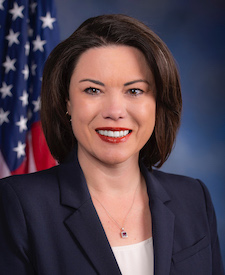
Rep. Angie Craig
Sponsored bills
Providing Real-world Education and Clinical Experience by Precepting Tomorrow's Nurses Act or the PRECEPT Nurses Act This bill establishes a new, nonrefundable tax credit for eligible nurse preceptors, subject to limitations. The bill also requires the Internal Revenue Service (IRS) to report to Congress certain information about the tax credit for nurse preceptors. Under the bill, a nonrefundable tax credit of $2,000 is allowed for an eligible nurse preceptor through 2032. An eligible nurse preceptor is defined as an individual who provides at least 200 certified hours of supervision and personalized experiential learning, training, instruction, and mentoring in the clinical practice of nursing to a nursing student, advanced practice registered nursing student, or newly hired licensed nurse in a community designated as a health professional shortage area. The bill also requires the IRS to report to Congress the number of taxpayers that claim the tax credit for nurse preceptors each year and the geographic distribution of such taxpayers, aggregated and averaged data on the preceptorships served by taxpayers as an eligible nurse preceptor, and the effectiveness of the tax credit in increasing the number of nurse preceptors in the United States.
Maddy summaryHR 307, the ARC Act of 2025, aims to reduce avoidable amputations by expanding access to peripheral artery disease (PAD) screening and prevention. It requires Medicare and Medicaid to cover PAD screening tests (like ankle-brachial index tests) without cost-sharing for at-risk beneficiaries, including seniors, diabetics, and those with other vascular risk factors. The bill also establishes a federal education program to raise awareness about PAD and creates quality measures to incentivize hospitals to prioritize non-amputation treatments through early detection. These provisions directly affect millions of Americans, particularly minorities disproportionately impacted by PAD-related amputations, by making preventive care more accessible and integrated into routine care.
Head start Education And Development Workforce Advancement and Yield Act or the HEADWAY Act This bill allows some teachers in Early Head Start programs to teach while in the process of earning their Child Development Associate (CDA) credential and completing training. Currently, the Department of Health and Human Services (HHS) must ensure that all teachers providing direct services to children and families in Early Head Start centers (1) have a minimum of a CDA credential and have been trained in early childhood development, and (2) have been trained in early childhood development with a focus on infant and toddler development. The bill revises this requirement by requiring at least one teacher per classroom (instead of all teachers) to have a CDA credential and training. In particular, the bill requires HHS to ensure that (1) each additional teacher providing direct services to children and families is in the process of earning a CDA credential and completing training, and (2) the Early Head Start agency provides a mentor to oversee the progress and guide the work of a teacher who is in the process of earning a CDA credential and completing training.
Maddy summaryThis bill reauthorizes the Great Lakes Restoration Initiative (GLRI) through fiscal year 2031, providing $500 million annually for Great Lakes cleanup and restoration projects. It directly affects federal agencies (like the EPA), state governments, tribes, and environmental groups working on Great Lakes water quality, habitat restoration, and pollution prevention. The key provision extends existing funding levels for five additional years (2027-2031), ensuring continued support for projects addressing invasive species, toxic pollutants, and coastal wetlands restoration across the Great Lakes region. This is a funding authorization bill, not a policy change to the program's scope.
Maddy summaryThe Proxy Voting for New Parents Resolution (HRES 23) would allow U.S. House Members who have given birth or whose spouse has given birth to appoint another Member as a proxy to cast their vote or record their presence in the House and committees for up to 12 weeks after childbirth. To use this, the new parent must submit a signed letter to the Clerk detailing the birth or medical condition and naming the proxy; the proxy must vote exactly as instructed and announce the vote as "by proxy." The proxy vote does not count toward quorum, and the new parent can revoke the proxy at any time by submitting a new letter or casting their own vote. This resolution applies to all House Members, including Delegates and the Resident Commissioner, though they cannot cast votes for the House itself.
This resolution honors the life, achievements, legacy, and distinguished public service of former President Jimmy Carter. The resolution also (1) acknowledges President Carter's contributions to the state of Georgia, the United States, and the world; and (2) establishes his legacy as one of the great leaders and statesmen of the United States.
Maddy summaryThis bill increases healthcare affordability for low- and middle-income people by expanding eligibility for premium tax credits under the Affordable Care Act. It removes the previous 400% of poverty level cap for subsidy eligibility and replaces it with a new sliding scale based on income tiers, ranging from 0% to 8.5% of household income for coverage costs. The scale adjusts linearly across income levels, with households earning 300-400% of poverty paying 6.0%-8.5% of income (up from the prior fixed 400% cap), while lower-income households pay progressively less. These changes apply to tax years beginning after December 31, 2025, directly affecting individuals purchasing health insurance through marketplace plans.
Maddy summaryHR 82, the Social Security Fairness Act of 2023, repeals two provisions that reduce Social Security benefits for certain government workers. It eliminates the Government Pension Offset (GPO), which cuts spousal or survivor benefits for people with pensions from jobs not covered by Social Security (like federal or state government roles), and the Windfall Elimination Provision (WEP), which lowers retirement benefits for those with similar pensions. The law takes effect for benefits paid after December 2023, requiring the Social Security Administration to adjust benefit calculations to remove these reductions. This change directly affects public-sector employees who previously had their Social Security benefits reduced due to their government pensions.
Maddy summaryThis bill renames a United States Postal Service facility at 114 Center Street East in Roseau, Minnesota, as the "Floyd B. Olson Post Office." It directly affects the physical post office location and all official references to it in government documents. The key provision updates all federal records, maps, and communications to use the new name, ensuring consistency in official correspondence and signage. This is a ceremonial designation with no changes to postal services, funding, or policy.