

American Teacher Act This bill establishes grants to increase the minimum salary of public elementary and secondary school teachers. It also authorizes a national campaign regarding the value of the teaching profession. First, the bill directs the Department of Education (ED) to award four-year grants to state educational agencies (SEAs) and, through them, subgrants to local educational agencies to establish a minimum annual salary of $60,000 (to be adjusted annually for inflation) for these teachers. Second, the bill directs ED to award grants to eligible SEAs to provide cost-of-living adjustments to the annual base salary of teachers. Finally, the bill authorizes ED to carry out a national campaign to (1) increase awareness about the importance of teachers and the value of the teaching profession, (2) encourage secondary school and college students to consider teaching as a professional career, and (3) diversify the pool of individuals who enter the teaching profession.
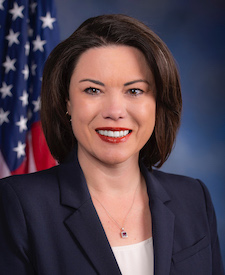
Rep. Angie Craig
Sponsored bills
Maddy summaryThe MATCH IT Act of 2025 establishes national standards to improve patient matching accuracy in healthcare, directly affecting hospitals, clinics, health IT vendors, and federal agencies like CMS and HHS. It requires the Secretary of Health and Human Services to develop a uniform definition for measuring patient match rates within 180 days, accounting for duplicate records, overlaid records, and mismatch rates. The bill mandates health IT vendors to incorporate a standardized data set into their systems to support 99.9% matching accuracy, with Medicare providers earning voluntary bonus payments for achieving at least 90% matching accuracy through anonymous reporting. This aims to reduce medical errors, prevent unnecessary tests, and cut costs linked to patient misidentification, which currently cost the healthcare system over $6.7 billion annually.
Maddy summaryHR 1902, the HERO Act, creates a national data system to track suicide rates among public safety officers (including firefighters, EMTs, police, and telecommunicators) and requires annual reports to Congress with detailed breakdowns by age, gender, occupation, and employment status (volunteer, career, etc.). The bill funds peer-support mental health programs for fire departments and EMS agencies, establishes confidential wellness services for healthcare providers, and develops resources to train mental health professionals on first responder-specific stressors and PTSD. It prohibits using suicide data to deny life insurance or benefits to survivors and mandates that all collected data be kept confidential and secure. This legislation directly affects all public safety officers nationwide by improving data collection, access to mental health resources, and evidence-based interventions to address suicide and trauma.
Maddy summaryThis bill amends the calculation method for the Basic Allowance for Housing (BAH) for uniformed service members living off-base in the United States. It requires the Secretary of Defense to set BAH amounts based directly on the actual monthly cost of adequate housing in each area, matching the member's pay grade and dependency status. This change ensures BAH rates more accurately reflect local housing expenses rather than using a previous formula. The bill directly affects all service members receiving BAH for off-base housing across the U.S., particularly those in high-cost areas where current rates may not cover actual rent.
Maddy summaryThis bill authorizes a posthumous Congressional Gold Medal for actor James Earl Jones to recognize his career achievements in theater and film. It directs the Treasury Secretary to strike a gold medal bearing his name, which will be presented to his son, Flynn Earl Jones, following Jones' passing. The bill also permits the sale of bronze duplicates to cover costs. As a ceremonial honor with no policy changes, it does not affect legislation or government operations.
Maddy summaryThis bill creates a process for establishing Medicare payment rates for pediatric-specific medical devices. It requires the Medicare program (via the Secretary of Health and Human Services) to set national payment rates (called "relative value units") for qualifying pediatric technologies upon manufacturer request, starting in 2026. A "qualifying pediatric technology" is defined as a covered medical device that is FDA-approved/cleared, has a temporary HCPCS code, and is either predominantly used for pediatric procedures or specifically designed for children. Manufacturers must submit detailed data with their requests, and the timeline for setting rates depends on when the request is received (by May 1 for same-year implementation). The bill does not mandate coverage but ensures payment mechanisms exist for these devices once approved.
Maddy summaryHR 1954, the "Do No Harm Act," amends the Religious Freedom Restoration Act (RFRA) to clarify that RFRA does not override specific federal laws protecting against harm. It explicitly exempts provisions related to anti-discrimination (like the Civil Rights Act), workplace protections (wages, leave, collective activity), child safety, and healthcare access from RFRA's requirements. The bill ensures RFRA cannot be used to challenge government programs or contracts that provide these essential protections. It also clarifies that RFRA applies only to disputes involving government as a party, not private disputes between individuals. This change preserves existing legal safeguards while modifying RFRA's scope.
Maddy summaryHR 1921, the Hearing Device Coverage Clarification Act, requires Medicare to clarify that fully implanted active middle ear hearing devices are prosthetics - not excluded hearing aids - ensuring they qualify for coverage under Medicare's prosthetic benefit. This change directly affects Medicare beneficiaries, particularly seniors and individuals with hearing impairments who rely on these implanted devices. The bill mandates the Centers for Medicare & Medicaid Services (CMS) to issue this clarification within 60 days of enactment, using the existing federal definition of "prosthetic" from the Code of Federal Regulations. This policy adjustment removes an administrative barrier, allowing Medicare to cover these devices without requiring separate policy changes.
Congressional Trade Authority Act of 2025 This bill requires congressional approval for a presidential import adjustment due to a national security threat from an import and limits the adjustments to certain goods that are essential to national security. Specifically, the bill limits the President's authority for such import adjustments to goods related to the development, maintenance, or protection of military equipment, energy resources, or critical infrastructure essential to national security. The bill specifies that the term national security (1) means the protection of the United States from foreign aggression, and (2) does not otherwise include the protection of the general welfare of the United States. The bill requires the President to submit a proposal to Congress to adjust imports. Congress must then approve the proposal with a joint resolution before an import adjustment takes effect. Under current law, the President determines whether any adjustment of an import is necessary and must submit to Congress the reasons for any action taken or not taken. Currently, there is a congressional disapproval mechanism to override presidential actions related to petroleum imports. The bill also requires the Department of Defense (currently, the Department of Commerce) to investigate the effect of these imports on national security and submit a report before the President determines whether an adjustment to an import is necessary, establishes requirements for a process to grant requests to exclude certain goods from import adjustments, and applies retroactively to any proposed action taken up to six years before the enactment of this bill.
Maddy summaryThis bill amends the Clean Air Act to update the definition of fossil fuel, explicitly including "fuel for ocean-going vessels" alongside home heating oil and jet fuel. It directly affects the shipping industry by requiring the Environmental Protection Agency (EPA) to issue regulations within one year of enactment to implement this updated definition. The key mechanism is changing the statutory definition to ensure ocean vessel fuels are covered under existing fossil fuel regulations, potentially influencing future clean fuel standards for ships. The EPA must also submit a report to Congress on implementation within one year of finalizing these regulations.