

Toxic Exposure in the American Military Act or the TEAM Act This bill requires the Department of Veterans Affairs (VA) to expand health care, benefits, and resources for veterans with conditions related to exposure to toxic substances. Specifically, the bill expands eligibility for VA hospital care, medical services, and nursing home care to include veterans who (1) were exposed to toxic substances, radiation, or other conditions, and were awarded certain medals (e.g., the Armed Forces Service Medal); (2) are eligible for inclusion in the Airborne Hazards and Open Burn Pit Registry; or (3) have been identified by the Department of Defense to have been possibly exposed during service to an open burn pit, toxic substance, or specified hazardous sites. (A burn pit is an area used for burning solid waste in open air without equipment.) The bill establishes a presumption of service-connection for diseases associated with exposure to certain toxic substances and that become manifest within a certain time period; the VA must specify such diseases and requirements through regulations. Under a presumption of service-connection, specific conditions diagnosed in certain veterans are presumed to have been caused by the circumstances of their military service. Health care benefits and disability compensation may then be awarded. The bill also requires the VA to take specified actions to (1) evaluate scientific evidence regarding associations between diseases and exposure to toxic substances; (2) train its health care personnel on identifying, treating, and assessing illnesses related to such exposure; and (3) provide resources to veterans exposed to toxic substances.
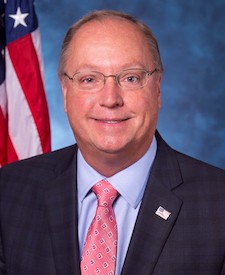
Rep. Jim Hagedorn
Sponsored bills
Flexible Financing for Rural America Act This bill allows rural utility service providers to submit to the Department of Agriculture (USDA) a request to adjust the interest rate or modify the terms of certain loans. The request shall include a report summarizing how the adjustment or modification will assist the borrower in providing critical utility services to a rural community. Specifically, on receipt of a request, USDA or the Department of the Treasury (in the case of a loan owned by the Federal Financing Bank) must adjust the interest rate on the loan to match certain interest rates for obligations of comparable maturity to the term remaining on the loan (or a higher rate requested by the borrower), and make modifications to the loan terms as necessary to address changes in the financial position of the borrower due to the COVID-19 public health emergency and to promote the financial sustainability of the borrower. In carrying out the adjustments or modifications, USDA or Treasury shall not impose or collect any fee from, or impose any penalty on, a borrower. The bill also provides funding to implement the adjustments and modifications and for the liquidation of residual intragovernmental amounts owed by the Federal Financing Bank in connection with certain loans.
Trade Related Intellectual Property Protection Act or the TRIPP Act This bill requires the President to oppose any waiver of obligations under the TRIPS Agreement (i.e., the Agreement on Trade-Related Aspects of Intellectual Property Rights) held by members of the World Trade Organization unless there is an express, statutory authorization for such a waiver.
This bill allows permanent expensing of property used in the mining, reclaiming, or recycling of certain critical minerals and metals within the United States and of nonresidential real property used in mining such minerals and metals. Expensing is the treatment of expenditures as operating costs deductible in full in the current taxable year. The bill allows a new tax deduction for 200% of the cost of purchasing or acquiring such critical minerals and metals extracted from deposits in the United States and a 22% rate of percentage depletion for such critical minerals and metals. The bill requires the Department of the Interior to establish a pilot project grant program for the development of critical minerals and metals in the United States. A grant awarded under such program may not exceed $10 million. In awarding grants, Interior must give priority to projects determined to be economically viable over the long term and must allot not less than 30% of grants funds to the secondary recovery of critical minerals and metals.
Adopt the Greenhouse gases, Regulated Emissions, and Energy use in Transportation model Act or the Adopt GREET Act This bill requires the Environmental Protection Agency (EPA) to update the methodology used in life-cycle analyses of greenhouse gas emissions that result from the production and use of corn-based ethanol and biodiesel fuel. The EPA must update its methodology within 90 days and every five years thereafter. In the first update, the EPA must adopt the most recent Greenhouse gases, Regulated Emissions, and Energy use in Transportation model (commonly referred to as the GREET model) developed by Argonne National Laboratory.
This resolution calls on the people of the United States to observe Memorial Day to honor the men and women who died in the pursuit of freedom and peace.
This resolution expresses support for Israel's efforts of self-determination and collective security against external forces, recognizes Jerusalem as the legitimate capital city of Israel, and condemns actions by Hamas against the people of Israel.
Biodiesel Tax Credit Extension Act of 2021 This bill extends the income and excise tax credits for biodiesel and renewable diesel used as fuel through 2025.
Restaurant Recovery Fairness Act of 2021 This bill directs the Small Business Administration (SBA) to require applicants for restaurant revitalization grants to reduce waste, fraud, and abuse, and it requires the SBA to submit an oversight and audit plan detailing its policies and procedures with respect to such grants.
Air America Act of 2021 This bill establishes the service of Air America employees as qualifying service for purposes of the Civil Service Retirement System. (Air America was a government-owned airline that provided air transport for certain covert operations in Southeast Asia, including Laos and Vietnam, between 1950 and 1976.) The bill applies to U.S. citizens who were employees of Air America or another affiliated company, as specified, between January 1, 1950 and December 31, 1976. Benefit applications must be filed within two years of the date of enactment of this bill.