

Maddy summaryHCONRES 3 is a non-binding congressional resolution expressing support for pro-life facilities, groups, and churches targeted by vandalism and threats following the Supreme Court's Dobbs decision. It condemns specific incidents like graffiti, window-smashing, and arson at pregnancy centers and churches (e.g., in Frederick, MD, and Portland, OR), while recognizing the role of these organizations in supporting pregnant women. The resolution calls on the Biden Administration to use law enforcement to protect these facilities but does not create new laws or policies. As a symbolic measure, it has no legal effect on the incidents described.
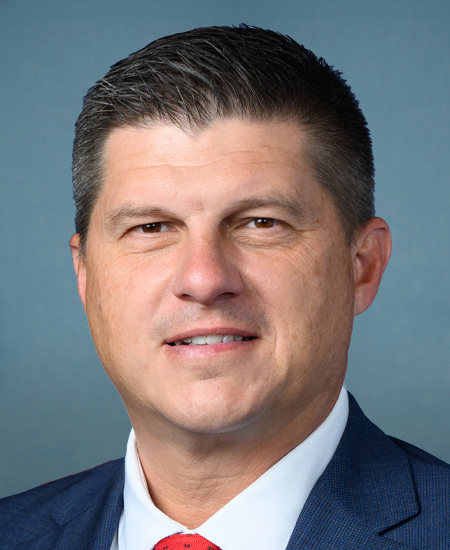
Rep. Brad Finstad
Sponsored bills
Maddy summaryThis bill blocks federal funding for colleges that operate or partner with campus health clinics providing abortion drugs or abortions to students or staff. It requires institutions receiving federal funds to annually certify that no such services are offered at their on-campus clinics. The law specifically excludes hospital-based clinics from coverage and defines "abortion drugs" as medications intended to terminate pregnancy (excluding specific medical exceptions). It directly affects public and private colleges receiving federal aid, as most institutions of higher education qualify for such funding.
Investing in Rural Manufacturing Act This bill authorizes the Small Business Administration to make loans for certain costs to businesses that manufacture goods essential to critical infrastructure sectors in rural areas. Businesses that meet at least 75% of their job creation goals under such loans may receive partial loan forgiveness.
Life at Conception Act This bill declares that the right to life guaranteed by the Constitution is vested in each human being at all stages of life, including the moment of fertilization, cloning, or other moment at which an individual comes into being. Nothing in this bill shall be construed to authorize the prosecution of any woman for the death of her unborn child.
Standardizing Thresholds Of Penalties for Fentanyl Act or the STOP Fentanyl Act This bill reduces the drug quantity thresholds that trigger a mandatory minimum prison term for a defendant who manufactures, distributes, imports, exports, or possesses with intent to distribute fentanyl. The bill also creates enhanced criminal penalties for certain violations involving fentanyl that was imported along the U.S.-Mexico border. Specifically, the bill reduces from 400 to 5 grams the fentanyl quantity and from 100 to 0.05 grams the fentanyl analogue quantity that trigger a mandatory minimum prison term for high-level first-time or repeat offenders. It also reduces from 40 to 0.5 grams the fentanyl quantity and from 10 to 0.005 grams the fentanyl analogue quantity that trigger a mandatory minimum prison term for low-level first-time or repeat offenders. Additionally, the bill creates enhanced mandatory minimum prison terms for importing or exporting fentanyl that was imported along the U.S.-Mexico border.
Maddy summaryThe HALT Fentanyl Act classifies all fentanyl-related substances as Schedule I controlled substances, affecting researchers, medical institutions, and law enforcement. It defines fentanyl-related substances broadly to include any chemical modifications meeting specific structural criteria, such as substitutions on the phenethyl or piperidine rings. The bill establishes expedited registration processes for research on these substances conducted by or funded by HHS or VA, and clarifies that certain research-related manufacturing activities do not require separate manufacturing registrations. It also requires researchers to notify the Attorney General about research involving these substances and outlines procedures for handling substances newly added to Schedule I.
Maddy summaryThe GORAC Act requires the Comptroller General to hire an external auditor to review all federal programs over the past 20 years, identifying duplicative, wasteful, or outdated functions. The auditor must recommend consolidating agencies with the same purpose or eliminating programs that wasted funds through mismanagement, personal benefit, or completed objectives. The bill mandates that any savings from these changes fund domestic programs or reduce the national debt, while requiring agencies to relocate affected employees. Congress must act on the auditor's report within two years through a streamlined process that limits debate and amendments to the proposed legislation.
No Taxpayer Funding for the World Health Organization Act This bill prohibits the United States from providing any assessed or voluntary contributions to the World Health Organization.
Maddy summaryThis bill designates the U.S. Postal Service facility at 130 North Main Street in Blue Earth, Minnesota, as the "Jim Hagedorn Memorial Post Office." It updates all federal references to the location to reflect this new name, ensuring official documents and records consistently use the memorial designation. The bill is purely procedural, with no substantive policy changes or funding impacts.
Maddy summaryThe GAS Act (HR 337) prohibits any federal agency from banning the sale or use of gas-burning stoves in the United States. This applies to all agencies defined under federal law, including the Environmental Protection Agency and Consumer Product Safety Commission. The bill directly blocks agencies from enacting new regulations that would restrict gas stoves, preventing future regulatory actions. It does not affect existing stove sales or current agency authority but sets a clear restriction on future rulemaking.