

This joint resolution nullifies a Department of Labor final rule entitled Adverse Effect Wage Rate Methodology for the Temporary Employment of H-2A Nonimmigrants in Non-Range Occupations in the United States and published on February 28, 2023. This rule makes changes to the methodology used to set adverse effect wage rates for H-2A workers (temporary agricultural workers), including by using Bureau of Labor Statistics wage surveys in certain instances. (Generally, the minimum wage for an H-2A worker is the highest of the adverse effect wage rate, the applicable minimum wage, the prevailing wage for that occupation in that area, or any agreed-upon collective bargaining wage.)
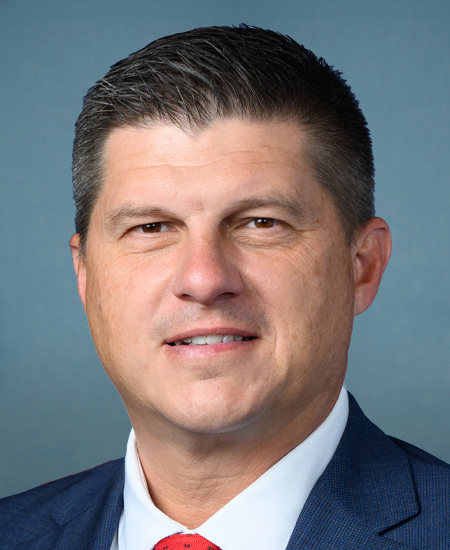
Rep. Brad Finstad
Sponsored bills
Maddy summaryHR 2826, the Save Local Business Act, clarifies when multiple businesses can be held jointly responsible for labor laws. It amends the National Labor Relations Act and Fair Labor Standards Act to state that a business is only a joint employer if it directly controls key employment terms like hiring, pay, schedules, or discipline for another business's workers. This directly affects franchisors, contractors, and similar business models that might previously have been deemed joint employers under broader interpretations. The bill aims to limit joint employer liability to cases where one business has clear, day-to-day control over essential worker conditions.
Farm Credit Administration Independent Authority Act This bill specifies that the Farm Credit Administration (FCA) is the sole regulator of the Farm Credit System (FCS) and establishes reporting requirements for FCS institutions. Specifically, the bill states that the FCA is the sole and independent regulator of the FCS and exempts entities that are supervised by the FCA from the Equal Credit Opportunity Act (ECOA). (The bill addresses a proposed rule by the Consumer Financial Protection Bureau [CFPB] that would implement provisions of the ECOA by requiring covered financial institutions, including FCS lenders, to collect and report to the CFPB data on credit applications for small businesses, including the principal owner's race, sex, and ethnicity.) The bill also requires FCS institutions to (1) request that loan applicants and borrowers that are small farmers disclose information identifying their race, sex, and ethnicity; and (2) annually report the collected information to the FCA. If an FCS institution customer does not voluntarily report the requested information, the FCA may not require the institution to use other means to deduce the information.
Maddy summaryHR 734, the Protection of Women and Girls in Sports Act of 2023, amends Title IX to prohibit federally funded schools and athletic programs from allowing individuals assigned male at birth to participate in women's or girls' sports teams. The bill defines "sex" for this purpose as "reproductive biology and genetics at birth," making it a violation of federal law to permit such participation in designated women's or girls' programs. It allows males to train with women's teams only if no female is deprived of a roster spot, competition opportunity, scholarship, or other benefit tied to the team. This law directly affects public and private schools receiving federal financial assistance that operate athletic programs.
Maddy summaryHR 2743 prohibits large financial institutions (over $100 billion in assets) from denying banking services to lawful businesses based on subjective political reasons, industry type, or reputational concerns. It requires these institutions to use objective, risk-based assessments for service decisions and provide written justifications for denials. The law applies to banks, credit unions, and payment networks, with civil penalties for violations including fines up to $10,000 per incident. It specifically ensures businesses operating legally under federal law receive fair access to financial services without discrimination. The bill mandates that denials be based on documented risk factors, not political bias or category-based exclusion.
Maddy summaryThe Freedom from Government Competition Act of 2023 requires federal agencies to obtain most goods and services from private companies through competitive bidding instead of providing them through government operations. Exceptions apply only when the law mandates government provision, for national defense or homeland security, for inherently governmental functions, or when no private source exists. Agencies must conduct competitive analyses to confirm private sector provision offers the best value to taxpayers and submit annual reports to Congress with a 5-year plan to transition commercial activities to private companies. This policy directly affects federal agencies and private sector providers by shifting procurement responsibilities away from government-run services.
American Innovation and R&D Competitiveness Act of 2023 This bill eliminates the five-year amortization requirement for research and experimental expenditures, thus allowing continued expensing of such expenditures in the taxable years in which they are incurred.
Maddy summaryHJRES 27 is a congressional resolution seeking to block a federal rule that redefined which waterways fall under the Clean Water Act's protections. It targets a rule submitted by the Army Corps of Engineers, Department of Defense, and Environmental Protection Agency (EPA) on January 18, 2023, which aimed to revise the "Waters of the United States" definition. The resolution would formally disapprove this rule under a specific federal procedure (Chapter 8 of Title 5), preventing it from taking effect. This would directly affect how federal agencies regulate pollution and development near water bodies, including wetlands and smaller streams.
Maddy summaryThe VA Same-Day Scheduling Act of 2023 requires the Department of Veterans Affairs to schedule appointments for enrolled veterans during the same phone call when they request care. This applies to veterans enrolled in the VA healthcare system who contact the VA by phone to request appointments. The law mandates that the VA must complete the scheduling during the call - without delay or future scheduling - regardless of the appointment date. The requirement takes effect 120 days after the bill is enacted.
Maddy summaryHR 2584, the SAVE Act, creates a new federal criminal offense for assaulting or intimidating hospital employees while they're performing their duties, punishable by up to 10 years in prison, with enhanced penalties for using weapons, causing injury, or during public emergencies. The bill authorizes $25 million annually in federal grants to hospitals for violence prevention programs, including staff training, security technologies like panic buttons and video surveillance, and coordination with law enforcement. It defines "hospital" broadly to include various medical facilities such as long-term care hospitals, rehabilitation facilities, and critical access hospitals. The legislation directly affects hospital workers and medical facilities by establishing federal criminal penalties for violence against employees and providing funding to improve workplace safety. The law aims to address the rising problem of workplace violence against healthcare workers, which the bill states has increased since 2011.