

Maddy summaryHR 5437, the Protecting Infrastructure Investments for Rural America Act, modifies federal transportation grant rules to better support small rural communities. It redefines "small community" as areas outside urbanized zones with 5,000 or fewer residents (down from 20,000) and requires at least 5% of annual program funds to support projects in these areas. The bill increases federal funding for eligible projects in small communities from 80% to 90% of costs and mandates that projects must improve economic development or quality of life for residents. This directly affects rural towns and villages with populations under 5,000 seeking highway, road, bridge, or tunnel improvements.
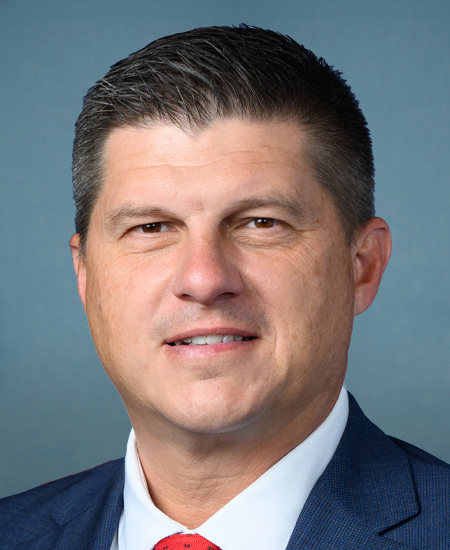
Rep. Brad Finstad
Sponsored bills
Maddy summaryThis bill authorizes the U.S. Department of Veterans Affairs (VA) to lease space for a Vet Center in Mankato, Minnesota, using up to $1.4 million over fiscal years 2024-2025. It directly affects veterans in Mankato who would gain access to VA mental health and support services at the new location. The key provision allows the VA Secretary to enter a lease agreement for the facility, subject to available funding. The bill does not change existing benefits or create new programs - only funds the physical space for an existing service model.
Maddy summaryHR 3152, the "Fight CRIME Act," aims to maintain international restrictions on Iran's missile-related activities by requiring diplomatic efforts to extend these restrictions before they expire in October 2023. The bill mandates annual reports detailing U.S. diplomatic strategies, potential impacts of expiration, and measures to deter missile technology transfers to Iran. It establishes sanctions against foreign individuals or entities that knowingly support Iran's missile or drone programs, including asset freezes and visa restrictions. These sanctions apply regardless of whether UN restrictions remain in effect after their expiration, directly affecting foreign entities involved in these activities.
Maddy summaryHR 5419, the Direct Seller and Real Estate Agent Harmonization Act, amends the Fair Labor Standards Act to exclude direct sellers (like door-to-door sales representatives) and qualified real estate agents from the federal definition of "employee." This change means these workers would no longer be automatically covered by federal minimum wage and overtime protections under the Fair Labor Standards Act. The bill directly affects individuals working in these specific roles by altering their legal classification under labor law. The key provision is a new definition inserted into existing law, aligning labor classification with existing tax code definitions for these professions.
Maddy summaryHR 4861 authorizes the USDA to provide grants to specific educational institutions - including land-grant universities, community colleges with agriculture programs, and career schools - to develop agriculture workforce training programs. These programs must include internships, apprenticeships, and skill-building workshops in partnership with agriculture companies, industry associations, or nonprofit job-training groups. Grantees must use at least 5% of funds for student recruitment and faculty training to prepare workers for agriculture careers. The bill aims to strengthen the agriculture workforce by improving training, retention, and industry competitiveness.
Maddy summaryThis bill requires the Bureau of Prisons to develop and implement a strategy for scanning all incoming mail at federal prisons to stop fentanyl and other synthetic drugs from entering facilities. It directs the Bureau to evaluate existing scanning technology within 180 days and submit a detailed plan to Congress within 90 days, including how to provide digital copies of mail to inmates within 24 hours and physical copies within 30 days (if safe). The strategy must achieve 100% mail scanning capacity at all federal prisons, prioritize high-security facilities, and include a budget proposal for fiscal years 2024-2026. This directly affects federal prisons, inmates, and Bureau employees by changing mail processing procedures to enhance safety and reduce staffing burdens from manual mail checks.
Investing in Rural America Act This bill allows Farm Credit System (FCS) institutions to provide financing and technical assistance for essential community facility projects as part of the Department of Agriculture's Community Facilities Direct Loan & Grant Program. (This program provides funding to develop essential community facilities in rural areas.) The FCS financing and technical assistance may be provided in order to make capital available to develop, build, maintain, improve, or provide other support for essential community facilities in rural communities (e.g., certain facilities that provide healthcare, community support, public safety, educational, or utility services). Under the bill, the financing provided by an FCS institution may not exceed 15% of the institution’s total assets unless the FCS institution offers at least one non-FCS lending institution an interest in the financing under reasonable terms and conditions acceptable to the borrower. The FCS institution must also report the offer to the Farm Credit Administration (FCA). The FCA must submit an annual report to Congress on the activities undertaken by FCS institutions under this bill, including through the partnerships between FCS institutions and other lending institutions. The FCA must post the report on the agency's website.
Rural Wellness Act This bill prioritizes behavioral and mental health treatment services under certain rural development grant and loan programs. The bill also reauthorizes through FY2028 the set-asides and prioritizations for substance use disorder treatment services under the Department of Agriculture's (1) Community Facilities Direct Loan and Grant Program, (2) Rural Health and Safety Education Competitive Grants Program, and (3) Distance Learning and Telemedicine Grant Program. Under the community facilities program, the bill prioritizes direct loans and grants for the development of behavioral and mental health services facilities, including facilities that provide treatment services. Further, loans and grants provided under the program may be used to develop facilities and systems to provide telehealth services for behavioral and mental health treatment. Under the Rural Health and Safety Education Competitive Grants Program, the bill prioritizes grants for behavioral and mental health education and treatment. Under the Distance Learning and Telemedicine Grants Program, the bill includes a 17% set-aside for telemedicine projects that provide substance use disorder treatment services (currently a 20% set-aside).
Maddy summaryHR 4288, the Agricultural Labeling Uniformity Act, establishes national uniformity for pesticide labeling under federal law. It prohibits states, local governments, or courts from imposing additional or different labeling requirements on pesticides beyond those approved by the federal Administrator under the Federal Insecticide, Fungicide, and Rodenticide Act (FIFRA). The bill requires that all pesticide labeling aligns with federal human health assessments and carcinogenicity classifications, preventing states from creating separate rules for warnings or packaging. This directly affects pesticide manufacturers, distributors, and state regulatory agencies by eliminating conflicting state labeling standards. The key mechanism is a federal preemption of state labeling rules that differ from the nationally approved labeling.
Maddy summaryThe ReConnecting Rural America Act of 2023 provides federal funding through grants, loans, and combinations of both to build broadband infrastructure in rural areas. It requires projects to provide at least 100 Mbps downstream and 100 Mbps upstream service, with priority given to areas where at least 90% of households lack such service. The bill authorizes $650 million annually from 2024-2028 for this program, targeting rural communities that currently lack adequate broadband access, while requiring cost-sharing of up to 25% and technical assistance for applicants. Eligible entities include state/local governments, tribes, cooperatives, and corporations, but not individuals or general partnerships. The program will expire on September 30, 2028.