

Maddy summaryHRES 966 is a symbolic resolution condemning alleged sexual violence committed by Hamas during its October 7, 2023, attack on Israel. It specifically references eyewitness accounts, forensic evidence, and Hamas fighters' admissions of ordering gang rape, sexual mutilation, and assault against Israeli civilians. The resolution calls for international condemnation of such acts as weapons of war, urges nations to criminalize sexual violence, and supports investigations into Hamas' actions. As a non-binding resolution, it does not create new laws or directly affect any individuals but formally expresses the House's position on the issue.
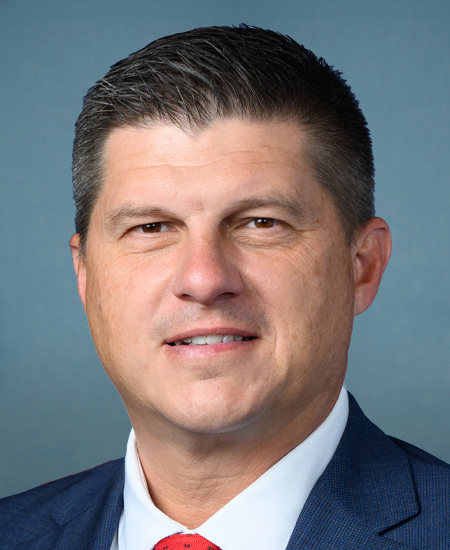
Rep. Brad Finstad
Sponsored bills
Maddy summaryHJRES 114 is a joint resolution seeking congressional disapproval of a Federal Highway Administration (FHWA) rule that would have required tracking greenhouse gas emissions as part of assessing performance for the National Highway System. The rule, published in the Federal Register in December 2023, aimed to establish specific metrics for evaluating highway system performance, including emissions data. If approved, this resolution would nullify the rule, preventing the FHWA from implementing the emissions tracking requirement. This action directly affects how the FHWA measures highway system performance, specifically regarding environmental metrics.
Maddy summaryThis bill appropriates over $15 billion in supplemental funding for U.S. security assistance to Israel following attacks in Israel. It includes specific allocations such as $5.2 billion for Israel's Iron Dome, David's Sling, and Iron Beam defense systems, as well as funds for military personnel, operations, and equipment across all branches of the military. The bill requires the Secretary of Defense and Secretary of State to submit regular reports to Congress detailing security assistance provided to Israel and designates all funding as "emergency requirements" under federal law. This funding directly supports U.S. security assistance programs with Israel to respond to regional security threats.
Maddy summaryThis resolution disapproves a Department of Energy rule that would have set new energy efficiency standards for consumer furnaces. The rule, published in the Federal Register (88 Fed. Reg. 87502), aimed to require furnace manufacturers to produce models meeting higher energy conservation levels. If enacted, this resolution would cancel the rule, preventing it from taking effect. As a result, current energy efficiency standards for furnaces would remain unchanged, and manufacturers would not face the new requirements.
Maddy summaryThis bill repeals a law (18 U.S.C. § 1715) that previously prohibited mailing firearms without a license. It directly affects the U.S. Postal Service, firearm sellers, and individuals mailing firearms by preventing the Postal Service from creating rules that would block firearm mailings or require disclosure of sensitive records like sales receipts or firearm serial numbers. Key provisions include removing the existing ban on mailing firearms and prohibiting the Postal Service from imposing new restrictions on firearm mailings or demanding customer transaction data. The bill ensures that firearm mailings can proceed without these specific federal restrictions, while applying to ongoing legal cases under the repealed law.
Maddy summaryThe AFIDA Improvements Act of 2024 updates the Agricultural Foreign Investment Disclosure Act to require foreign individuals or entities owning at least 1% of U.S. agricultural land (directly or through multiple ownership tiers) to report their holdings. It creates new enforcement duties for the Farm Production and Conservation Business Center (FPAC-BC) to validate data, ensure compliance, and identify violators. The bill mandates the Secretary of Agriculture to share foreign ownership reports with the Committee on Foreign Investment in the United States (CFIUS) and update agency handbooks using recommendations from a 2024 Government Accountability Office report. These changes apply directly to foreign landowners and agricultural agencies like the Farm Service Agency, aiming to improve transparency around foreign ownership of U.S. farmland.
Maddy summaryThis bill prohibits the EPA from finalizing, implementing, or enforcing the December 13, 2023, proposed rule on water pollution standards for meat and poultry processing facilities under the Clean Water Act. It directly affects meat and poultry processing plants by blocking a specific EPA regulation that would have set new wastewater discharge limits. The key provision explicitly bans the EPA from moving forward with this rule or any "substantially similar" rule. The bill does not create new regulations but stops a specific EPA action from taking effect.
Maddy summaryHR 7087, the MOMS Act, establishes a pilot program to provide evidence-based mental health support for pregnant and postpartum members of the U.S. Armed Forces and their beneficiaries (including family members). It requires the Defense Health Agency to integrate these prevention programs into existing maternal or pediatric care at military medical facilities, prioritizing diverse locations and removing barriers like childcare access. The bill mandates an advisory committee with military members, experts, and service organizations to guide implementation, along with annual reports tracking participation by demographics and a study on the program’s effectiveness. Funded at $5 million annually from 2025-2029, the pilot aims to reduce perinatal mental health conditions and improve military readiness.
Maddy summaryHR 7083, the RAZOR Act, prohibits federal agencies from removing or altering barriers (like fences or fences) built by states along the U.S. border to prevent unlawful crossings. It directly affects federal departments and agencies, such as the Department of Homeland Security, by restricting their ability to modify state-constructed border infrastructure. The key provision is a clear ban on any federal action that would change or remove these state-built barriers. This bill makes a specific policy change regarding federal-state border infrastructure authority without altering broader immigration law.
Maddy summaryThe Farm and Food Cybersecurity Act of 2024 requires the U.S. Department of Agriculture to conduct biennial studies assessing cyber threats and vulnerabilities across the entire food supply chain - including farmers, processors, distributors, and retailers - and submit reports to Congress detailing risks to food safety, public health, and national security. It also mandates annual cross-sector simulations with agencies like Homeland Security and Health and Human Services to test emergency responses to food-related cyber incidents, involving government and private sector stakeholders. The bill authorizes $1 million annually (2024-2028) to fund these studies and simulations, aiming to identify gaps and improve coordination. These requirements directly affect federal agencies, state/local governments, and food industry entities responsible for food production, distribution, and security.