Maddy summaryHRES 1577 is a resolution expressing congressional support for National Adoption Day (November 23, 2024) and National Adoption Month (November 2024). It highlights that over 108,000 children in U.S. foster care are waiting for adoption and encourages Americans to consider adoption to help provide safety, permanency, and well-being for children. The resolution does not create new laws but formally recognizes the importance of adoption and urges the public to support efforts to place children in permanent families. It directly affects public awareness and encourages citizen engagement during these designated observances.
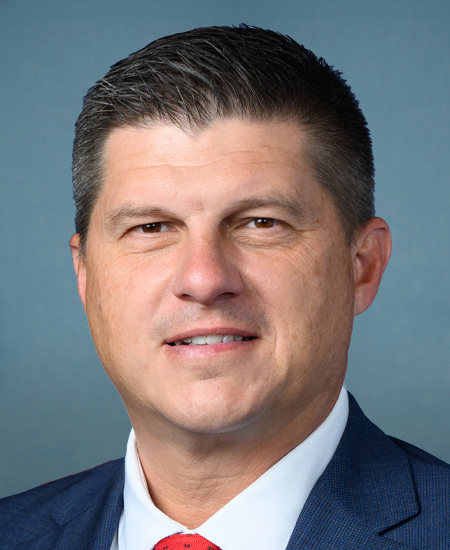
Rep. Brad Finstad
Sponsored bills
Maddy summary# Summary of Proposed Higher Education Act Amendments This document outlines significant proposed amendments to the Higher Education Act of 1965, primarily as part of the "College Cost Reduction Act." The key elements include: ## Accreditation Reform - Major overhaul of accreditation standards, requiring accrediting agencies to demonstrate independence from trade associations - New requirements for accrediting agencies to assess student achievement outcomes, including median value-added earnings relative to median total price charged - Introduction of an "Alternative Quality Assurance Experimental Site Initiative" to test non-accredited institutions - Protections for religious institutions, including a new process for appealing accreditation decisions related to religious mission - Removal of "litmus tests" that would require institutions to support specific political viewpoints ## Student Success Initiatives - Establishment of "Postsecondary Student Success Grants" to increase participation, retention, and completion rates for high-need students - Focus on evidence-based practices, with tiered requirements (tier 1, 2, and 3 reforms) - Mandatory inclusion of high-need student populations (low-income, first-generation, military-connected, etc.) - Requirements for institutions to report on completion rates, retention rates, and student demographics ## Regulatory Changes - Repeal of numerous existing regulations including: * Closed school discharges * Borrower defense to repayment * Pre-dispute arbitration * False certification requirements * Ability-to-benefit rules * Financial responsibility regulations - New restrictions on incentive compensation for recruiters - Changes to third-party servicer definitions and regulations ## Transfer and Credit Policies - New requirement that institutions cannot deny transfer credit based solely on the source of accreditation - Requirements for transparent transfer policies - Changes to reverse transfer policies ## Other Key Provisions - Modifications to the National Advisory Committee on Institutional Quality and Integrity (NACIQI) - New definitions for "total price" and "value-added earnings" - Changes to the process for institutions to change accrediting agencies - New requirements for institutions to report on student outcomes The overall focus of these proposed amendments is to reduce regulatory burden on institutions, promote transparency, improve student outcomes (particularly for high-need students), modernize accreditation processes, and protect religious institutions' rights in accreditation decisions.

Maddy summaryHR 10143 requires the FEMA Administrator to transfer unspent funds from COVID-19 relief acts and funds that have passed their initial performance period for past disaster declarations into the Disaster Relief Fund. This bill directly affects FEMA's budget management by redirecting leftover government funds that were originally allocated for specific purposes. The key mechanism is a mandatory transfer of these unobligated amounts to the central Disaster Relief Fund, which is used to respond to future disasters. The bill does not create new spending but reallocates existing, unused funds to strengthen the Disaster Relief Fund's available resources.
Maddy summaryHRES 1566 is a symbolic House resolution honoring all U.S. veterans on Veterans Day 2024. It recognizes the service and sacrifice of the estimated 15.8 million veterans living in the U.S. as of 2023, including those who served in conflicts from World War II to post-9/11. The resolution calls on the American public to observe Veterans Day to acknowledge veterans' role in preserving national freedom. As a non-binding resolution, it has no direct policy impact but formally expresses congressional recognition of veterans' contributions.
Maddy summaryThis bill provides one-time financial assistance to U.S. farmers growing specific crops (like corn, soybeans, wheat, cotton, and rice) during the 2024 crop year if their expected costs exceed expected returns. Payments equal 60% of the difference between the expected cost of production per acre (based on USDA cost forecasts) and the expected gross return per acre (based on projected farm prices and yields). Payments are calculated using actual planted acreage plus 50% of acreage prevented from planting due to natural disasters, with annual caps of $175,000 or $350,000 depending on the farm’s primary income source. The program uses existing USDA data sources and applies standard farm payment limits.
Maddy summaryHRES 1537 is a non-binding House resolution condemning Hamas' October 7, 2023, attacks on Israel, which killed over 1,200 people and took 251 hostages, including 7 Americans still held captive. It calls on Hamas to immediately surrender, cease attacks, and release all hostages unconditionally, while reaffirming Israel's right to self-defense. The resolution also urges international organizations to condemn Hamas' actions and address the global surge in antisemitism following the attacks. As a symbolic statement, it does not create new laws or alter policy but expresses congressional position. The bill specifically references the ongoing captivity of seven U.S. citizens: Edan Alexander, Itay Chen, Sagui Dekel-Chen, Gadi Haggai, Judith Weinstein Haggai, Omer Neutra, and Keith Siegel.
Maddy summaryHR 9950, the "Miracle on Ice Congressional Gold Medal Act," authorizes three gold medals to be awarded to the members of the 1980 U.S. Olympic men's ice hockey team for their historic victory over the Soviet Union during the Winter Olympics. The medals, designed by the Treasury Secretary, will be presented by Congress to honor the team's achievement, which revitalized American morale during the Cold War. One medal will be displayed at the Lake Placid Olympic Center, one at the USA Hockey Hall of Fame in Eveleth, Minnesota, and one at the U.S. Olympic Museum in Colorado Springs. The bill also permits the sale of bronze duplicates to cover production costs. This is a ceremonial honor, not a policy change, directly recognizing the team members and their legacy.
Maddy summaryThis bill requires Department of Defense contractors to disclose detailed sourcing information for rare earth elements and strategic materials used in permanent magnets and advanced batteries. It expands existing disclosure rules to cover battery components, mandating contractors report where materials like lithium, nickel, cobalt, manganese, and graphite are mined, refined, and manufactured. The changes apply specifically to Defense contracts involving these critical materials, aiming to increase transparency in supply chains. This modifies Section 857 of the 2023 National Defense Authorization Act.
Maddy summaryThis bill amends the Clean Air Act to modify ethanol waiver processes and fuel volatility standards. It adds a new provision allowing fuel to enter commerce if it meets Reid Vapor Pressure requirements through similarity to certified vehicles or existing waivers, and adjusts vapor pressure limits from 10% to 10-15% in several sections. Small refineries that retired credits for 2016-2018 compliance years may now have those credits returned or applied to future years if their petitions remained pending as of December 1, 2022. The changes directly affect fuel retailers, ethanol producers, and small refineries by altering compliance pathways for fuel standards and credit management under the renewable fuel program.
Maddy summaryHRES 1517 is a symbolic resolution expressing the U.S. House of Representatives' support for designating October 7-12, 2024, as "National 4-H Week." It does not create new laws or policies but formally recognizes 4-H, the nation’s largest youth development program, which engages nearly 6 million young people through hands-on learning in health, science, and leadership. The resolution highlights 4-H’s role in developing youth leadership via its network of volunteers, land-grant universities, and the Department of Agriculture. It has no direct impact on any specific group or program, as it only serves as a formal acknowledgment of the organization’s work.