

Maddy summaryThis bill allows U.S. Representatives and Senators to use space within Department of Veterans Affairs (VA) facilities for meetings with veterans who are their constituents. It requires the VA Secretary to establish clear rules within 90 days, including that meeting spaces must be visible, accessible during business hours, and rented at rates similar to commercial office space in the area. The bill prohibits political campaigning, recording veterans without consent, or using VA spaces during the 60 days before federal elections. It directly affects veterans seeking in-person help from their representatives and the VA facilities managing these access points. The key change is creating a formal, regulated process for congressional access to VA locations, not altering veterans' benefits or policies.
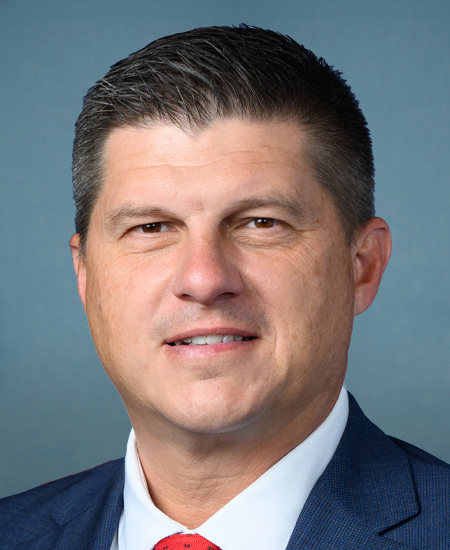
Rep. Brad Finstad
Sponsored bills
Maddy summaryThe Fiscal Commission Act establishes a 16-member commission to address the federal government's fiscal challenges, including reducing debt and deficit while aiming for a debt-to-GDP ratio of 100% by 2039. The commission must educate the public about fiscal issues, identify policy recommendations, and submit a detailed report with legislative language by November 2026 (with possible extension to April 2027). This report requires bipartisan approval, needing at least two Republican and two Democratic members for majority support. If approved, the recommended legislation would become an "implementing bill" considered under expedited procedures in both congressional chambers. The commission's work directly affects federal budget decisions and public awareness of fiscal policy, with hearings required to gather input from experts and government officials.
Maddy summaryHR 3283, the FARMER Act, directly affects farmers who purchase crop insurance under enterprise or whole farm units by increasing federal premium subsidies. It raises the government subsidy rate to 77% for higher coverage levels and 68% for lower coverage levels under specific revenue or yield protection plans. The bill also lowers the required coverage level from 14% to 10% and increases the premium subsidy rate from 65% to 80% for supplemental coverage. Additionally, it mandates a study on expanding supplemental coverage to larger counties, requiring a report to Congress within one year.
More Opportunities for Moms to Succeed Act or the MOMS Act This bill establishes requirements to enable the collection of certain child support during pregnancy, establishes grants for supportive services for women that promote alternatives to abortions, and requires the Department of Health and Human Services (HHS) to establish a website with pregnancy resources other than those about abortions. Specifically, the bill requires states to apply child support obligations to the time period during pregnancy under the Child Support Enforcement program. (The program enables states to receive federal matching funds for expenses related to child support enforcement activities and related services.) Such child support applies at the request of the mother and may be applied retroactively. Also, HHS must award grants to nonprofits to provide pregnant and postpartum women, and women parenting young children, with services or information on topics including health care (excluding abortions), child care, and employment assistance. It also requires HHS to provide grants to health care providers in rural or medically underserved areas, as well as tribal areas, to purchase equipment enabling telehealth visits for prenatal and postnatal care (e.g., monitoring devices). Additionally, the bill requires HHS to establish a public website to inform pregnant and postpartum women, and women parenting young children, of nearby services and resources on topics including health care, material or legal support, and alternatives to abortion. States must, as a condition of receiving certain federal funds, provide lists of nonprofit child placement agencies for potential inclusion on the site.
Maddy summaryHR 3228, the Constitutional Hearing Protection Act, reclassifies firearm silencers as firearms under federal tax law and eliminates their separate registration under the National Firearms Act. It requires the Attorney General to destroy all existing federal silencer registration records within one year and preempts state laws that impose taxes, registration, or recordkeeping requirements on silencers. The bill defines "firearm silencer" and specifies that manufacturers must mark silencers on a "keystone part" with a serial number. This directly affects silencer owners, manufacturers, and state governments by standardizing federal regulation and removing state-level restrictions.
Maddy summaryThe Parity in Engineering Act (HR 3258) amends a federal highway law to remove Minnesota from a list of states eligible for a specific contracting process for engineering and design services. It changes the provision from applying to "West Virginia or Minnesota" to applying only to "West Virginia," directly affecting Minnesota's eligibility for this contracting method in federal highway projects. The bill makes a technical correction to the law without altering funding levels, program requirements, or creating new policies. This adjustment streamlines the eligibility criteria for federal highway engineering contracts.
Maddy summaryThis bill establishes the Last Acre Program to provide grants and loans to broadband providers to deliver high-speed internet (minimum 100 Mbps downstream, 20 Mbps upstream) to agricultural land that is unserved or underserved. It directly affects farmers, ranchers, and agricultural producers on eligible land (including cropland, grassland, and farm sites) who lack sufficient broadband access, with priority for limited resource farmers and ranchers. The program requires providers to meet cybersecurity standards, use a competitive bidding process to determine recipients, and prioritize remote areas and unserved land, with $20 million authorized annually from 2026-2030. It also mandates the National Agricultural Statistics Service to collect detailed broadband usage data through updated agricultural surveys.
Maddy summaryHR 976, the "1071 Repeal to Protect Small Business Lending Act," would repeal data collection and reporting requirements for small business loans under Section 704B of the Equal Credit Opportunity Act. This specifically removes the mandate for financial institutions - especially community banks and credit unions - to track and submit loan data by business characteristics like race or gender. The bill aims to reduce compliance costs for lenders, which its findings argue limit small business access to credit. The repeal would eliminate these reporting obligations and remove references to the requirement from related federal laws.
Maddy summary# Summary of the SHIPS for America Act This comprehensive legislation focuses on strengthening the U.S. maritime industry, shipbuilding capacity, and maritime workforce to enhance national security and economic competitiveness. ## Key Areas of Focus 1. **Shipbuilding & Maritime Infrastructure** - Establishes a United States Center for Maritime Innovation to accelerate adoption of commercial technologies - Creates a National Shipbuilding Research Program - Requires an annual survey of anticipated commercial vessel construction - Includes provisions for streamlined environmental reviews of maritime infrastructure 2. **Workforce Development** - Establishes the United States Merchant Marine Career Retention Program to maintain mariner qualifications - Creates Centers of Excellence for Domestic Maritime Workforce Training and Education - Implements military-to-maritime transition programs - Establishes a Maritime Career and Technical Education Advisory Committee 3. **Education & Training** - Expands educational assistance for merchant mariners - Creates eligibility for Naval Postgraduate School for merchant mariners - Establishes maritime education programs from K-12 through higher education - Provides for international exchanges for mariners and naval architects 4. **National Security & Strategic Readiness** - Requires reports on National Defense Reserve Fleet utilization - Includes measures to de-risk the maritime sector from Chinese influence - Enhances shipbuilding capacity for national security needs - Establishes programs to ensure sufficient mariner workforce for national defense 5. **Funding Mechanisms** - Authorizes appropriations from the Maritime Security Trust Fund - Includes funding for workforce programs, education, and shipbuilding initiatives - Establishes specific funding levels for various programs over multiple fiscal years The legislation aims to create a sustainable domestic maritime industrial base that supports both commercial shipping and national defense requirements, with a particular emphasis on developing and retaining a skilled U.S. maritime workforce.
Maddy summaryThis bill creates a new federal program to expand high-speed broadband access in rural areas by providing grants, loans, and combinations of both. It sets minimum standards requiring 100 Mbps downstream and upstream speeds, prioritizes projects in communities where at least 90% of households lack such service, and directs funding toward areas with high poverty, small populations, or strategic community plans. Eligible applicants include tribal organizations, cooperatives, local governments, and rural utilities, with requirements to meet buildout deadlines, participate in federal affordability programs, and provide cost-sharing (up to 25%). The program authorizes $650 million annually from 2026 to 2030 to fund infrastructure construction, improvement, or acquisition in underserved rural communities.