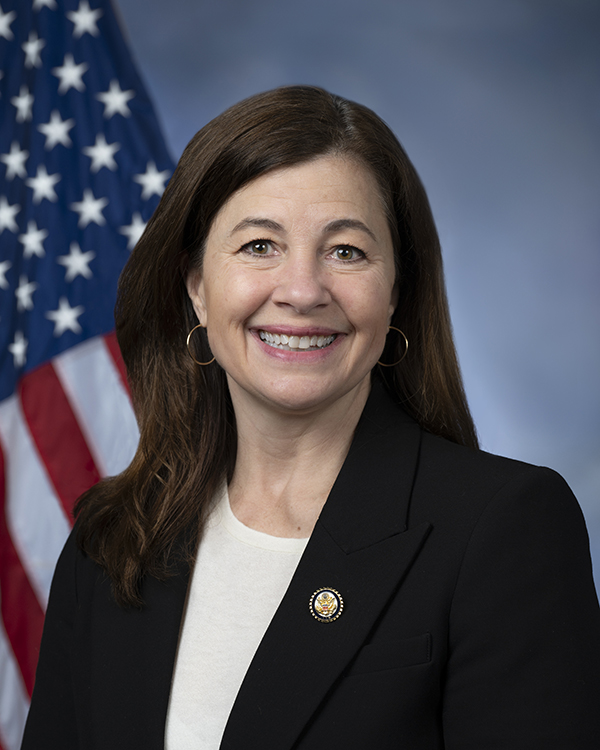
Photo of Kristen McDonald Rivet
D United States House · District 8 · Michigan On the 2026 ballot

Rep. Kristen McDonald Rivet

Compare
Total votes
669
all sessions
Attendance
98%
15 missed
Near the chamber average
With party
92%
of cast votes
Lower than 90% of chamber peers
Bipartisan score
4%
crosses aisle rarely
Higher than 89% of chamber peers
Sponsored
363
bills & resolutions
Near the chamber average
Committees
6
assignments
363 bills and resolutions

Sponsored bills

Total
363
Primary
19
Co-sponsor
344
This page
363
matching current filters
Co-sponsor HRES 1027
In committee · United States House · Co-sponsor
Supporting the designation of the "International Year of the Woman Farmer" to recognize and honor the critical role of women in agriculture.

This resolution supports the designation of the International Year of the Woman Farmer and recognizes the critical role of women in agriculture. The resolution also encourages citizens to celebrate the impact these women have on the food systems and agricultural workforce of the United States by encouraging and empowering women to pursue careers in agriculture and cultivate leadership opportunities.

In committee Jan 30, 2026 1 co-sponsor
Co-sponsor HR 7277
In committee · United States House · Co-sponsor
Emergency Medical Services Reimbursement for On-Scene and Support Act

Maddy summaryHR 7277, the Emergency Medical Services Reimbursement for On-Scene and Support Act, expands Medicare reimbursement to ambulance providers for non-transport emergency medical services. It amends the Social Security Act to allow reimbursement for on-scene care (like medical treatment at the location) provided on or after January 1, 2026, regardless of whether transport was offered. This directly affects ambulance service providers who currently may not receive payment for non-transport care. The bill requires reimbursement for these on-scene services to be comparable to transport reimbursement rates, ensuring consistent payment for similar care. The policy change takes effect in 2026, addressing a gap in coverage for emergency care delivered without patient transport.

In committee Jan 30, 2026 1 co-sponsor
Co-sponsor HJRES 144
In committee · United States House · Co-sponsor
Providing for congressional disapproval under chapter 8 of title 5, United States Code, of the rule submitted by the Department of Veterans Affairs relating to "Reproductive Health Services".

Maddy summaryHJRES 144 is a congressional disapproval resolution targeting a specific rule issued by the Department of Veterans Affairs (VA) on December 31, 2025, which addressed "Reproductive Health Services" (90 Fed. Reg. 61310). This resolution directs Congress to disapprove the VA rule under Chapter 8 of Title 5, U.S. Code, meaning the rule would have no legal effect if passed. The bill directly affects the VA's implementation of reproductive health services for veterans, as it seeks to nullify the agency's existing policy. This is a procedural measure, not a substantive policy change, aimed solely at blocking the VA's rule through congressional action.

In committee Jan 27, 2026 1 co-sponsor
Co-sponsor HRES 375
Passed · United States House · Co-sponsor
Expressing support for the designation of May 2025 as Renewable Fuels Month to recognize the important role that renewable fuels play in reducing carbon impacts, lowering fuel prices for consumers, supporting rural communities, and lessening reliance on foreign adversaries.

Maddy summaryHRES 375 is a symbolic resolution designating May 2025 as "Renewable Fuels Month" to recognize renewable fuels' role in reducing carbon emissions, lowering consumer fuel prices, supporting rural economies, and decreasing reliance on foreign energy sources. The resolution expresses the House's support for this designation without creating new laws or funding. It highlights renewable fuels' economic contributions (e.g., jobs, GDP impact) and environmental benefits as context for the recognition, but does not alter existing policies. As a non-binding resolution, it has no direct legal effect on consumers, industries, or government programs.

Passed Jan 22, 2026 1 co-sponsor
Co-sponsor HR 7206
In committee · United States House · Co-sponsor
Farm and Family Relief Act

Maddy summaryHR 7206, the Farm and Family Relief Act, provides direct financial assistance to agricultural producers facing market challenges during the 2025 crop year. It establishes one-time payments for eligible crop producers (including wheat, corn, soybeans, and cotton) when expected costs exceed expected returns, with payment limits based on farming income (capping at $125,000 or $250,000 depending on farming income percentage). The bill allocates $5 billion for specialty crop producers, $500 million for timber industry assistance, and $330 million for sugar beet producers through cooperative block grants. Additionally, it delays certain cost-shift provisions in food assistance programs and terminates specific tariff-imposing executive orders.

In committee Jan 22, 2026 1 co-sponsor
Co-sponsor HR 2878
In committee · United States House · Co-sponsor
Daniel J. Harvey, Jr. and Adam Lambert Improving Servicemember Transition to Reduce Veteran Suicide Act

Maddy summaryThis bill amends the Department of Defense's Transition Assistance Program (TAP) and the Department of Veterans Affairs' Solid Start Program to enhance mental health support during military-to-civilian transitions. It requires TAP to provide specific information on suicide risk factors (including depression, homelessness, and relationship strain), treatment options for conditions like PTSD and substance abuse, and the impact of losing social support systems. The Solid Start Program must now assist veterans in enrolling in VA healthcare and educate them about available mental health resources. The Secretaries of Defense and Veterans Affairs must jointly report to Congress within one year on the materials developed under these changes.

In committee Jan 21, 2026 1 co-sponsor
Co-sponsor HR 7099
In committee · United States House · Co-sponsor
PATH to Education Act

Maddy summaryThe PATH to Education Act creates federal grants to help public transportation providers partner with educational institutions like community colleges, Head Start programs, and career schools to improve transit access for students. Grant funds can be used for adding bus stops or routes near campuses, increasing service frequency, or adjusting schedules to help students and Head Start participants commute. The bill allocates $1 million in 2027, rising to $5 million by 2031, with priority given to projects involving schools where over 25% of students receive Pell Grants. This policy directly affects transit agencies and eligible schools by funding concrete transit improvements to support education access.

In committee Jan 16, 2026 1 co-sponsor
Co-sponsor HR 6505
In committee · United States House · Co-sponsor
Next Generation 9–1–1 Act

Next Generation 9–1–1 Act This bill establishes a grant program to support implementation of next generation 9-1-1 (NG9-1-1) systems by state, territorial, and tribal governments and requires other related activities. NG9-1-1 means a secure, interoperable, Internet Protocol-based (IP-based) system for receiving 9-1-1 requests for emergency assistance. (IP-based 9-1-1 systems have capabilities that legacy telephone systems do not, including enhanced location-finding and the ability to receive text and multimedia messages.) Under the bill, the National Telecommunications and Information Administration (NTIA) must provide grants to state, territorial, and tribal governments (and entities established by those governments) to support the implementation and maintenance of NG9-1-1 systems. Grant funds may also be used for public outreach on NG9-1-1, implementation of cybersecurity measures, and, subject to certain limits, training and administrative costs. Entities applying for grants must submit a plan for NG9-1-1 coordination and implementation that ensures interoperability and reliability, incorporates cybersecurity tools, and meets other requirements related to technology and procurement. Applicants must also certify that they have established, or will establish within a specified time frame, a sustainable funding mechanism to support NG9-1-1 and effective cybersecurity resources. The NTIA must advise applicants on the preparation of implementation plans and provide technical assistance to grant recipients. Further, the NTIA must establish (1) an advisory board to provide recommendations with respect to the grant program and other topics related to NG9-1-1; and (2) a cybersecurity center to coordinate with state, local, and regional governments on the sharing of cybersecurity information related to NG9-1-1.


In committee Jan 15, 2026 1 co-sponsor
Primary HR 6720
In committee · United States House · Lead sponsor
FARM Home Loans Act of 2025

Maddy summaryThis bill amends the Farm Credit Act to expand rural home loan eligibility. It adds "accessory dwelling units" (like guest houses or converted garages) to the definition of qualifying property features and increases the maximum property size for loans from 2,500 to 10,000 square feet. These changes directly affect rural homebuyers and lenders by allowing more property types and larger homes to qualify for Farm Credit loans. The policy change specifically modifies existing loan criteria without altering funding levels or creating new programs.

In committee Jan 13, 2026 0 co-sponsors
Co-sponsor HR 6598
In committee · United States House · Co-sponsor
Commodity Futures Trading Commission Research and Development Modernization Act of 2025

Maddy summaryThis bill modernizes the Commodity Futures Trading Commission's (CFTC) authority to conduct research on emerging technologies affecting financial markets. It requires the CFTC to establish programs studying how new technologies impact cybersecurity, market operations, and regulations, and to develop educational materials for market participants. The bill permits the CFTC to use streamlined "other transaction" agreements (bypassing standard procurement rules) and accept non-monetary contributions like data access or facilities for research, with strict safeguards against conflicts of interest. All such activities must be reported annually to congressional agriculture committees, and the authority expires in 2031. The bill directly affects the CFTC's research operations and indirectly impacts market participants through enhanced regulatory understanding.

In committee Jan 13, 2026 1 co-sponsor
Showing 81 to 90 of 363 bills
Previous 1 … 8 9 10 … 37 Next