

Cosmetic Supply Chain Transparency Act of 2021 This bill requires the Food and Drug Administration (FDA) to maintain a list of certain nonfunctional constituents in cosmetics that are harmful to human health or the environment, authorizes the FDA to request from a brand owner (i.e., the entity bringing a cosmetic to market) certain information about a cosmetic's ingredients, and addresses related issues. For each listed nonfunctional constituent, the list must identify the ingredient or cosmetic (or category of ingredient or cosmetic) in which the constituent is known or reasonably expected to be present. The FDA must also (1) establish procedures for petitions to add substances to the list, (2) issue guidance for industry related to testing and detecting such nonfunctional constituents, and (3) establish a committee to provide advice on creating the list and developing the required industry guidance. Within a year of a nonfunctional constituent being added to the list, a supplier of an ingredient or cosmetic must test for that constituent and provide a brand owner the results and other information before selling the ingredient or cosmetic to the brand owner. A supplier of an ingredient or cosmetic must provide additional information about the item upon a brand owner's request. Brand owners must maintain records with information about the suppliers of ingredients and raw materials used in their cosmetics and provide such information to the FDA upon request. The bill also imposes civil penalties for brand owners and suppliers that violate this bill's provisions.
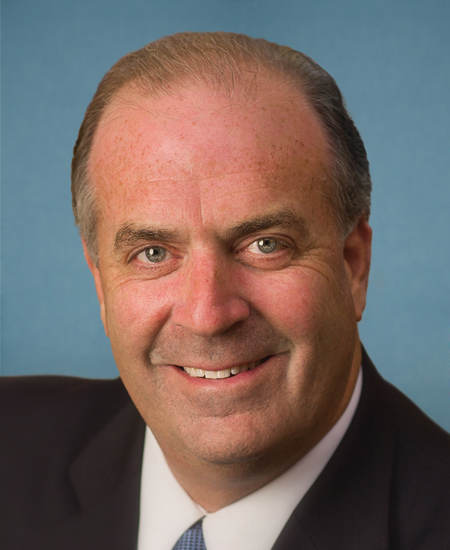
Rep. Daniel T. Kildee
Sponsored bills
Maddy summaryHR 5537, the Toxic-Free Beauty Act of 2021, bans specific chemicals in cosmetics under federal law. It prohibits the use of substances like certain PFAS (water-repellent chemicals), phthalates (e.g., dibutyl phthalate), formaldehyde, mercury, and specific parabens in cosmetic products. The ban directly affects cosmetic manufacturers, requiring them to reformulate products, and benefits consumers by removing these chemicals from beauty items. The law takes effect on January 1, 2025, with the ban applying to products bearing or containing the listed substances.
Cosmetic Fragrance and Flavor Ingredient Right to Know Act of 2021 This bill imposes disclosure and labeling requirements on cosmetics products that contain certain ingredients. A cosmetics product that fails to meet such requirements may not be sold. Within two years of this bill's enactment, a cosmetics product's labeling or packaging must indicate the use of any ingredient that (1) is identified on specified lists of harmful or potentially harmful chemicals, such as chemicals identified as carcinogenic to humans by the Environmental Protection Agency or toxic air contaminants under California regulations; or (2) must be disclosed under certain European Union laws and is present in a product above specified concentrations. The Food and Drug Administration must publish and periodically update on its website a list of the ingredients subject to this requirement. Within one year of this bill's enactment, a brand owner (i.e., the entity bringing a cosmetics product to market) must disclose certain information on its website if a cosmetics product contains any fragrance or flavor ingredient that is (1) present in the product above a certain concentration, or (2) subject to this bill's labeling or packaging requirement. The website must disclose the use of the ingredient in question and other information, such as the ingredient's functional purpose. The use of an ingredient subject to this bill's requirements shall not be treated as a confidential trade secret, but the concentration of such an ingredient shall be treated as confidential commercial information.
Cosmetic Safety for Communities of Color and Professional Salon Workers Act of 2021 This bill imposes labeling requirements on cosmetics intended for professional use, requires research on health issues relating to cosmetics, and addresses related issues. The Food and Drug Administration (FDA) must require (1) the labeling for cosmetics intended for professional use to include the name of each ingredient in descending order of predominance; and (2) the manufacturer, distributor, or seller of such a cosmetic to provide this information on its website. The Occupational Safety and Health Administration must issue a standard requiring each manufacturer or importer selling a cosmetic intended for professional use to (1) obtain or develop a safety data sheet for the cosmetic in various languages; and (2) make the data sheet available to relevant distributors and employers, such as hair salon owners. The standard must also require employers to make the data sheet available to employees exposed to the product and provide to employees versions of the sheet in languages other than English upon request. The FDA must conduct (or award grants for) research into chemicals linked to adverse health effects and most commonly found in cosmetics that are (1) marketed to women and girls of color; or (2) used by professional nail, hair, and beauty salon workers. The FDA must also award grants to support research focused on designing safer cosmetic chemicals, such as those with no inherent toxicity. The FDA must take actions to ensure that cosmetics marketed to women and girls of color are in full compliance with FDA requirements.
Indigenous Peoples' Day Act This bill designates Indigenous Peoples' Day as a legal public holiday in lieu of Columbus Day.
This bill requires the Department of Defense (DOD) to conduct outreach to build awareness among former members of the Armed Forces of the process established for the review of discharge characterizations related to sexual orientation (i.e., on the basis of Don't Ask, Don't Tell or a similar policy). DOD must also provide for specified relief for former members of the Armed Forces who were impacted by the discharge characterizations and ensure that DOD oral historians review related facts and receive testimony from affected individuals.
Solar Energy Manufacturing for America Act This bill allows a new tax credit for the production and sale of certain solar equipment produced and sold in a taxpayer's trade or business.
This resolution supports the designation of National Voter Registration Day.
Scholarship Tax Relief for Students Act of 2021 This bill excludes from gross income, for income tax purposes, any amount awarded under a Federal Pell Grant and any portion of a scholarship used by a full-time student for room and board.
Two-State Solution Act This bill addresses U.S. policy and related activities to preserve conditions for a two-state solution to resolve territorial disputes between Israel and Palestine. The bill prohibits the United States from providing support for projects in geographic regions that came under Israeli control after June 5, 1967. It also prohibits the use of any U.S. security assistance, defense articles, or defense services provided to Israel for efforts to annex or exercise permanent control over any part of the West Bank or Gaza. Current law designates the Palestine Liberation Organization (PLO) as a terrorist organization and restricts its activities (e.g., prohibiting it from maintaining an office in the United States). The President may waive for up to six months some of these restrictions to serve U.S. national security or diplomatic interests. If the President certifies that the PLO has ceased supporting terrorist actions and met other conditions, the bill automatically terminates the terrorist organization designation. Goods produced in the West Bank or Gaza that are imported into the United States must indicate those areas as the country of origin on their labels. The bill expands the scope of certain foreign and development assistance to foster initiatives, including shared educational opportunities and youth activities, that connect Israelis and Palestinians. Additionally, the Department of State and the U.S. Agency for International Development may jointly award grants to private, nonprofit organizations to promote human rights and democracy, strengthen civil society, and otherwise address the needs of the Palestinian people.