

Maddy summaryThe Keeping All Students Safe Act prohibits the use of "unlawful" seclusion and restraint in schools, including physical restraint that's life-threatening, contraindicated for a student's disability, or not properly trained for. It requires schools to use less restrictive interventions first, mandates training for school personnel in crisis intervention, and establishes reporting requirements for restraint incidents, including immediate parent notification and annual public reporting. The bill prohibits using physical restraint as a planned intervention in student education plans and requires states to submit compliance plans with data on restraint incidents disaggregated by race, disability status, and other factors. It applies to public schools and programs receiving federal funding, but does not affect private schools not receiving federal funds or home schools.
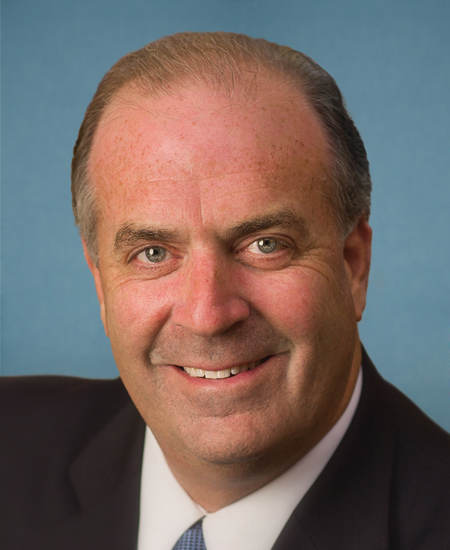
Rep. Daniel T. Kildee
Sponsored bills
Maddy summaryHR 3541, the Accounting STEM Pursuit Act of 2023, amends the Elementary and Secondary Education Act to include accounting education in school curricula. It requires schools to offer accounting career awareness and programs, particularly to students from groups underrepresented in accounting careers. The bill positions accounting as a STEM field and aims to expand student exposure to accounting through grade 12 courses. This change directly affects K-12 students and schools by integrating accounting into educational opportunities to diversify the future accounting workforce.
Maddy summaryThis bill establishes federal standards for labor-management cooperation between public safety employers (state and local governments) and public safety workers (law enforcement officers, firefighters, and emergency medical services personnel). It requires the Federal Labor Relations Authority to determine if states substantially provide rights like collective bargaining, union representation, and binding arbitration for these workers. States found lacking would need to follow federal bargaining procedures after a two-year transition period or following the next legislative session. The bill explicitly respects existing state laws that provide comparable or better rights to public safety workers. It also prohibits strikes or work stoppages that would disrupt emergency services.
Maddy summaryHR 3537 authorizes the minting of commemorative coins to mark the 100th anniversary of the U.S. Foreign Service, established by the 1924 Rogers Act. The bill specifies three coin types ($5 gold, $1 silver, and half-dollar clad) with limited mintage (50,000 gold, 400,000 silver, 750,000 half-dollars) to be issued in 2025, featuring designs honoring diplomatic history. A surcharge on each coin sale ($35 for gold, $10 for silver, $5 for half-dollars) will fund the Association for Diplomatic Studies and Training (ADST) to support its oral history program and diplomatic preservation efforts. The coins will be legal tender, sold at cost-plus-surcharge, with all revenue directed to ADST per the bill's provisions.
Cut Red Tape For Online Sales Act This bill modifies requirements for third party settlement organizations to eliminate their reporting requirement with respect to the transactions of their participating payees unless they have earned $5,000 or more. A third party settlement organization is the central organization that has the contractual obligation to make payments to participating payees (generally, a merchant or business) in a third party payment network. The bill also requires entities that report income to to issue a plain-language description of the taxability of income reported on Form 1099-K.
Maddy summaryHR 3409, the Healthy Families Act, requires most employers to provide employees with paid sick leave. Employees earn 1 hour of paid sick time for every 30 hours worked, up to a maximum of 56 hours per year, which can be used for their own illness, caring for family members, or addressing domestic violence, sexual assault, or stalking situations. Smaller employers with fewer than 15 employees can provide unpaid sick leave instead of paid leave. The bill includes protections against retaliation for using sick leave and requires employers to inform employees about their rights under this law.
National Law Enforcement Officers Remembrance, Support and Community Outreach Act This bill directs the Department of Justice (DOJ) to establish a National Law Enforcement Officers Remembrance, Support, and Community Outreach Program. The bill further directs DOJ to award a grant under the program to the National Law Enforcement Officers Memorial Fund for the expenses associated with community outreach, public education, and officer safety and wellness programs operated by the of the National Law Enforcement Officers Memorial Fund and National Law Enforcement Museum.
Maddy summaryThis bill expands the tax deduction available to educators by adding coaches and interscholastic sports administrators to the list of eligible professionals. Previously excluded from the deduction due to specific wording, these roles now qualify under the revised tax code language. The change modifies Section 62 of the Internal Revenue Code to include "interscholastic sports administrator or coach" as part of the deduction for instructional school personnel. It affects school staff directly by allowing them to deduct qualified education expenses on their federal tax returns starting in 2023. The bill does not create new programs but adjusts existing tax rules for eligible educators.
Maddy summaryThe Farm Operations Support Act maintains the minimum wage rate for H-2A agricultural workers at the level established in each state on December 1, 2022, through December 31, 2023. This directly affects agricultural employers who hire temporary foreign workers under the H-2A visa program and the workers themselves, by preventing the standard annual adjustment to the wage rate. The bill provides one-year stability in labor costs for employers without altering the underlying wage requirements.
Maddy summaryHR 3255, the Freight Rail Workforce Health and Safety Act, requires major freight railroads (Class I carriers) to provide employees with at least 7 days of paid sick leave annually. This includes leave for personal illness, family care, preventive medical visits, and situations related to domestic violence, sexual assault, or stalking. Employees can carry over unused days to the next year, and railroads cannot require workers to find replacements before taking leave or penalize them for using it. The law prohibits retaliation, such as termination or demotion, for requesting or using sick leave, and ensures paid sick leave is separate from existing vacation or holiday time.