

Uyghur Genocide Intelligence Review Act This bill requires all elements of the U.S. intelligence community to ensure timely and effective intelligence collection relating to the Uyghur genocide. (The Uyghurs are a predominantly Muslim ethnic minority group living primarily in the Xinjiang Uyghur Autonomous Region in China. In 2021, the Department of State determined that China had committed genocide against the Uyghurs and other ethnic and religious minority groups in Xinjiang.) The bill also requires the Office of the Director of National Intelligence to submit an annual report to Congress on the Uyghur genocide. This report must include information related to topics such as forced sterilization, forced abortion, torture, surveillance, forced labor, and work conditions of Uyghurs.
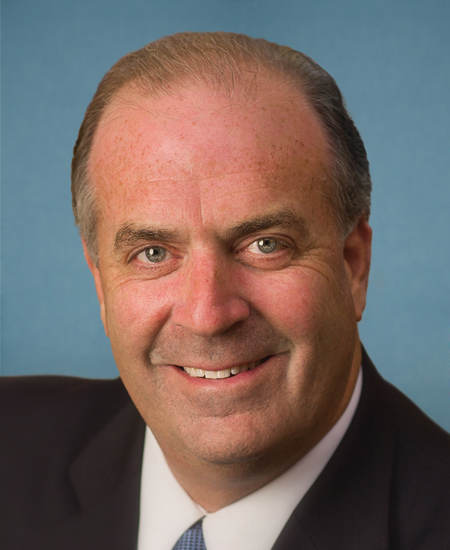
Rep. Daniel T. Kildee
Sponsored bills
Maddy summaryHR 698, the Assault Weapons Ban of 2023, prohibits the sale, manufacture, transfer, and possession of specific firearms and ammunition devices commonly referred to as "assault weapons" and "large capacity magazines" in interstate commerce. The bill defines "semiautomatic assault weapons" to include rifles like AR-15s and AK-47s, as well as firearms with specific features such as folding stocks, pistol grips, threaded barrels, and detachable magazines holding more than 15 rounds. It exempts law enforcement, military, antique firearms, and weapons already lawfully owned before the law's enactment (known as "grandfathered" weapons). The bill also requires new identification markings on these weapons and large capacity magazines, and adds background check requirements for transfers of grandfathered weapons.
Maddy summaryThis bill modifies tax rules for certain tax-exempt bonds used by agricultural and manufacturing businesses. It expands the definition of "manufacturing facility" to include production of intangible property (like software) and functionally related on-site facilities, while increasing the dollar limit for individual projects from $10 million to $30 million. The total annual bond limit per business rises from $40 million to $120 million, and the cap for first-time farmers increases from $450,000 to $1 million. These changes apply to bonds issued after the bill's enactment, with annual inflation adjustments added to all dollar amounts. The bill directly affects small and medium agricultural and manufacturing businesses seeking tax-exempt financing for facility investments.
Maddy summaryThis bill creates a new tax credit for expenses related to "qualified access technology for the blind" under the Internal Revenue Code. It allows taxpayers to claim a credit of up to $2,000 per year (adjusted for inflation) for costs paid for hardware, software, or IT that converts visual information into formats usable by blind individuals, covering the taxpayer, their spouse, or a dependent who is blind. The credit is limited to $2,000 over any three consecutive tax years per blind individual and expires after 2028. It directly affects blind individuals and their families who purchase qualifying assistive technology. The credit cannot be claimed for expenses already covered by other tax deductions or credits.
Maddy summaryHJRES 39 is a joint resolution disapproving a specific rule issued by the Department of Commerce. The rule (87 Fed. Reg. 56868) outlined procedures for suspending import duties and estimated duties under Presidential Proclamation 10414, which related to certain imported goods. This resolution blocks the rule from taking effect, meaning the Department of Commerce’s procedures for suspending duties under that proclamation will not be enforced. The action directly affects importers and customs operations that would have relied on the suspended duty procedures. As a disapproval resolution, it does not create new policy but formally rejects an existing agency rule.
Maddy summaryHRES 439 is a non-binding resolution expressing the House of Representatives' support for keeping the U.S. Postal Service (USPS) as an independent federal agency, not subject to privatization. It highlights USPS's constitutional role, self-sustaining nature (relying on service revenue, not taxpayer funds), and its importance to rural communities, e-commerce, and over 600,000 employees. The resolution urges Congress to take action to preserve USPS's independence, emphasizing that privatization could raise prices, reduce services, and harm the nation's mail infrastructure. As a procedural resolution, it does not change law but formally states the House's position.
Simplify Automatic Filing Extensions Act or the SAFE Act This bill eliminates the penalty for failure to pay income tax for individual taxpayers who timely pay 125% of their income tax liability for the immediately preceding taxable year.
Maddy summaryHRES 425 is a non-binding House resolution designating July 19, 2023, as "Glioblastoma Awareness Day" to increase public recognition of glioblastoma, an aggressive brain cancer. It directly supports patients, caregivers, and families affected by the disease, which has a low 5-year survival rate (6.9%) and no effective screening methods. The resolution encourages greater public awareness, honors those impacted by the disease, and urges continued research investments, including through the Glioblastoma Therapeutics Network. It does not create new laws or alter funding but serves as a symbolic statement to advance understanding and support for glioblastoma research.
Maddy summaryHR 3523, the Perinatal Workforce Act, provides $15 million annually from 2024 to 2028 to expand and diversify maternity care providers. It directs HHS to issue guidance for states on recruiting diverse providers (including midwives, nurses, and community health workers) and requires grant recipients to prioritize students from racial/ethnic minority groups, implement bias training, and target health professional shortage areas. The bill also mandates annual reporting on workforce diversity and outcomes, and requires a GAO report assessing barriers to equitable access in maternal healthcare. This legislation directly affects hospitals, nursing schools, midwifery programs, and insurers by funding targeted workforce development to address racial disparities in maternal care.
Maddy summary# Comprehensive Summary: Maternal Health and Vaccination Legislation This proposed legislation establishes a comprehensive framework to improve maternal health outcomes across multiple dimensions, with a strong focus on equity and addressing systemic disparities. The bill is organized into 13 titles covering various aspects of maternal health care. ## Key Focus Areas 1. **Maternal Health Equity**: The legislation emphasizes reducing racial and ethnic disparities in maternal health outcomes, with specific provisions targeting communities of color and underserved populations. 2. **Incarcerated Mothers**: Includes provisions to end shackling of pregnant individuals in correctional facilities and establishes programs for maternal health care in prisons and jails. 3. **Technology and Telehealth**: Creates grant programs for telehealth models, technology-enabled collaborative learning, and digital tools to improve access to maternal care. 4. **Climate Change Impact**: Addresses how climate change affects maternal and infant health, with a focus on vulnerable populations. 5. **Public Health Emergencies**: Establishes protocols for maternal care during public health crises like pandemics. 6. **Vaccinations**: Expands maternal vaccination awareness and equity campaigns. ## Major Provisions **Maternal Vaccination Campaign (Title XIII)**: - Expands awareness campaigns to specifically target pregnant and postpartum individuals - Allocates $17 million annually (2024-2028) for vaccination outreach - Includes specific efforts to increase vaccination rates among racial/ethnic minority groups **Technology and Telehealth (Titles IX)**: - $6 million annually for technology-enabled collaborative learning models - $6 million annually for digital tools to promote equity in maternal health - Creates a demonstration project for alternative payment models in maternal care **Climate Change and Maternal Health (Title XII)**: - $100 million for a grant program to protect vulnerable mothers and babies from climate change risks - $5 million for education and training at health profession schools - Establishes a National Institutes of Health Consortium on Birth and Climate Change Research **Incarcerated Mothers (Title VIII)**: - Requires 25% grant reduction for states that don't restrict restraints on pregnant incarcerated individuals - Establishes model programs in Bureau of Prisons facilities for pregnant and postpartum incarcerated individuals - $10 million annually for State and local prison and jail programs **Public Health Emergency Response (Title XI)**: - $100 million for data collection on maternal health during public health emergencies - $30 million for expanding maternal mortality reviews - $45 million for Pregnancy Risk Assessment Monitoring System (PRAMS) - $15 million for research on public health emergencies' impact on maternal health ## Cross-Cutting Themes - **Equity Focus**: Nearly every provision includes specific measures to address racial and ethnic disparities - **Data Collection**: Strong emphasis on collecting and analyzing demographic data - **Community Involvement**: Requires input from community-based organizations and affected populations - **Interagency Coordination**: Mandates collaboration between multiple federal agencies - **Long-Term Investment**: All funding is allocated for 5-year periods (2024-2028) The legislation represents a comprehensive, multi-faceted approach to improving maternal health outcomes in the United States, with particular attention to vulnerable populations and systemic barriers that contribute to poor maternal health outcomes.