

Maddy summaryThe Refuge System Protection Act of 2023 allows the U.S. Fish and Wildlife Service to seek legal action against individuals or entities that damage protected resources within national wildlife refuges, fish hatcheries, or other U.S. Fish and Wildlife Service-managed lands. It authorizes the Attorney General to sue for "response costs" (like cleanup) and "damages" (such as replacement costs for destroyed resources), but only if claims exceed $5,000. Recovered funds must be returned to the specific refuge unit where the damage occurred to cover restoration, cleanup, or monitoring. The bill also permits accepting donations to cover immediate response costs and clarifies that liability under this law supplements, but does not replace, existing federal or state laws.
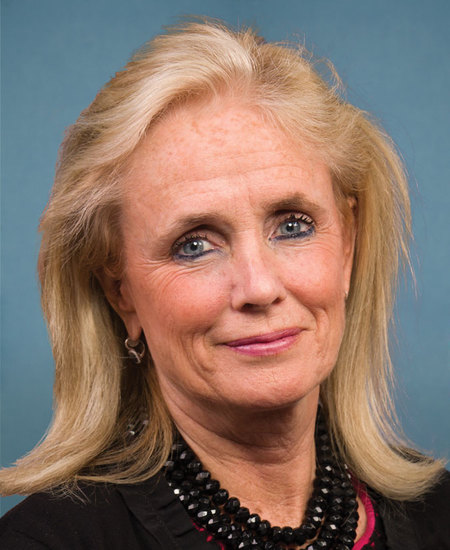
Rep. Debbie Dingell
Sponsored bills
Maddy summaryHR 6519, the "No PFAS in Cosmetics Act," prohibits the intentional addition of perfluoroalkyl or polyfluoroalkyl substances (PFAS) to cosmetics sold in the United States. It directly affects cosmetic manufacturers and suppliers who currently use PFAS for functional properties like water resistance. The bill amends the Federal Food, Drug, and Cosmetic Act to make cosmetics containing intentionally added PFAS "adulterated" and illegal to sell, effective January 1, 2025. It also repeals a prior provision from the Modernization of Cosmetics Regulation Act of 2022 that had addressed PFAS. This is a substantive regulatory change targeting product ingredients, not a procedural measure.
Maddy summaryThis bill reauthorizes the Never Again Education program, which funds Holocaust education initiatives in schools. It extends the program's funding authorization period from ending after four fiscal years to continuing annually through fiscal year 2030. The bill modifies the existing law (Public Law 116-141) by updating the funding timeline without changing program requirements or eligibility. It directly affects the existing grant program supporting educational materials and teacher training on the Holocaust. The change ensures continued federal funding for these specific educational efforts until 2030.
Maddy summaryThis bill directs the Department of Labor to commission the National Academies to study how to measure automation's impact on jobs, including job creation, displacement, and shifting skills needs. It also requires establishing an advisory board with diverse stakeholders (labor, industry, academia) to recommend data sources and strategies for addressing automation's workforce effects. The study must be completed within 2 years, followed by a Bureau of Labor Statistics implementation plan within 1 year. The bill aims to improve data collection and policy responses to automation, focusing on worker demographics and economic consequences.
Maddy summaryHRES 874 is a symbolic resolution expressing the House's support for designating November as "Prematurity Awareness Month." It does not create new laws or alter funding but urges the public, organizations, and communities to observe the month through events, promote awareness, and support preterm birth prevention programs. The resolution highlights statistics on preterm births (383,000 babies born preterm in 2021) and health disparities, but its sole action is endorsing the awareness designation. As a non-binding resolution, it has no direct impact on policy or affected individuals beyond raising public visibility.
Maddy summaryHRES 793 is a resolution passed by the U.S. House of Representatives calling on Hamas to immediately release all 199 hostages taken during Hamas' October 7, 2023 attack on Israel. The resolution condemns Hamas for the attack, the taking of hostages, and threats against hostages, while stating that holding hostages violates international humanitarian law under the Geneva Conventions. It demands the immediate release of all hostages and expresses sympathy for victims and their families. As a symbolic resolution, it does not create legal obligations but formally expresses the House's position.
Maddy summaryThis bill clarifies that veterans can be reimbursed for emergency care copayments (a fixed amount paid by the veteran) only if the amount is under $100, excluding deductibles or coinsurance. It directly affects veterans who received emergency treatment at non-VA facilities while having private health insurance, particularly those whose reimbursement claims were denied or partially denied. The key provision modifies existing rules to explicitly define "copayment" and set the $100 reimbursement threshold for such claims. The change applies retroactively to claims submitted since February 2010, including those from the Wolfe v. McDonough case. This is a clarification of current reimbursement rules, not a new benefit.
Maddy summaryHR 6468, the Ban Water Beads Act, bans specific water beads products from sale after 180 days of enactment. It defines banned products as those made of water-absorbing polymers (like polyacrylamides), sold with beads small enough to fit in a child's mouth, and marketed as toys, educational materials, or art supplies. These products would be classified as "banned hazardous products" under the Consumer Product Safety Act, prohibiting their manufacture, import, or sale. The law directly affects manufacturers, importers, and retailers of such water beads products intended for children's use.
Maddy summaryHR 6451, the Mental Health Justice Act of 2023, provides $250 million in federal grants to states, tribes, and localities to hire mental health professionals as first responders for specific emergencies. It directs these professionals to replace police in situations involving mental health crises, substance use, or intellectual/developmental disabilities - such as when a 911 caller describes a mental health emergency or a first responder identifies someone needing mental health support. The bill requires grantees to train responders in de-escalation techniques, link individuals to community-based services (not incarceration), and report on outcomes like reduced arrests or use of force. It also mandates data collection on demographics and prevents funneling people into institutional settings, with annual reports to Congress on program effectiveness.
Maddy summaryHRES 881 is a symbolic House resolution commemorating the 50th anniversary of the Endangered Species Act of 1973. It honors the Act's role in preventing the extinction of species like the bald eagle and humpback whale, citing its success in protecting 99% of listed species. The resolution does not create new legal requirements or affect any specific group, as it serves solely as a ceremonial recognition of the Act's conservation achievements.