

Maddy summaryHRES 972 is a non-binding resolution expressing the U.S. House of Representatives' support for designating January 2024 as "National Stalking Awareness Month." It does not create new laws but aims to raise public awareness about stalking, which affects approximately 1 in 3 women and 1 in 6 men in the U.S. The resolution encourages government agencies, schools, and private organizations to promote awareness and support victim services. It specifically urges policymakers and community groups to improve responses to stalking and highlight its prevalence, including technology-facilitated stalking affecting 80% of victims.
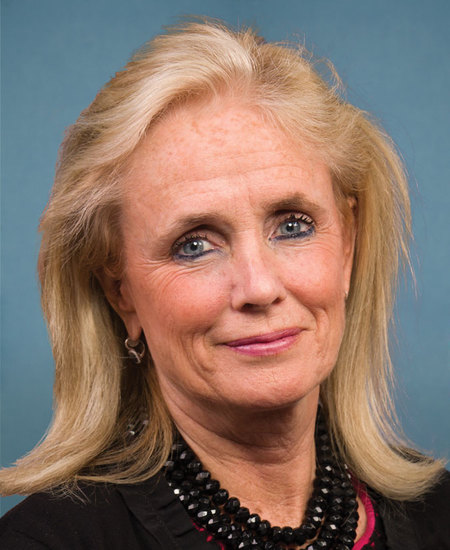
Rep. Debbie Dingell
Sponsored bills
Maddy summaryThe Stronger Communities through Better Transit Act establishes a new federal grant program to improve public transportation service. It provides funding to urban areas, states, and Indian tribes to cover up to 50% of public transit operating costs (up to 80% in persistent poverty areas and 100% for Indian tribes), with requirements to report on service frequency, access to jobs, and conduct community surveys. The program mandates that a majority of funds must benefit underserved communities and areas of persistent poverty, defined as census tracts with high poverty rates or minority populations. Recipients must maintain their transit funding levels and report on improvements in access to essential services. The bill authorizes $20 billion annually for fiscal years 2024-2027.
Maddy summaryHR 3925 establishes a federal grant program to fund youth fishing projects in coastal and Great Lakes areas. The bill authorizes $2 million annually (2024-2028) for grants to eligible entities like nonprofits, schools, state/local governments, or Tribal organizations to cover equipment, transportation, licenses, and educational components for youth. Priority is given to projects serving underserved communities, defined as groups facing systemic barriers due to race, disability, poverty, or inequality. Recipients must report annually on grant usage and participant numbers to Congress.
Maddy summaryThis bill restores visa eligibility for immigrants who had diversity visas allocated for fiscal years 2017-2022 but were denied entry due to specific travel restrictions (like Executive Orders 13769/13780 or related proclamations) or pandemic-related delays. The State Department must notify affected individuals within 90 days of the bill’s enactment, giving them one year to confirm they wish to proceed with their visa applications. Unused visas from those years can be reallocated without counting against current annual limits, and applicants who fail to respond or are denied for standard reasons (like education requirements) lose eligibility. The policy directly affects individuals impacted by these specific past barriers to immigration.
Maddy summaryHR 6986 limits patent holders from asserting multiple patents in infringement lawsuits against companies developing generic drugs or biosimilars. Specifically, it allows only one patent per "Patent Group" (commonly owned patents related through certain legal filings) to be claimed against such companies in a single lawsuit. This directly affects drug/biosimilar manufacturers submitting applications under FDA approval pathways (21 U.S.C. 355 or 42 U.S.C. 262) or selling approved versions of these products. The rule applies to new applications filed after the bill's enactment, aiming to reduce complex patent litigation tactics.
Maddy summaryThe Affordable Connectivity Program Extension Act of 2024 allocates $7 billion in funding for the Affordable Connectivity Program (ACP) during fiscal year 2024. The ACP provides subsidies to low-income households to help cover the cost of internet service and connected devices like laptops or tablets. This funding ensures the program can continue supporting eligible households throughout the year, with the money remaining available until fully spent. The bill extends existing program funding without changing eligibility criteria or service requirements.
Maddy summaryHRES 953 is a formal resolution congratulating the University of Michigan Wolverines football team for winning the 2024 NCAA Division I College Football Playoff National Championship. It specifically recognizes their undefeated 15-0 season, 12th national title in school history, and three-peat Big Ten Conference championship. The resolution directs the House to invite the team to the U.S. Capitol for an honor and sends copies to university leadership (President, Athletic Director, and Head Coach) for display. This is a ceremonial resolution with no policy changes or direct impact beyond expressing congressional recognition.
Maddy summaryThe PFAS Action Act of 2023 establishes federal regulations to address PFAS contamination across multiple environmental and health domains. It requires the EPA to designate specific PFAS (like PFOA and PFOS) as hazardous substances, set drinking water standards for PFAS, and mandate testing and reporting by manufacturers. The bill provides $500 million for community water systems to install PFAS treatment systems, $100 million for school water testing and filtration, and creates a website to help homeowners test well water. It also establishes labeling requirements for PFAS-free products and mandates better public communication about PFAS risks.
Maddy summaryThis bill increases funding for cancer research by directing an additional 25% of the 2022 National Cancer Institute (NCI) budget annually through 2028. It also requires the Health and Human Services Secretary to study the causes of cancer drug shortages - including supply chain issues, FDA approval delays, and lack of generic drugs - and submit a report with solutions to Congress within one year. The key provisions directly affect NCI-funded research programs and aim to improve cancer drug availability for patients and healthcare providers. The bill focuses on concrete policy changes: boosting research funding and mandating a systematic review of drug shortages, without advocating for specific outcomes.
Maddy summaryThis bill requires the Environmental Protection Agency (EPA) to list all perfluoroalkyl and polyfluoroalkyl substances (PFAS) with at least one fully fluorinated carbon atom as hazardous air pollutants under the Clean Air Act within 180 days of enactment. It directly affects industries that produce or use PFAS, such as manufacturers of non-stick coatings, firefighting foams, and textiles. The EPA must then revise source categories for these pollutants within 365 days, specifying which facilities (like factories or industrial sites) are subject to emission controls. This creates a regulatory framework for monitoring and reducing PFAS releases into the air.