

Maddy summaryHR 9337, the "Don’t STEAL Act," requires employers to pay employees the full wage rate specified in their employment contracts (including collective bargaining agreements) if it exceeds the minimum rate under the Fair Labor Standards Act (FLSA). This directly affects workers engaged in commerce or production for commerce, ensuring they receive agreed-upon higher wages. The bill adds criminal penalties for willful wage theft, including fines and up to 5 years in prison for violations exceeding $1,000, with penalties based on severity and business size. It also directs fines collected from violations to fund the Department of Labor’s Wage and Hour Division enforcement efforts. The law applies to unpaid wages or overtime violations occurring 90 days after enactment.
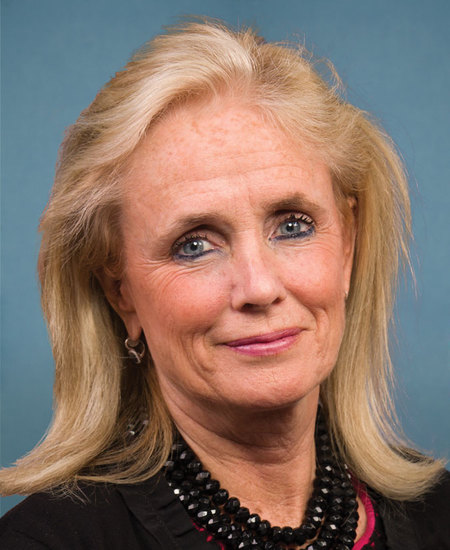
Rep. Debbie Dingell
Sponsored bills
Maddy summaryHR 9274, the SHAWL Act, establishes two new Smithsonian museums: the National Museum of the American Latino and the American Women’s History Museum. It authorizes both museums to be located within the National Mall’s "Reserve" area, overriding prior restrictions, and requires federal agencies managing potential sites to transfer jurisdiction to the Smithsonian after notifying congressional committees. The bill mandates that both museums accurately represent diverse cultures, histories, and viewpoints within Latino and women’s communities through exhibits and programs, requiring input from a broad range of community experts. It also requires the Smithsonian to submit biennial reports to Congress detailing compliance with these representation requirements.
Maddy summaryThe NO BAN Act (HR 9244) prohibits U.S. immigration authorities from denying visas or entry based on national origin, religion, or sex. It amends immigration law to explicitly ban such discrimination in visa decisions and tightens restrictions on the president’s power to suspend entry of certain groups under Section 212(f). The bill requires specific evidence, narrow tailoring, time limits, and congressional notification for any entry restriction, while mandating public reports on visa denials and waivers. It directly affects nonimmigrant visa applicants (e.g., students, workers) and federal agencies administering immigration policy.
Maddy summaryThe Sustaining America's Fisheries for the Future Act of 2024 aims to improve the long-term health of U.S. fisheries by addressing climate change impacts, supporting fishing communities, and modernizing management practices. The bill requires federal agencies to incorporate climate science into fishery management decisions and mandates regular vulnerability assessments of fish stocks to environmental changes. It establishes new grant programs to help coastal communities preserve working waterfronts and improve data collection systems through electronic monitoring technologies. The legislation also strengthens transparency by requiring more detailed reporting on fishery management council activities and expanding tribal representation on regional councils. Additionally, the bill creates a standardized national program to track and reduce bycatch across all fisheries while updating international fisheries management agreements.
Maddy summary# Summary of Proposed Workplace Discrimination and Harassment Prevention Bill This comprehensive legislative proposal aims to strengthen protections against workplace discrimination and harassment through multiple interconnected provisions: 1. **Expanded Protections**: Broadens coverage to include sexual orientation, gender identity, and other protected categories in workplace discrimination laws. 2. **Nondisclosure Agreement Restrictions**: Prohibits employers from requiring nondisclosure or nondisparagement clauses that would prevent workers from reporting harassment or discrimination, with limited exceptions for settlement agreements meeting specific requirements. 3. **Arbitration Prohibition**: Bans mandatory pre-dispute arbitration agreements for work-related disputes and imposes strict requirements for post-dispute agreements. 4. **Federal Contractor Requirements**: Mandates that federal contractors disclose labor and civil rights violations from the previous three years and requires corrective actions for violations. 5. **Grant Programs**: - National grants to prevent and address workplace discrimination through education, outreach, and complaint assistance - Grants for legal assistance to low-income workers facing employment discrimination - State-level advocacy systems with funding allotments to support worker rights protection 6. **Enforcement Mechanisms**: Establishes clear enforcement procedures, with the Equal Employment Opportunity Commission (EEOC) having authority to enforce these provisions with powers similar to those under existing civil rights laws. The bill also includes definitions, implementation details, and provisions for state and federal coordination to create a comprehensive system for preventing and addressing workplace discrimination and harassment across all sectors of employment.
Maddy summaryThis bill makes it a federal crime to steal packages that have been delivered by private carriers (like FedEx or UPS) but not yet received by the recipient. It directly affects package recipients, carriers, and thieves who target unclaimed deliveries left on porches or in mailboxes. The key provision amends federal law to include these delivered-but-unclaimed packages under the same legal protections as mail in transit. This changes the law to treat stolen packages at the delivery stage as a federal offense, similar to theft of postal mail. The bill does not create new penalties but expands existing theft statutes to cover this specific scenario.
Maddy summaryHR 9196, the Pregnancy Empowerment Act of 2024, prohibits states from delaying or denying divorce petitions solely because a person is pregnant. This directly affects pregnant individuals - particularly women of color and those experiencing intimate partner violence - who face barriers to finalizing divorces during pregnancy, trapping them in abusive relationships. The bill mandates that states cannot consider pregnancy status when processing divorce filings, addressing findings that such delays increase risks of violence and reproductive coercion. It aims to remove legal obstacles that prevent pregnant people from accessing divorce, a critical step for safety and autonomy.
Maddy summaryHRES 1387 is a non-binding resolution recognizing the 34th anniversary of the Americans with Disabilities Act (ADA) and highlighting ongoing challenges faced by people with disabilities, including high poverty rates (nearly 25% below the poverty line), workplace barriers, and inaccessible services. It calls on 11 federal agencies - including the Departments of Labor, Health and Human Services, and Transportation - to take specific actions to improve employment opportunities, accessibility, and community inclusion. The resolution does not create new laws or funding but urges agencies to develop policies and provide resources to support economic self-sufficiency and full participation. It emphasizes the ADA as a foundation for further progress, not a complete solution.
Maddy summaryHRES 1386 is a non-binding House resolution expressing the House's condemnation of Project 2025. It states that if enacted, Project 2025 would threaten healthcare access (including ending protections for pre-existing conditions and banning Medicare drug negotiations), restrict abortion and fertility services, cut education funding, raise costs for working families, and give tax breaks to wealthy corporations. The resolution specifically lists these potential impacts as reasons for the House to "condemn in the strongest terms" Project 2025. As a resolution, it does not create new law but formally expresses the House's position on this policy proposal.
Maddy summaryHR 9168, the Plug Offshore Wells Act, requires the U.S. Department of the Interior to issue annual reports starting two years after the law's enactment. These reports must detail the number of decommissioning applications received, wells/platforms not decommissioned on time, approvals for decommissioning in place, pipeline removal status, and enforcement actions related to offshore oil and gas operations. The reports will be submitted to Congress and made publicly available online. This bill directly affects the Department of the Interior's reporting obligations and provides transparency on offshore decommissioning compliance.