

Maddy summaryHRES 1436 is a symbolic resolution (not a law) introduced in the U.S. House of Representatives. It recognizes suicide as a preventable public health crisis by citing statistics from the CDC, VA, and SAMHSA showing rising suicide rates across age groups, including veterans and adolescents. The resolution formally supports designating September as "National Suicide Prevention Month" and September 10, 2024, as "World Suicide Prevention Day." It does not create new policies, allocate funding, or directly affect any individuals - its purpose is solely to express congressional support for suicide prevention awareness and efforts.
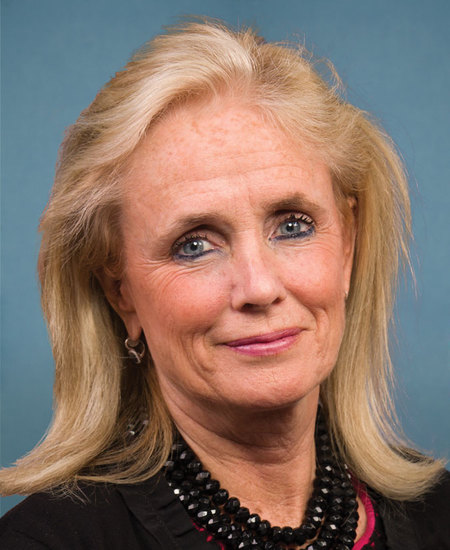
Rep. Debbie Dingell
Sponsored bills
Maddy summaryHR 9529, the SAFER Nursing Homes Act of 2024 (despite its title referencing "Sustained Allocations" in the text), provides mandatory funding for inspections of nursing facilities participating in Medicare and Medicaid. It allocates $492 million for fiscal year 2025 specifically to support surveys and certifications of skilled nursing facilities and nursing facilities under federal programs. This funding directly affects Medicare/Medicaid-certified nursing homes by ensuring resources for required regulatory oversight. The bill does not create new rules but secures financial support for existing inspection processes, with future funding determined annually by the Health and Human Services Secretary.
Maddy summaryHR 8836 establishes a grant program to fund projects improving habitat connectivity for migratory wildlife, particularly big game species like deer, elk, and pronghorn. It provides up to 90% federal funding for initiatives such as wildlife crossings, fence modifications, habitat restoration, and coordination with landowners, administered through the National Fish and Wildlife Foundation. Eligible recipients include state and tribal wildlife agencies, landowners, nonprofits, and transportation departments. The bill explicitly prohibits requiring changes to agriculture, mining, or existing land uses and preserves state/Tribal authority over wildlife management.
Maddy summaryHRES 1429 is a non-binding House resolution that congratulates Michigan athletes who competed in the 2024 Paris Olympics and Paralympics. It specifically honors 20 athletes, including basketball player Devin Booker and track and field athlete Grant Fisher, by naming them in the resolution. The resolution does not create new laws or policies but serves as a symbolic gesture recognizing their achievements and the values of the Olympic movement.
Maddy summaryHR 8312, the Combat Veterans Pre-Enrollment Act of 2024, creates a 3-year pilot program allowing eligible combat veterans to pre-enroll in the VA healthcare system before separating from active duty. It directly affects service members who would qualify for VA healthcare upon separation and meet specific combat-related service criteria under existing law. The bill establishes a mechanism during the 180 days before separation, requiring coordination between VA, Defense, and Homeland Security to facilitate pre-enrollment. The program includes reporting requirements for participation rates, demographics, and a GAO evaluation of effectiveness after the pilot ends in 2027.
Maddy summaryHRES 1422 is a resolution recognizing the 60th anniversary of the Wilderness Act (enacted in 1964), which established the National Wilderness Preservation System. The resolution commends advocates for the Act, acknowledges wilderness areas' role in protecting over 112 million acres of public lands, and highlights their benefits for recreation, clean water, wildlife habitat, and climate resilience. It specifically emphasizes the importance of including Tribal governments in wilderness designation and management. As a commemorative resolution, it does not create new laws or directly affect any group.
Maddy summaryThe PROTOCOL Act (HR 9450) improves transparency in federal broadband funding by requiring the FCC and NTIA to enhance their public databases. It adds detailed filtering options to the FCC's broadband map, allowing users to search by entity type (e.g., tribal entities, nonprofits, private companies), funding amounts, project timelines, and minimum service speeds. The bill also mandates states to submit annual reports on broadband deployment locations using federal and state funds, and requires all federal agencies awarding broadband grants to use the FCC map when making funding decisions. This directly affects federal agencies, states, and broadband providers receiving federal support, making project data more accessible for public oversight.
Maddy summaryHR 8199, the *Increasing Nutrition Access for Seniors Act of 2024*, would make it easier for seniors and disabled individuals in SNAP (food stamp) households to qualify for benefits. It expands certification periods to 36 months for households without earned income and creates a new standard medical deduction: states can automatically deduct $155 monthly (adjusted yearly for inflation) from income for seniors/disabled members who report over $35 in monthly medical expenses. States may also set higher deductions if they provide evidence of higher average medical costs in their area. These changes apply to new certification periods starting 180 days after enactment.
Maddy summaryThis resolution symbolically designates March 2024 as Endometriosis Awareness Month to highlight a condition affecting approximately 1 in 10 women of reproductive age. It encourages public awareness and education about endometriosis, which causes chronic pain, long diagnosis delays (3-11 years), and significant healthcare costs ($13,000+ annually per patient). The resolution has no funding or policy changes; it is purely a symbolic gesture urging the public to observe the month through educational activities and recognizing the need for more research and culturally competent care. It directly affects women living with endometriosis and their healthcare experiences.
Maddy summaryThe HOPE Act of 2024 would establish HOPE Accounts, tax-advantaged savings accounts for paying qualified medical expenses. These accounts would allow individuals to save for medical costs with tax-free growth and distributions, with contribution limits of up to $4,000 per month for self-only coverage or $8,000 for family coverage. To qualify, individuals must have minimum essential health coverage and cannot have other health savings accounts like HSAs or FSAs. Contributions are generally not deductible but may be excluded from gross income for lower-income individuals, and distributions for qualified medical expenses would be tax-free. The bill also includes rules for employer contributions and coordination with existing health savings mechanisms.