

Maddy summaryThe Half-Century Update for Water Access and Affordability Act establishes a federal program to provide financial assistance to low-income households struggling to pay water bills. It requires states and water utilities to implement programs that offer direct bill discounts, debt relief, water efficiency upgrades, and crisis assistance to households earning up to 200% of the poverty level or 80% of local median income. The bill prohibits disconnections for non-payment, allows automatic enrollment for households already receiving other federal assistance, and mandates data collection to track program impacts on water service access. The legislation authorizes $20 billion annually from 2025-2035 to fund this assistance, with specific requirements to ensure universal access and prevent discrimination in program implementation.
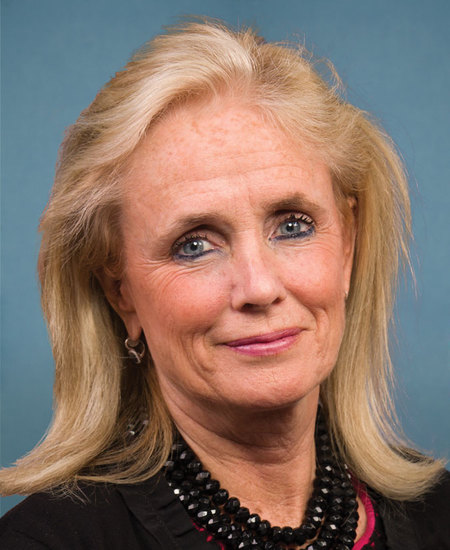
Rep. Debbie Dingell
Sponsored bills
Maddy summaryHCONRES 132 is a symbolic resolution designating the week of November 11-17, 2024, as "National Caregiving Youth Week." It directly affects children and adolescents under 18 who serve as primary or secondary caregivers for family members with health conditions, chronic illnesses, disabilities, or aging needs. The resolution supports raising public awareness about this underserved population (estimated at over 5 million nationwide), encourages recognition by educators and policymakers, and calls for updated federal research on their needs. As a non-binding resolution, it does not create new laws but aims to highlight challenges these youth face balancing caregiving with education and well-being.
Maddy summaryHRES 1566 is a symbolic House resolution honoring all U.S. veterans on Veterans Day 2024. It recognizes the service and sacrifice of the estimated 15.8 million veterans living in the U.S. as of 2023, including those who served in conflicts from World War II to post-9/11. The resolution calls on the American public to observe Veterans Day to acknowledge veterans' role in preserving national freedom. As a non-binding resolution, it has no direct policy impact but formally expresses congressional recognition of veterans' contributions.
Maddy summaryThis resolution (HRES 1558) is a symbolic House of Representatives measure supporting October as "National Domestic Violence Awareness Month." It does not create new laws or allocate funding but formally expresses the House's support for raising awareness about domestic violence and its impacts, and urges continued backing for existing programs that address domestic violence. The resolution cites statistics on domestic violence prevalence (e.g., 24 people per minute affected by intimate partner violence) to underscore the importance of the observance. It directly affects public awareness efforts but does not change policies or directly impact individuals.
Maddy summaryHR 10099 would establish the first national domestic violence prevention action plan for the United States, creating a federal steering committee of agency officials to coordinate prevention efforts across government levels. The plan must include specific goals for primary, secondary, and tertiary prevention strategies, a $25 million public awareness media campaign, and requirements for data collection and evaluation. It would directly affect federal agencies, state domestic violence coalitions, and community organizations working on prevention, addressing the current lack of a coordinated national plan which the U.S. lacks compared to other countries like Canada and the UK. The bill requires the plan to address disproportionate impacts on marginalized communities and be based on evidence-based prevention strategies.
Maddy summaryThis bill modifies how disability benefits are treated for homeless disabled veterans seeking housing assistance. It excludes certain disability payments (under Chapter 11 or 15 of Title 38, U.S. Code) from income calculations when determining eligibility for HUD-assisted housing programs, including the supported housing program under Section 8(o)(19) and housing on Department property. Specifically, it ensures these benefits are not counted toward income for housing eligibility, though they still count for "adjusted income" definitions. The bill directly affects disabled veterans applying for HUD housing assistance who receive these specific disability benefits. It makes a concrete change to income calculation rules without altering benefit amounts or creating new funding.
Maddy summaryThe COAST Act amends a 1946 flood control law to increase annual funding for emergency shoreline protection from $25 million to $45.5 million. It expands the types of infrastructure protected to include public recreational assets, public lands, and parks, while maintaining coverage for highways, bridges, historical lighthouses, schools, hospitals, and nonprofit services. The bill directly affects communities vulnerable to coastal erosion by enabling faster repairs to critical infrastructure during emergencies. Key changes are limited to the funding amount and the updated list of protected assets under the existing emergency protection program.
Maddy summaryThis bill expands Medicaid coverage for low-income individuals diagnosed with breast or cervical cancer. It requires Medicaid programs to cover breast reconstruction surgery after a medically necessary mastectomy, adding this as a mandatory benefit under existing Medicaid rules. The bill also modifies eligibility criteria to ensure coverage for these specific cancer patients, aligning with prior Medicaid provisions. These changes apply to all states administering Medicaid, directly affecting eligible patients seeking cancer treatment and recovery services.
Maddy summaryHRES 1548 is a non-binding resolution supporting the designation of October 2024 as "National Learning Disabilities Awareness Month." It highlights that specific learning disabilities affect 34% of students receiving special education services and notes significant academic challenges, with over 95% of affected 4th and 8th graders not proficient in reading or math in 2022. The resolution calls on schools to continue providing appropriate support for students with learning disabilities but does not create new laws or funding. It aims to raise public awareness about learning disabilities, not to change educational policies.
Maddy summaryThe VA Employee Fairness Act of 2024 modifies collective bargaining rules for employees of the Veterans Health Administration (VHA). It removes existing subsections (b), (c), and (d) from the law governing VHA employee bargaining and renumbers the remaining provision. This change streamlines the collective bargaining framework but does not alter the Secretary of Veterans Affairs' existing authorities over incentive pay and expedited hiring. The bill directly affects VHA employees by changing how their collective bargaining rights are structured under federal law. The law remains neutral, focusing solely on procedural adjustments to the existing bargaining framework.