

Maddy summaryHR 3284, the Providers and Payers COMPETE Act, requires the Health and Human Services Secretary to annually report starting in 2026 on how Medicare regulations (for Parts B, C, and D) affect consolidation among healthcare providers and insurers. It also mandates that beginning in 2025, the Secretary must seek public comment on the potential consolidation impacts of proposed Medicare rules. The bill further modifies Medicare's innovation model testing to require evaluation of how such models affect provider and payer consolidation, including hospital mergers and pharmacy chain integrations. These provisions aim to increase transparency around consolidation trends in Medicare programs without altering existing payment structures.
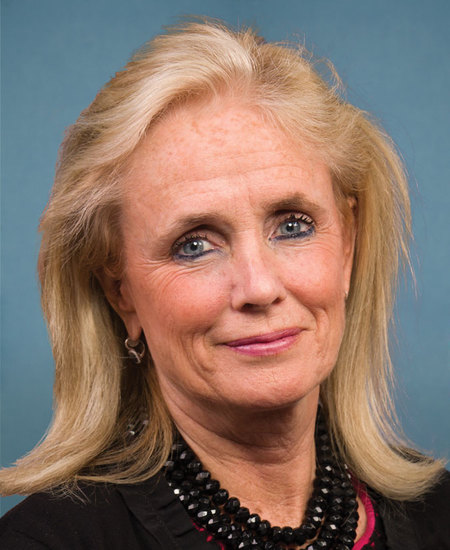
Rep. Debbie Dingell
Sponsored bills
Maddy summaryThe Jeanette Acosta Invest in Women’s Health Act of 2024 would expand access to preventive cancer screenings (including breast, cervical, ovarian, and uterine cancer screenings) for women, with a focus on low-income women, women of color, rural communities, and underserved populations. It authorizes $20 million annually for grants to health care providers - such as family planning centers - to increase screenings and establishes a training program for health care providers on best practices and cultural competency to address racial disparities. The bill also mandates a study analyzing cancer screening rates and disparities by race, income, geography, and insurance status, with reports to Congress every five years. These provisions aim to improve early detection, reduce mortality, and address systemic barriers in women’s cancer care.
Maddy summaryThe Thyroid Disease CARE Act of 2024 directs the U.S. Department of Health and Human Services (HHS) to conduct research on thyroid disease, with a focus on identifying and addressing health disparities affecting populations such as racial and ethnic minorities, women, and those with varying insurance coverage or geographic locations. It requires HHS to analyze data from Medicaid, Medicare, and other health programs to study gaps in diagnosis, treatment, and outcomes - particularly for thyroid cancer and persistent symptoms - and develop recommendations for improved care. The bill authorizes $30 million annually for research (2025-2029) and $3 million annually for a public awareness campaign to educate patients and healthcare providers about thyroid disease symptoms, treatment options, and early detection, especially during pregnancy. This legislation aims to enhance evidence-based care through research and outreach without altering existing patient benefits or insurance requirements.
Maddy summaryThis bill establishes a federal task force to research health conditions affecting the children and grandchildren of veterans exposed to toxic substances during military service. It requires the task force to develop a strategic plan and submit an initial report within two years, followed by annual updates for five years. The task force must also maintain a public website with research findings and evidence reviews on the connection between health conditions and toxic exposure risks. The bill directly affects descendants of toxic-exposed veterans and federal agencies conducting the research.
Maddy summaryThe Working Dog Commemorative Coin Act (HR 807) directs the U.S. Treasury to mint three types of commemorative coins honoring working dogs' service: $5 gold coins, $1 silver coins, and half-dollar coins with specific weight and composition requirements. Each coin will carry a surcharge ($35 for $5 coins, $10 for $1 coins, $5 for half-dollars) that will be paid directly to America's VetDogs to support their programs providing service dogs for veterans, the disabled, and others. The coins will be issued in 2027 with designs reflecting working dogs' roles in military, detection, therapy, and assistance work. The legislation specifies that all surcharge revenue must fund America's VetDogs' operations without creating new government programs. This is a commemorative measure focused on honoring working dogs' contributions through coin sales, with all surcharge funds going to a specific nonprofit organization.
Maddy summaryHR 3012 reauthorizes U.S. programs under the North Korean Human Rights Act of 2004 through 2028, extending funding and reporting requirements for existing initiatives. It directs the U.S. Agency for Global Media to continue broadcasting independent news into North Korea, supports transparent humanitarian aid delivery, and urges China to halt forcible repatriation of North Korean refugees. The bill directly affects North Korean citizens by promoting information access and refugee protection, and North Korean refugees in China by advocating for UNHCR access and refugee rights. Key provisions include extending program deadlines, reinforcing U.S. diplomatic efforts on human rights, and calling for swift confirmation of the Special Envoy on North Korean Human Rights Issues.
Maddy summaryHRES 1588 is a House resolution supporting Transgender Day of Remembrance (TDoR) by recognizing the epidemic of violence against transgender people and memorializing those killed between October 1, 2023, and September 30, 2024. It specifically honors 38 transgender or gender-nonconforming individuals whose lives were lost to violence during that period, highlighting that transgender women of color face disproportionate risks. The resolution acknowledges systemic issues like underreporting, barriers to healthcare, and higher rates of homelessness and suicide within the community. It calls for the U.S. government to prioritize solutions to this violence while affirming transgender people's right to dignity and safety. As a symbolic resolution, it does not create new laws or policies but formally recognizes these issues for congressional record.
Maddy summaryHRES 1581 is a symbolic resolution expressing congressional support for designating November 2024 as "Prematurity Awareness Month." It highlights the U.S. maternal and infant health crisis, including higher preterm birth rates and disparities affecting Black and Native American women and their infants. The resolution urges Americans, communities, and organizations to observe the month through events and education focused on preterm birth prevention. It does not create new laws or funding but aims to raise public awareness about this health issue, which contributes to infant mortality and costs an estimated $25.2 billion annually.
Maddy summaryThis bill prohibits Medicaid from covering conversion therapy for any enrollee. It amends federal law to block Medicaid payments for any therapy aimed at changing a person's sexual orientation or gender identity (defined as "conversion therapy" in the bill), starting in the first full quarter after the law takes effect. The prohibition applies to all Medicaid providers who offer such therapy for compensation, but explicitly excludes support for gender transition, acceptance-based care, and interventions focused on safety or unlawful conduct. It directly affects Medicaid recipients seeking therapy and providers who previously billed for conversion therapy services.
Maddy summaryHR 7807 creates a federal task force to address U.S. reliance on foreign sources for critical minerals essential to national security, technology, and defense. The task force, established within 90 days, will coordinate across federal agencies, state/local governments, and tribal nations to assess supply chain vulnerabilities - particularly dependence on countries like China - and recommend strategies to boost domestic mining, processing, and international partnerships. It requires regular reports to Congress, including a final report within two years, and mandates consultation with industry stakeholders and environmental experts. The bill directly affects federal departments (like Defense and Energy), state/local governments, tribal nations, and the mining industry, aiming to secure supply chains without immediate regulatory changes.