

Maddy summaryThis bill expands Medicare coverage for hereditary cancer prevention and management. It requires Medicare to cover genetic testing for individuals with a personal or family history of hereditary cancer mutations, as defined by evidence-based guidelines from organizations like the National Comprehensive Cancer Network. The bill also mandates coverage for risk-reducing surgeries (like mastectomies or oophorectomies) when medically appropriate, and increases the frequency of recommended cancer screenings (such as mammograms, colonoscopies, and breast MRI) to at least annually for those with confirmed hereditary cancer gene mutations. These changes apply to Medicare beneficiaries with specific hereditary cancer risk factors, effective upon the bill's enactment.
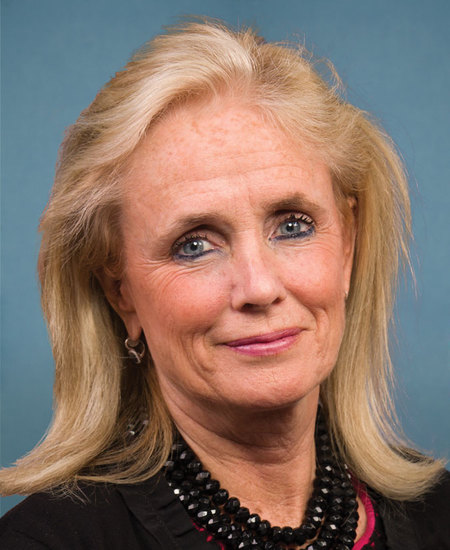
Rep. Debbie Dingell
Sponsored bills
Maddy summaryHR 1377, the Promoting United States Wireless Leadership Act of 2023, directs the Assistant Secretary of Commerce to enhance U.S. participation in global wireless standards bodies (like 3GPP and IEEE) for 5G and future networks. It requires equitably encouraging U.S. companies and stakeholders - excluding those deemed "not trusted" due to national security risks - to participate in these bodies. The bill mandates a 60-day briefing to Congress on implementation strategy and defines key terms, including "not trusted" (based on existing security determinations). This act focuses on facilitating U.S. industry involvement in setting wireless standards, directly affecting companies seeking to contribute to global 5G/6G network specifications.
Maddy summaryThe Stop the Wait Act of 2023 eliminates the current 5-month waiting period for Social Security Disability Insurance (SSDI) benefits by phasing it out: applications filed in 2023-2025 would face a 3-month wait, 2026 a 2-month wait, and 2027 a 1-month wait, with full elimination by January 2028. It also changes Medicare rules to allow individuals without minimum essential health coverage to receive Medicare benefits retroactively from the first month of SSDI eligibility, rather than waiting 24 months. This directly affects people under 65 applying for SSDI who lack other health insurance, ensuring they have coverage during the waiting period. The bill amends the Social Security Act to implement these changes, effective January 1, 2028.
Maddy summary# Summary of Proposed Election Reform Legislation This document outlines a comprehensive federal election reform bill with multiple titles addressing various aspects of voting rights, election administration, and election integrity. ## Key Provisions: ### 1. Democracy Restoration (Title I) - Restores voting rights to citizens with felony convictions who are not serving a felony sentence in a correctional institution - Requires states to notify individuals of restored voting rights upon release from prison, completion of probation, or sentencing - Prohibits states from conditioning voting rights on payment of fines or fees - Requires states to provide notification of voting rights to citizens with criminal convictions ### 2. Voter Identification Requirements (Title II) - Establishes a broad definition of acceptable identification documents (including utility bills, bank statements, student IDs, etc.) - Requires states to provide free identification to voters who lack one - Authorizes $5 million annually for 5 years to cover costs of providing identification - Sets procedures for provisional voting when identification is not presented ### 3. Voter List Maintenance (Title III) - Prohibits "voter caging" (using undeliverable mail to challenge voter registration) - Bans use of unverified match lists to remove voters from registration lists - Sets strict conditions for removing voters from registration lists - Requires states to provide notice to voters removed from registration lists ### 4. Election Integrity Measures (Title V) - Prohibits hindering or interfering with voter registration (Section 2001) - Restricts removal of local election administrators (Section 3001) - Prohibits harassment of election workers (Section 3101) - Bans deceptive practices in elections (Section 3201), including false statements about voting locations, eligibility, or endorsements ### 5. Additional Provisions - Requires states to provide notice of voting rights restoration to citizens - Establishes private rights of action for violations of the law - Sets criminal penalties for violations (up to $100,000 fines and 5 years imprisonment) - Includes provisions for federal funding to be contingent on compliance with voting rights restoration This legislation represents a significant overhaul of voting rights and election administration procedures across the United States, with a focus on expanding voting access, protecting voter rights, and ensuring fair election administration.
Maddy summaryHR 549, the Metastatic Breast Cancer Access to Care Act, removes waiting periods for disability and Medicare coverage for people diagnosed with metastatic breast cancer. Specifically, it amends Social Security Act sections to allow immediate eligibility for disability insurance benefits (eliminating the standard waiting period) and immediate Medicare coverage (waiving the 24-month waiting period) for these patients. The bill directly affects individuals with metastatic breast cancer who would otherwise face delays in accessing critical benefits. These changes apply to applications filed or benefits beginning after the bill's enactment date. The law makes no other policy changes beyond these specific eligibility adjustments.
Maddy summaryThe EACH Act of 2023 would require federal health programs - including Medicaid, Medicare, the Indian Health Service, and TRICARE - to cover abortion services without restrictions. It repeals a provision in the Affordable Care Act that allowed states to limit abortion coverage in health insurance plans sold through state marketplaces. The bill also prohibits the federal government from restricting abortion coverage in private health insurance plans. This would directly affect millions of people, particularly low-income individuals and people of color, who are disproportionately enrolled in Medicaid and currently face barriers to abortion care due to coverage restrictions.
Maddy summaryHR 415, the "End the Threat of Default Act," repeals the statutory debt ceiling (section 3101 of Title 31, U.S. Code), which currently limits how much the federal government can borrow. This would eliminate the need for Congress to approve increases to the borrowing cap, removing the risk of a government default on its debts. The bill directly affects the Treasury Department’s ability to manage federal borrowing, as it would no longer require congressional action to authorize new debt issuance. The technical amendments update references to the debt ceiling in other laws to reflect this change.
Maddy summaryHR 244, the Medicare Hearing Aid Coverage Act of 2023, removes Medicare's exclusion of hearing aids and related examinations from coverage under the Social Security Act. This change will directly affect Medicare beneficiaries with hearing loss, allowing them to receive coverage for hearing aids and necessary exams starting January 1, 2024. The bill amends Section 1862(a)(7) of the Social Security Act to eliminate the specific exclusion. Additionally, it requires the Government Accountability Office (GAO) to study existing hearing aid programs and report to Congress within 18 months of the coverage change, including recommendations for improving access. This is a concrete policy change that expands Medicare benefits for a specific healthcare need.
Maddy summaryThis bill, HR 35 (Close the Medigap Act of 2023), prohibits Medicare supplemental insurance (Medigap) insurers from denying coverage or charging higher premiums based on health status, pre-existing conditions, genetic information, or age. It directly affects Medicare beneficiaries (particularly those with pre-existing conditions) and requires insurers to offer guaranteed issue coverage starting January 1, 2024, with full implementation by 2029. Key mechanisms include banning health-based pricing discrimination, requiring insurers to spend at least 65% of individual policy premiums on healthcare (increasing to align with NAIC recommendations), and improving transparency on the Medicare Plan Finder website. The bill does not change Medicare Part A/B benefits but ensures broader access to supplemental coverage without health-related barriers.
Maddy summaryThe Assuring Medicare’s Promise Act of 2023 directs that taxes collected under the net investment income tax (a tax on investment income for high earners) be added to the Medicare Hospital Insurance Trust Fund, which helps finance Medicare Part A benefits. It modifies the tax code to include certain business income of high-income individuals (with modified adjusted gross income over $400,000 for single filers or $500,000 for joint filers) in the tax base, but includes a phase-in mechanism to limit immediate tax increases. This bill primarily affects high-income taxpayers and aims to strengthen Medicare’s financial stability by increasing trust fund revenue.