

Return to Prudent Banking Act of 2023 This bill generally separates the activities of commercial banks and investment banks. Specifically, the bill prohibits an insured depository institution from affiliating with any person or firm engaged principally in, among other things, issuing or selling stocks, bonds, notes, or other securities. Officers, directors and employees of securities firms are prohibited from simultaneously serving as an officer, director, or employee of a depository institution, except in specified circumstances. No entity issuing or selling stocks, bonds, or other securities may engage in the business of receiving deposits, which includes the establishment and maintenance of transaction accounts. The bill declares that Congress ratifies the interpretation by the Supreme Court in Investment Company Institute v. Camp (ICI) of specified statutory language regarding permissible activities of banks and securities firms. It further declares that the reasoning of the Court in that case shall continue to apply to the limitations placed upon security affiliations as enacted by this bill. No federal banking agency or federal court shall issue an interpretation regarding such security affiliations that is narrower than that of the Court in ICI.
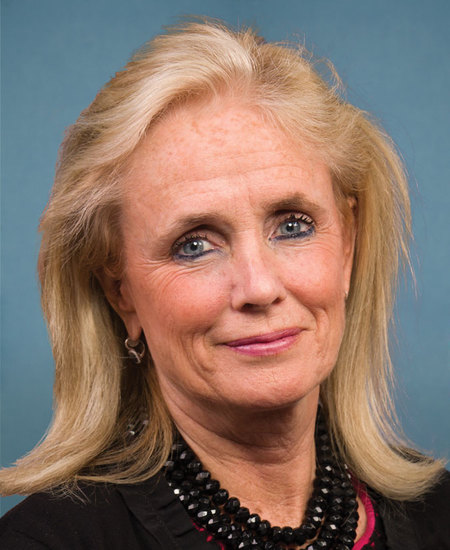
Rep. Debbie Dingell
Sponsored bills
Maddy summaryHR 2693, the Pay Our Coast Guard Parity Act of 2023, ensures Coast Guard members, civilian staff, and qualifying contractors receive pay and benefits during specific funding gaps. It requires Congress to appropriate funds for Coast Guard personnel pay, allowances, and key benefits (like death gratuities and housing allowances) if a Coast Guard-specific funding lapse occurs - when Coast Guard funding isn’t approved before a fiscal year starts but Department of Defense funding is. The bill mandates these payments continue until a full appropriation is enacted or for up to two weeks after the lapse begins, with costs charged to future appropriations. This addresses a gap in funding continuity for Coast Guard personnel during government shutdowns affecting only the Coast Guard.
Maddy summaryThe Puppy Protection Act of 2023 sets new standards for businesses that sell dogs (dealers), directly affecting pet stores and breeders operating under the Animal Welfare Act. It requires specific housing with space allowances based on dog size (e.g., 12-30 square feet per dog), temperature control (45-85°F), clean food twice daily, and daily exercise or socialization with humans/dogs for at least 30 minutes. The bill also mandates annual veterinary exams including dental care, strict breeding limits (e.g., age restrictions, maximum 2 litters in 18 months), and efforts to place retired breeding dogs in homes instead of selling them to other breeders. Regulations must be finalized within 18 months of enactment.
Maddy summaryHRES 303 is a symbolic House resolution designating April 2023 as "Care Worker Recognition Month" to honor care workers in the U.S. It specifically recognizes home care workers supporting older adults and people with disabilities, childcare workers, and early educators. The resolution highlights how these workers enable families to remain in the workforce and emphasizes the importance of their roles in community care. This is a non-binding expression of support with no new policy or funding changes.
Maddy summaryHR 2665 delays Medicaid payment reductions for safety net hospitals by two years, changing the effective date from 2024 to 2026 under Section 1923(f)(7)(A) of the Social Security Act. This bill directly affects hospitals that serve high numbers of low-income and uninsured patients, providing them with additional time before facing reduced federal Medicaid payments. The key mechanism is a technical amendment to existing law, postponing an already scheduled payment adjustment without altering funding levels or eligibility. As a procedural bill, it does not create new programs or change hospital requirements.
Maddy summaryHR 1213, the RESCUE Whales Act of 2023, repeals Title I of Division JJ in the Consolidated Appropriations Act of 2023 (Public Law 117-328). This provision specifically removed a modification that had altered how certain conservation funding was allocated under environmental laws protecting whales. The bill directly affects the implementation of that funding mechanism by restoring the prior legal framework. It is a procedural change with no new policy requirements or direct impact on whale conservation efforts beyond reversing the 2023 funding adjustment.
Maddy summaryHR 808, the Veterans Patient Advocacy Act, requires the Department of Veterans Affairs (VA) to provide patient advocates at VA medical facilities. Starting one year after the bill's enactment, the VA must ensure at least one patient advocate serves every 13,500 enrolled veterans, with specific efforts to ensure rural veterans can access these advocates, including through rural clinics. The bill also mandates a Government Accountability Office (GAO) report within two years to evaluate how well the VA implements this requirement. This legislation directly affects veterans receiving care through the VA system and VA medical facilities.
Maddy summaryHR 693, the VACANT Act, requires the VA Secretary to notify Congress when a medical center director is temporarily reassigned to another VA role. Specifically, the Secretary must provide details (like location, position, and expected absence duration) within 90 days of the detail, appoint an acting director within 120 days, and update Congress every 30 days while the position remains vacant. The bill mandates that directors return to their medical center role or a new director is hired within 180 days (with limited 540-day waivers for specific reasons), ensuring leadership continuity at VA medical centers. This directly affects VA medical center operations and Congress through mandated reporting.
This resolution recognizes the importance of the Islamic faith and expresses deep respect for Muslims in the United States and worldwide in honor of Eid al-Fitr (the conclusion of Ramadan).
Maddy summaryHR 2441, the Servicemembers and Veterans Empowerment and Support Act of 2023, improves support for veterans who experienced military sexual trauma by reforming disability claims processing and expanding access to mental health care. The bill establishes new standards for evaluating claims involving military sexual trauma, requiring specialized VA teams to process these claims and creating clearer guidelines for evidence and communication with veterans. It expands eligibility for counseling and treatment to include all former reserve members and creates a pilot program providing interim mental health care when veterans face wait times exceeding 14 days for residential treatment. The legislation also mandates a Comptroller General study on access to care and requires the VA to provide better communication and support throughout the claims process.