

Maddy summaryHR 4889, the Raise the Wage Act of 2023, would gradually increase the federal minimum wage for most workers to $15.50 per hour by 2027, with specific annual targets: $9.50 starting in 2023, rising to $11.00 after one year, $12.50 after two years, and $15.50 after four years. It would also phase out the separate lower minimum wage for tipped employees (starting at $6.00/hour) by aligning their pay with the regular minimum wage by 2028, while requiring employers to let workers keep all tips. The bill includes similar phased increases for workers under 20 and transitions toward fairer wages for workers with disabilities under special certificates, which would sunset after 2028. Future annual increases after 2028 would tie the minimum wage to the median hourly wage of all workers.
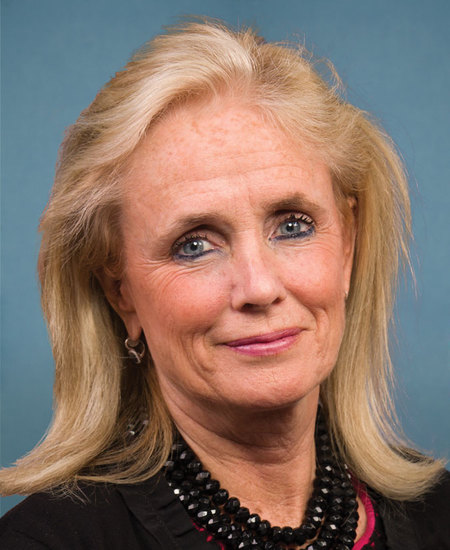
Rep. Debbie Dingell
Sponsored bills
Maddy summaryHR 4157, the "Not Just a Number Act," requires the Department of Veterans Affairs (VA) to produce annual reports on veteran suicide rates and their connection to VA healthcare and benefits. The reports must break down suicide rates by age, gender, and race, and examine how engagement with VA services (like Vet Centers, healthcare enrollment, benefits claims, and housing loans) correlates with suicide trends. The bill also mandates a VA toolkit for state/local coroners to improve veteran suicide death reporting, and a study on creating a dedicated VA suicide prevention office. These measures aim to standardize data collection and identify effective prevention strategies, directly affecting VA operations, congressional oversight, and veteran care systems.
Maddy summaryHR 4769, the PFAS Alternatives Act, funds research and training to develop PFAS-free turnout gear for firefighters. It authorizes $25 million annually (2024-2028) for grants to eligible organizations to research, develop, and test next-generation gear without per- and polyfluoroalkyl substances (PFAS), which are linked to firefighter cancer risks. The bill requires partnerships with firefighting organizations to ensure research translates into practical training and gear care guidance, including decontamination protocols. It also allocates $2 million yearly for training programs on proper gear use and maintenance, aiming to reduce exposure to hazardous chemicals during fire operations.
Protecting Pandemic and All-Hazards Preparedness Act of 2023 or the Protecting PAHPA Act of 2023 This bill extends through FY2028 and modifies various programs and activities that support public health preparedness and response. The bill also addresses matters concerning shortages of drugs and medical devices and recalls of drugs. For example, the bill modifies activities of the Office of the Assistant Secretary for Preparedness and Response, the Centers for Disease Control and Prevention, and the Biomedical Advanced Research and Development Authority; grants to support preparedness and response activities of health departments, hospitals, and public health laboratories; programs to facilitate the response of volunteer health providers and other professionals during disasters and emergencies; efforts related to the management and operation of the Strategic National Stockpile; federal partnerships and initiatives for collaborating and coordinating during public health and other emergencies and with the development of medical countermeasures and diagnostic testing capacity; and requirements for collecting and reporting public health and health care data and information. Additionally, the bill makes various changes to address and mitigate shortages of drugs and devices, including by (1) setting out a process to safely extend the expiration date of certain medical countermeasures and other life-saving drugs, and (2) expanding requirements for drug manufacturers to notify the Food and Drug Administration concerning potential shortages. Further, the bill expands the authority of the Secretary of the Department of Health and Human Services to order the recall of controlled substances to cover all drugs.
Maddy summaryHR 4663, the Federal Mechanical Insulation Act, defines "mechanical insulation" (insulation around pipes and equipment in federal buildings) as an eligible energy efficiency measure. It requires federal agencies to include mechanical insulation in their required energy and water evaluations, specifically mandating that evaluations identify this insulation as a potential efficiency measure. The bill specifies that such insulation must meet minimum standards under Reference Standard 90.1 to qualify. This change directly affects federal building managers and contractors by formally recognizing mechanical insulation as a standard efficiency option in compliance with existing energy conservation laws.
Maddy summaryThis bill amends the Child Nutrition Act to extend liability protections for food and pet supply donations. It adds definitions for "pet," "emotional support animal," and "pet supply" to the Act, clarifying that donations of pet food or supplies for pets, service animals, or emotional support animals are covered. The key provision (Section 22(c)(4)) shields donors and nonprofits from civil/criminal liability when donating such items in good faith for direct distribution to animals. It directly affects pet food donors, animal welfare nonprofits, and local governments distributing pet supplies. The bill does not create new programs but modifies existing donation rules to include pet-related items.
Maddy summaryH.J.Res. 25 would remove the 1979 deadline for states to ratify the Equal Rights Amendment (ERA), which was originally proposed in 1972. This bill directly affects states that ratified the ERA after the deadline (such as Nevada, Illinois, and Virginia in 2017-2018) by making their ratifications legally valid. The key provision states that the ERA is valid as part of the Constitution if ratified by three-fourths of states, regardless of the original deadline. The bill does not create new rights but aims to finalize the constitutional amendment process by eliminating the time limit.
Maddy summaryThis bill modifies federal sentencing for youth under 18 who were trafficked, abused, or assaulted before committing a violent offense. It allows courts to sentence below statutory minimums and suspend portions of sentences to account for trauma, applying only to cases with clear evidence of prior victimization under specific laws (like sex trafficking). The law directs the U.S. Sentencing Commission to update guidelines to align with these changes, effective only for convictions after the bill’s enactment. It directly affects juvenile offenders with documented prior victimization, focusing on trauma-informed sentencing rather than standard penalties.
Maddy summaryHR 1774, the VA Emergency Transportation Act, expands VA benefits to cover emergency transportation for veterans. It amends existing law to replace "emergency treatment" with "emergency services" throughout, explicitly including ambulance or air ambulance transport as covered services. This means veterans needing emergency transport to or from a medical facility (to receive treatment) can now have those costs reimbursed by the VA. The bill directly affects veterans who require urgent medical transport, clarifying that such transportation is part of their covered VA benefits.
Maddy summaryThis bill, HR 1282 (Major Richard Star Act), expands benefits for certain military retirees by allowing them to receive both veterans' disability compensation and military retirement pay simultaneously. It specifically affects combat-related disabled retirees under Chapter 61 of the military retirement system who have fewer than 20 years of service. The key change removes the automatic reduction of military retirement pay when these retirees also receive disability compensation, as amended in Section 1413a(b)(3) of Title 10. Technical updates to the law’s structure and effective date (starting after enactment) complete the provisions.