

Maddy summaryThe John R. Lewis Voting Rights Advancement Act of 2023 would strengthen the Voting Rights Act of 1965 by updating the criteria for which states and localities must obtain federal preclearance before changing voting practices. It would establish new standards for proving vote dilution and vote denial by requiring courts to consider historical discrimination, racial polarization in voting, and whether voting practices disproportionately burden minority voters. The bill would also require states and localities to provide public notice of voting changes and share demographic data about polling locations. These changes would primarily affect jurisdictions with a history of voting rights violations, aiming to prevent discriminatory voting practices before they take effect.
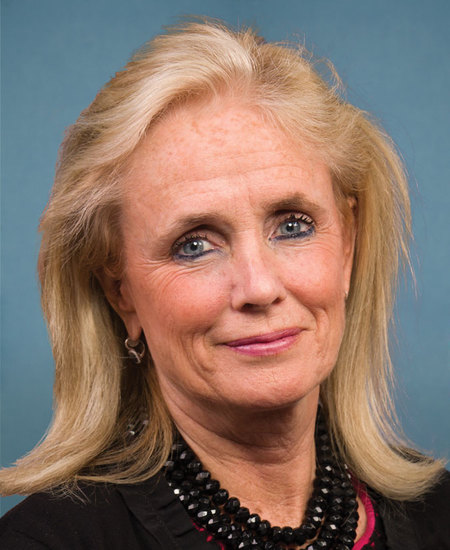
Rep. Debbie Dingell
Sponsored bills
Maddy summaryThis bill modifies Medicaid and CHIP enrollment rules to provide 12-month continuous coverage for all eligible individuals, removing previous age restrictions that limited this benefit to children under 19. It changes language from "child" to "individual" in both programs, ensuring adults and children who qualify maintain coverage without annual renewal requirements. The changes apply to all Medicaid and CHIP participants meeting income and other eligibility criteria, preventing coverage loss due to administrative re-certification. The amendment takes effect one year after the bill's enactment, aligning with existing 2023 implementation timelines.
Maddy summaryThe No Tax Breaks for Union Busting Act would deny tax deductions for employers who attempt to influence employees' decisions about union activities, including unfair labor practices like firing workers for organizing or using captive audience meetings. It targets expenses related to union-busting tactics, such as consulting fees and other costs used to sway workers' opinions about collective bargaining. Employers would need to report these expenses on tax returns and would no longer be able to deduct them from taxable income. The bill aims to prevent employers from using tax-deductible expenses to influence union elections, aligning with existing rules that deny tax deductions for political spending. It would apply to expenses incurred in taxable years beginning 240 days after enactment.
Maddy summaryThis bill prohibits individuals convicted of a misdemeanor hate crime or who received an enhanced sentence for a hate-motivated misdemeanor from obtaining, possessing, shipping, or transporting firearms. It directly affects people convicted under state, federal, or tribal law of a misdemeanor involving physical force or credible threat motivated by bias against race, religion, national origin, gender, sexual orientation, gender identity, or disability. The law amends existing federal gun laws (18 U.S.C. §§ 922(d) and 922(g)) to add this category to the list of prohibited persons, with specific exceptions for cases where the conviction was expunged, the person had proper legal counsel, or civil rights were restored. The bill focuses on concrete policy changes to restrict firearm access for this specific group, not broader speculation.
Maddy summaryHR 5433, the Child Care Stabilization Act, provides $16 billion annually from 2024 to 2028 to stabilize the child care sector through grants administered by the Health and Human Services Secretary. It directly affects licensed child care providers by offering stable funding to cover operating costs, while supporting higher wages for early educators without raising family fees. Key provisions include expanding access to high-quality, affordable care - especially for infants/toddlers, rural communities, and children with disabilities - and addressing shortages in underserved areas. The funding builds on existing American Rescue Plan resources, aiming to strengthen the child care workforce and increase available options for working families.
Maddy summaryHR 5428, the No Tax Breaks for Union Busting (NTBUB) Act, prevents employers from deducting certain expenses related to influencing workers' decisions about union representation. It targets spending on tactics like anti-union meetings, workplace surveillance, or consultants during organizing campaigns, making these costs non-deductible for tax purposes. Employers must report such expenses on their tax returns, including details about the activities and amounts spent. The bill aims to remove tax incentives for employer interference in union elections, aligning with federal labor law protections for workers' collective bargaining rights.
Maddy summaryThis bill requires the Bureau of Prisons to develop and implement a strategy for scanning all incoming mail at federal prisons to stop fentanyl and other synthetic drugs from entering facilities. It directs the Bureau to evaluate existing scanning technology within 180 days and submit a detailed plan to Congress within 90 days, including how to provide digital copies of mail to inmates within 24 hours and physical copies within 30 days (if safe). The strategy must achieve 100% mail scanning capacity at all federal prisons, prioritize high-security facilities, and include a budget proposal for fiscal years 2024-2026. This directly affects federal prisons, inmates, and Bureau employees by changing mail processing procedures to enhance safety and reduce staffing burdens from manual mail checks.
Maddy summaryHR 5295, the Expanding the VOTE Act, modifies Section 203 of the Voting Rights Act to expand language access for voters. It requires states and localities to provide voting materials (including ballots and instructions) in the language of covered language minority groups, with new provisions for American Indian and Alaska Native languages requiring tribal government consultation for unwritten languages. The bill creates $15 million in grants to help jurisdictions provide voting materials in languages that don’t currently trigger Section 203 coverage, while mandating continued provision for those groups in future elections. It also directs a study to evaluate lowering population thresholds for language protections and expanding the definition of covered languages.
Maddy summaryHCONRES 59 is a non-binding congressional resolution urging all countries to ban the dog and cat meat trade and enforce existing anti-trade laws. It directly affects foreign governments, not U.S. citizens, as it calls on them to adopt legal prohibitions and strengthen enforcement. The resolution cites animal cruelty concerns (including reports of stolen pets and inhumane slaughter) and public health risks (such as rabies and trichinellosis transmission linked to the trade). It does not change U.S. law, as domestic prohibition already exists under the 2018 Agriculture Act. The resolution affirms U.S. support for global animal welfare but has no legal force.
Maddy summaryHR 4350, the MONARCH Act of 2023, establishes a $12.5 million annual fund (2023-2027) to support habitat restoration for western monarch butterflies, which are at risk of extinction due to a 99% population decline over 30 years. The bill authorizes grants to eligible entities like tribal governments, nonprofits, and local agencies to restore milkweed, protect overwintering sites, and conserve pollinator habitats across California, Arizona, Nevada, Washington, Oregon, Idaho, and Utah. Projects must include community consultation, avoid conflicts with food safety, and demonstrate clear conservation benefits. The Secretary of the Interior will manage the grants, require annual progress reports to Congress and the public, and coordinate with existing conservation plans.