

Maddy summaryHR 5561, the Protecting the Right to Keep and Bear Arms Act of 2023, prevents federal agencies from using emergency declarations to implement gun control measures. It specifically prohibits the President from declaring a national emergency under the National Emergencies Act or the Robert T. Stafford Act for gun control purposes, and stops the Health and Human Services Secretary from declaring a public health emergency under the Public Health Service Act for the same reason. The bill also amends the Stafford Act to explicitly prohibit any emergency-related restrictions on possessing, manufacturing, selling, or transferring firearms, ammunition, ammunition feeding devices, or firearm accessories. This directly affects how federal agencies can respond during emergencies without violating the Second Amendment. The law aims to limit executive actions during emergencies that could restrict gun rights.
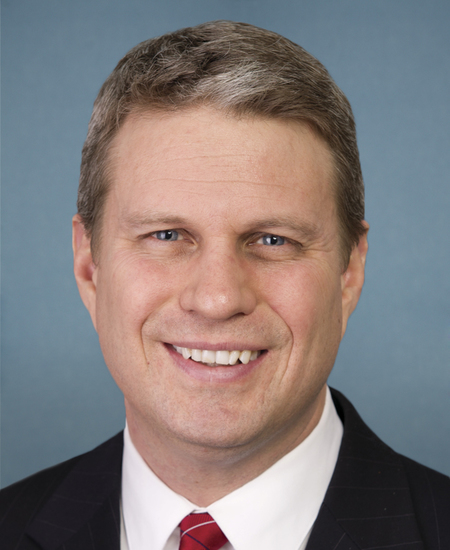
Rep. Bill Huizenga
Sponsored bills
Maddy summaryHR 4739, the Protecting America’s Orchardists and Nursery Tree Growers Act, amends the Agricultural Act of 2014 to improve assistance for orchardists and nursery tree growers experiencing tree loss. It lowers the mortality threshold from 15% to "normal mortality," requires replacement activities within 12 months (or as needed for tree survival), and allows growers to use assistance for alternative replanting options like different tree varieties, stand densities, or locations - without exceeding the original assistance amount. The bill also excludes growers with 75%+ farming income from gross income limits and mandates the Secretary to notify applicants within 120 days of application status. This directly affects growers facing tree loss due to pests, disease, or other causes, streamlining program access and flexibility.
Maddy summaryThis bill requires parties in civil lawsuits to disclose any foreign entities funding their case - including names, addresses, and countries of origin - within 30 days of filing or signing funding agreements. It specifically prohibits foreign governments and sovereign wealth funds from funding litigation where payment depends on the case outcome, banning such agreements entirely. Parties must also certify if foreign money is used and submit annual reports to Congress detailing foreign funders, judicial districts involved, and case types. The law applies to all civil cases filed after enactment, aiming to increase transparency about foreign influence in U.S. courts.
Maddy summaryHR 3152, the "Fight CRIME Act," aims to maintain international restrictions on Iran's missile-related activities by requiring diplomatic efforts to extend these restrictions before they expire in October 2023. The bill mandates annual reports detailing U.S. diplomatic strategies, potential impacts of expiration, and measures to deter missile technology transfers to Iran. It establishes sanctions against foreign individuals or entities that knowingly support Iran's missile or drone programs, including asset freezes and visa restrictions. These sanctions apply regardless of whether UN restrictions remain in effect after their expiration, directly affecting foreign entities involved in these activities.
Maddy summaryHR 5224 reauthorizes the Missing Children's Assistance Act through fiscal year 2028, updating definitions and expanding services to better address child sexual exploitation. It adds specific terms like "sextortion" and "sexting" to clarify key concepts, and requires the Administrator to manage the CyberTipline for reporting missing children and exploitation. The bill mandates new data collection on children missing from state care, including those likely victims of sex trafficking, and increases annual funding authorization from $40 million to $49.3 million. These changes directly affect child welfare agencies, law enforcement, and organizations working with missing or exploited children by improving reporting systems, recovery support, and data transparency.
Maddy summaryHR 5130, the "Finish It Act," requires the Department of Defense to use stored border wall construction materials (valued at approximately $300 million) for building permanent barriers along the U.S.-Mexico border within 30 days of the bill's enactment. It mandates that states receiving materials certify they will use them exclusively for border barriers, with penalties for unused materials (requiring repayment of the original cost) and imposes a 1% budget cut for every two days of delay in implementation. The bill also demands a detailed report from the Department of Defense within 90 days, including internal communications about storage costs and contracts with private landowners. This legislation directly affects the Department of Defense and border states, focusing on redirecting existing resources rather than creating new funding or construction.
Maddy summaryThis is a ceremonial resolution (HRES 622), not a substantive bill. It expresses the U.S. House of Representatives' gratitude and congratulations to the U.S. Coast Guard for its maritime border security efforts in fiscal year 2022. The resolution cites specific achievements like interdicting over 330,000 pounds of narcotics, 12,500 illegal immigrants, and 6,300 vessel boardings. It has no policy impact or legal effect - it solely serves to honor the Coast Guard's service.
Maddy summaryThis bill designates the Department of Veterans Affairs clinic in Indian River, Michigan, as the "Pfc. Justin T. Paton Department of Veterans Affairs Clinic" for all official references. It does not change the clinic's services, operations, or eligibility for veterans. The bill simply updates the facility's name to honor Pfc. Justin T. Paton, a veteran, in recognition of his service.
Maddy summaryThis bill establishes a Senior Advisor and Task Force within the State Department to coordinate and oversee the AUKUS trilateral security partnership (U.S., UK, Australia). The Senior Advisor, appointed from existing State Department leadership, will coordinate implementation across agencies, engage with UK/Australia partners, and streamline defense trade barriers. The Task Force must meet quarterly, track defense transactions, create vendor lists, and report to Congress every 90 days on progress, delays, and compliance issues. It also modifies the Arms Export Control Act to allow streamlined licensing for AUKUS-related defense trade, requiring annual reports on transactions and reduced review times. The oversight structure expires after 7 years unless renewed by the Secretary of State.
Maddy summaryThe KOALA Act streamlines defense trade between the U.S., Australia, and the U.K. by removing the usual licensing requirements for defense exports and transfers under the Arms Export Control Act, specifically for activities related to the AUKUS security partnership announced in 2021. It directly affects U.S. defense exporters and Australian defense entities by allowing faster transfers of defense articles and services without individual licenses. Key provisions include requiring the President to submit semiannual reports to Congress on these transfers and establishing a process for Congress to disapprove exemptions via joint resolution. The bill modifies reporting and certification requirements for these transactions and increases civil/criminal penalties for violations. It takes effect 180 days after enactment.