

Maddy summaryThe Responsible Budgeting Act (HR 1092) changes how the U.S. debt ceiling can be raised. It requires Congress to adopt a budget resolution that reduces the projected debt-to-GDP ratio by at least 5 percentage points over 10 years to automatically increase the debt ceiling. If Congress fails to adopt such a resolution by a deadline, the President can submit a debt reduction proposal meeting this target, triggering an automatic debt ceiling increase after 30 days unless Congress passes a joint resolution disapproving it within that timeframe. The bill establishes expedited procedures for Congress to consider and vote on debt reduction proposals, with strict requirements for any proposal to meet the required debt reduction target.
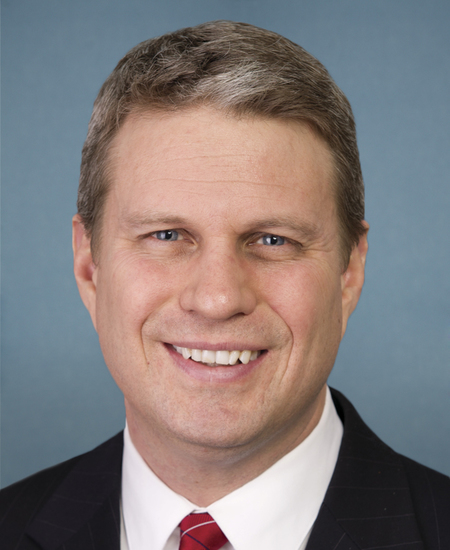
Rep. Bill Huizenga
Sponsored bills
Maddy summaryHR 1020 (BOOST Act) creates a tax credit for homeowners in rural unserved areas to improve broadband access. It allows a 75% credit (up to $400) for purchasing signal boosters, satellite customer equipment, or ground stations used in a primary residence. The credit applies only once per household and expires after 2029, targeting areas eligible for FCC's Rural Digital Opportunity Fund. This directly affects individual homeowners in designated rural broadband gaps seeking to enhance their internet connectivity.
Maddy summaryHR 991, the Cost Estimates Improvement Act, requires the Congressional Budget Office (CBO) and Joint Committee on Taxation (JCT) to include debt servicing costs (interest payments on the national debt) in their budget estimates "to the extent practicable." This change directly affects how Congress evaluates the fiscal impact of proposed legislation, as these estimates determine whether bills qualify for budget reconciliation and influence funding decisions. The key mechanism amends the 1974 Congressional Budget Act to mandate this inclusion within existing cost estimation processes. The bill does not alter spending or tax policy but aims to make budget scoring more comprehensive by accounting for ongoing interest costs.
Fair Access to Banking Act This bill places restrictions on certain banks, credit unions, and payment card networks if they refuse to do business with a person who complies with the law. Restrictions include prohibiting the use of electronic funds transfer systems and lending programs, termination of an institution's depository insurance, and specified civil penalties. Banks and other specified financial institutions are allowed to deny financial services to a person only if the denial is justified by a documented failure of that person to meet quantitative, impartial, risk-based standards established in advance by the institution. This justification may not be based upon reputational risks to the institution. The bill establishes the right for a person to bring a civil action for a violation of this bill.
Maddy summaryHR 1024, the US-Kazakhstan Trade Modernization Act, terminates the application of Title IV of the Trade Act of 1974 to Kazakhstan. This means the U.S. will no longer apply special trade restrictions tied to Kazakhstan's emigration policies, as Kazakhstan has been found compliant since 1997. The bill allows the President to determine that Title IV no longer applies and extend normal trade relations (NTR) treatment to Kazakhstan's products. As a result, Kazakhstan's exports to the U.S. will be subject to standard U.S. trade rules rather than the specific Title IV provisions.
Maddy summaryHR 1007, the Antisemitism Awareness Act of 2025, clarifies how the Department of Education enforces Title VI of the Civil Rights Act of 1964 to address discrimination against Jewish individuals. It requires the Department to consider the International Holocaust Remembrance Alliance (IHRA) definition of antisemitism when investigating complaints involving discrimination based on actual or perceived Jewish ancestry or ethnic characteristics. This affects Jewish students and communities in K-12 schools and colleges receiving federal funding, as it ensures antisemitism is assessed under existing civil rights protections. The bill does not create new laws but specifies that the IHRA definition - already used by the Department since 2018 - must be applied in Title VI enforcement cases.
Maddy summaryHRES 106 is a non-binding resolution calling on the United Nations Security Council to immediately impose an arms embargo on Burma’s military (the Tatmadaw). It directly targets the military junta responsible for the 2021 coup, ongoing human rights abuses, and violence against civilians, including ethnic minorities like the Rohingya. The resolution specifies that lifting the embargo would require the military to end violence, release detained leaders, allow humanitarian access, restore internet, and transition power to a civilian government. It also urges the international community to support affected civilians and promote peace dialogues. This resolution expresses congressional support for UN action but does not create new U.S. policy.
Health Care Workforce Innovation Act of 2025 This bill establishes the Health Care Workforce Innovation Program within the Health Resources and Services Administration to provide grants to federally qualified health centers, rural health clinics, and post-secondary vocational programs for developing education and training for allied health professionals (e.g., professionals providing clinical or non-clinical support services, community health workers, and health education specialists). Specifically, grant recipients must use the funds to carry out innovative, community-based programs to train allied health professionals, with a focus on supporting rural and underserved areas. Grant recipients may use the funds to launch or expand health care professional partnerships (e.g., between a grant recipient and a school), establish apprenticeship or other career programs, or invest in training equipment, among other activities.
Medicare Patient Access and Practice Stabilization Act of 2025 This bill increases certain payment adjustments under the Medicare physician fee schedule for services furnished between April 1, 2025, and January 1, 2026.
Maddy summaryHR 833 creates a federal tax credit for individuals and corporations that contribute to scholarship granting organizations (SGOs) providing scholarships for elementary and secondary education. The credit allows taxpayers to deduct up to 10% of their adjusted gross income or $5,000 (whichever is less) for contributions to SGOs serving students from households with income up to 300% of the area median income. The bill establishes a $10 billion annual cap on the tax credit program, requires SGOs to verify student eligibility and maintain separate accounts, and prohibits government control over SGOs or private schools. It ensures scholarships can be used at public, private, or religious schools without discrimination based on religious character. The tax credit would be available for contributions made after December 31, 2025, with annual volume cap increases based on usage.