

Maddy summaryThe Autism Family Caregivers Act of 2025 creates a 5-year pilot program funding grants to community organizations for free, evidence-based skills training for family caregivers of children (ages 0-9) with autism spectrum disorder or other developmental disabilities or delays. The program requires training in communication, social engagement, daily living skills, and caregiver self-care strategies, with emphasis on cultural competence and coordination with local health, education, and community services. Grants must support at least 25 organizations across 15+ states, using $10 million annually (2026-2030), and mandate stakeholder committees including caregivers and local providers. It directly affects families caring for young children with these conditions by expanding access to structured support, while requiring programs to supplement - rather than replace - existing Medicaid, education, or insurance-covered services.
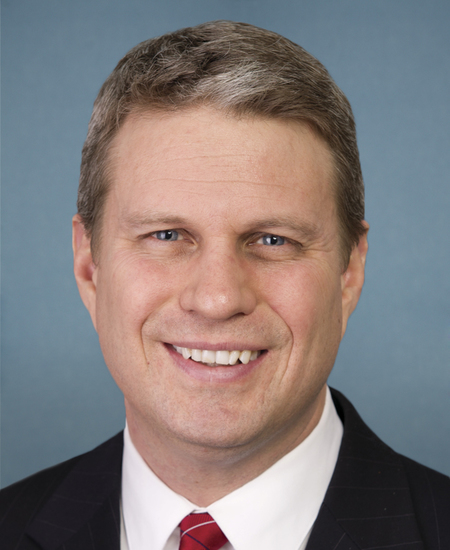
Rep. Bill Huizenga
Sponsored bills
Maddy summaryH.J.Res. 88 disapproves an Environmental Protection Agency (EPA) rule that would have allowed California to enforce its "Advanced Clean Cars II" vehicle emission standards. This rule, submitted by the EPA on January 6, 2025, sought to grant California a waiver to override federal preemption for its stricter vehicle pollution controls. The resolution, passed by Congress and signed into law on June 12, 2025, formally nullifies the EPA rule, preventing California from implementing its Advanced Clean Cars II program under this specific waiver. The bill directly affects California's ability to set its own vehicle emission standards for passenger cars and light trucks.
Maddy summaryThe Veterans Patient Advocacy Act (HR 2068) requires the Department of Veterans Affairs (VA) to ensure rural veterans can access patient advocates at VA medical facilities, including assigning advocates to rural community-based outpatient clinics when feasible. This policy directly affects veterans receiving care at rural VA locations by providing dedicated support to help navigate healthcare services. The VA must implement this change within two years of the bill’s enactment, and the Government Accountability Office (GAO) must report on implementation progress within the same timeframe. The law focuses on improving access to advocacy for a specific group (rural veterans) without altering broader healthcare benefits or funding.
Maddy summaryThis bill prohibits male students from participating in athletic programs at the U.S. Military Academies (West Point, Annapolis, and Air Force Academy) designated exclusively for women or girls. It allows males to train with such teams only if no female athlete loses a roster spot, competition opportunity, scholarship, or other benefit. The bill defines "sex" as biological sex at birth and clarifies that "athletic programs" include all team-based activities requiring participation. It directly affects the women's sports teams at these three service academies and their eligibility rules.
Maddy summaryHR 3880, the Clear the ROADS Act, requires states to prohibit non-government individuals from recklessly blocking highways in ways that endanger public safety. If a state fails to meet this requirement, the federal government would withhold 10% of that state's annual highway funding starting October 1 each year. The bill directs the Transportation Secretary to issue rules within 180 days to define how states must comply. This affects all states receiving federal highway funds, directly targeting reckless road obstructions by private individuals.
Maddy summaryThe Restoring American Freedom Act (HR 3719) prohibits the U.S. Department of State and entities receiving federal funds from it from censoring U.S. citizens' First Amendment-protected speech. It bans using federal funds to create or distribute "censorship tools" without safeguards and prohibits "advertising blacklists" that target citizens based on their speech content. The bill requires the Department to monitor for censorship, correct past misconduct, and notify Congress and affected citizens when such violations occur. This law directly affects Department of State operations and organizations receiving State Department grants or contracts.
Maddy summaryThis bill updates the definition of "accredited investor" under securities law to formally include specific professional certifications, designations, and credentials already approved by the SEC (like certain licenses listed in a 2020 SEC order). It requires the SEC to periodically review and adjust this list every five years (starting 18 months after enactment) to ensure it reflects individuals' financial sophistication and experience. The change directly affects individuals seeking accredited investor status, who may now qualify based on these designated credentials. The bill mandates the SEC to add new credentials that measure financial knowledge similarly to those already on the list, aiming to maintain the definition's relevance for investor protection.
Maddy summaryThis bill requires the Securities and Exchange Commission (SEC) to create rules allowing covered financial entities (like investment companies, brokers, and advisers) to deliver required regulatory documents - such as prospectuses, annual reports, and proxy statements - electronically to investors. It mandates specific transition steps: initial paper delivery for investors preferring it, a 180-day shift to electronic delivery, and annual paper reminders for two years after transition to maintain opt-out options. The rules must ensure documents are readable, securely delivered, and include clear mechanisms for investors to switch back to paper at any time. The SEC must finalize these rules within one year of the bill’s enactment, while existing document delivery requirements remain unchanged.
Maddy summaryHRES 466 is a symbolic resolution expressing the House's support for designating the first Tuesday in June as "National Cancer Survivor Beauty and Support Day." It does not create new laws or programs but acknowledges an existing volunteer event where beauty industry professionals provide free services to cancer survivors. The resolution cites statistics about cancer diagnoses and survivors, noting the event has expanded to thousands of salons nationwide since 2003 without fundraising. It has no direct policy impact but formally recognizes this annual volunteer initiative.
Maddy summaryHRES 447 is a non-binding House resolution condemning antisemitism and honoring Yaron Lischinsky and Sarah Milgrim, two Israeli Embassy employees killed during a peace-focused panel discussion in 2023. The resolution specifically condemns all forms of antisemitism - including violence, vandalism, and online harassment - and remembers the victims, who were killed by a far-left activist affiliated with the Party for Socialism and Liberation. It calls for enforcing existing hate crime laws and protecting religious freedom, without creating new legislation. This resolution symbolically supports Jewish communities and victims of antisemitic violence but does not alter legal requirements.