

Maddy summary# Summary of Proposed FEMA Reform Legislation (FEMA Act of 2025) This comprehensive legislative document proposes significant reforms to the Robert T. Stafford Disaster Relief and Emergency Assistance Act, with four main sections addressing: ## 1. Disaster Assistance Reforms - **Expanded eligibility** for assistance, including clarifying that absence of a fixed address doesn't disqualify individuals from sheltering assistance - **Improved rental assistance** with consideration of local post-disaster rent increases - **Direct assistance** for those unable to use financial assistance, with no requirement to show other assistance can cover costs (except insurance) - **Enhanced notices** for applicants, including documentation of denial decisions - **Clarification of displacement assistance** eligibility, stating insurance shouldn't be considered a duplication of benefits ## 2. Mitigation Program Enhancements - **Preapproved project mitigation plans** requiring states to develop plans with peer review processes - **Improved allocation of funds** with formulas prioritizing vulnerable communities, high-risk areas, and rural/economically distressed communities - **Resilient buildings** requirements for housing retrofits using the latest building codes - **Streamlined application processes** for hazard mitigation funds across multiple programs - **Study on mitigation benefits** to evaluate cost savings and effectiveness ## 3. Transparency and Accountability Measures - **Public dashboards** for both individual assistance (431) and public assistance (432) showing application status, approvals, denials, and funding - **Transparency requirements** for disaster declarations with detailed justifications for approvals/denials - **GAO studies** on numerous topics including: - Identity theft in disaster assistance (409) - Insurance utilization for public assistance facilities (410) - Wildfire management plans (411) - Effectiveness of alerting systems (412) - Cost savings of repair/rebuilding reforms (415) - **Prohibition on political discrimination** in assistance distribution ## 4. Workforce and Operational Improvements - **Study on workforce retention** in noncontiguous communities - **Pilot program** for preliminary damage assessments in remote communities - **Fast-moving disasters working group** to develop best practices for rapid response The legislation focuses on improving efficiency, transparency, and effectiveness of disaster relief programs while prioritizing vulnerable populations and communities with higher risk of disasters. It also emphasizes data-driven decision making through required studies and reports to continuously improve disaster management policies.
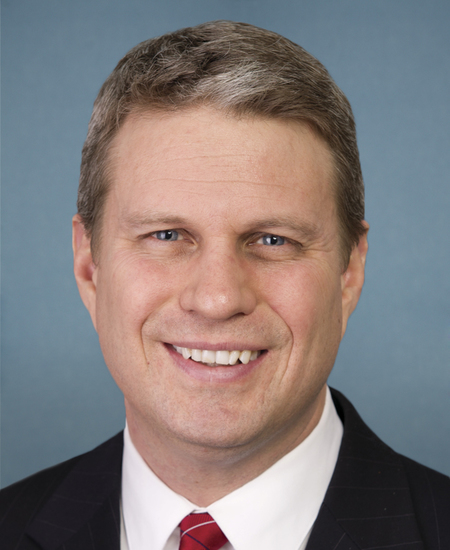
Rep. Bill Huizenga
Sponsored bills
Maddy summaryHR 4215 establishes strict timelines for processing U.S. defense export licenses under the Arms Export Control Act. It requires the State Department to create a priority list of countries and end-users needing expedited approvals (45 days), while setting a 60-day deadline for all other applications. The bill mandates semi-annual reports to Congress detailing any delays in meeting these timelines, including specific reasons and planned resolutions. This directly affects defense exporters, foreign governments purchasing military equipment, and the State and Defense Departments responsible for licensing decisions. The law aims to streamline commercial defense exports without altering the underlying regulatory framework.
Maddy summaryHJRES 116 is a ceremonial resolution honoring 13 U.S. service members who died in the August 26, 2021, Abbey Gate bombing at Kabul's airport. It designates a National Day of Remembrance for those who perished during the Afghanistan withdrawal, expresses condolences to their families, and commemorates their service. The resolution does not create new policies or funding but formally recognizes their sacrifice and the role they played in saving lives during the evacuation. It directly affects the Gold Star families of the named service members and the broader public through this national acknowledgment.
Maddy summaryThis bill permanently establishes the Coordinator for Afghan Relocation Efforts (CARE) within the State Department, expanding their role to prioritize family reunification for U.S. military personnel and veterans with Afghan allies. It mandates the Coordinator to collect detailed data on Afghan applicants (including special immigrant visa seekers, refugees, and parolees), vetting timelines, and pending family reunification cases into a centralized database. The Coordinator must report this data to Congress every 90 days to ensure transparency and inform policy decisions. The law directly affects Afghan allies and their families seeking U.S. relocation, particularly those connected to U.S. military service.
Maddy summaryHR 940 (FAIR Exams Act) requires federal banking regulators to deliver final examination reports to financial institutions within 60 days after an exit interview or when additional information is provided. It creates an Office of Independent Examination Review led by a presidentially appointed Director to handle appeals of material supervisory determinations, including investigating complaints and reviewing exam procedures. Financial institutions gain the right to request an independent review of exam findings within 60 days, with the Director making final recommendations to regulators within 60 days, and prohibits retaliation for using these appeal rights. The bill directly affects all federally regulated banks, credit unions, and their representatives subject to federal examinations.
Maddy summaryHR 4735, the Business of Insurance Regulatory Reform Act of 2025, clarifies that the Consumer Financial Protection Bureau (CFPB) cannot enforce federal consumer financial laws over companies already regulated by state insurance departments for their insurance activities. The bill amends Section 1027(f) of the Consumer Financial Protection Act to explicitly state that the CFPB lacks authority to regulate insurance products or services when a company is subject to state insurance regulation. It also requires the CFPB to broadly interpret its authority in favor of state insurance regulators for such entities. This directly affects insurance companies operating under state oversight, preventing overlapping federal enforcement. The change focuses on defining regulatory boundaries, not altering insurance product rules.
Maddy summaryHR 1917, the Great Lakes Mass Marking Program Act of 2025, establishes a federal program within the U.S. Fish and Wildlife Service to mass-tag hatchery-reared fish in the Great Lakes. The program directly affects federal, state, and tribal fisheries agencies by providing data on hatchery fish versus wild fish populations through automated tagging. Key provisions authorize $5 million annually (2026-2030) to purchase tagging equipment, hire staff, and share collected data with partner agencies to inform management decisions about fish stocking, habitat restoration, and balancing predator-prey relationships. This data supports the economic stability of the Great Lakes fisheries sector, which contributes over $7 billion annually to the regional economy.
Maddy summaryThis bill prohibits life, disability, and long-term care insurers from denying coverage, canceling policies, or increasing premiums based solely on a person's status as a living organ donor. It directly protects living organ donors by preventing insurance discrimination unrelated to actual health risks. The bill also requires the Health and Human Services Secretary to update public educational materials about organ donation benefits, risks, and insurance impacts within six months of enactment. These materials will include information on the new insurance protections established by the bill. The law relies on state insurance regulators for enforcement of the insurance provisions.
Maddy summaryThis bill eliminates a lifetime limit on inpatient psychiatric hospital care for Medicare beneficiaries. Currently, Medicare restricts coverage to 190 days total for such care; this bill removes that cap entirely. The key change amends Section 1812 of the Social Security Act to allow unlimited coverage for inpatient psychiatric hospital services under Medicare. The provision takes effect January 1, 2027, directly affecting Medicare patients requiring long-term inpatient mental health treatment.
Maddy summaryThis bill amends the Family and Medical Leave Act (FMLA) and federal employee leave rules to clarify that recovery from organ donation surgery qualifies as a "serious health condition." It directly affects private-sector workers covered by the FMLA and federal civil service employees. The key change adds "including recovery from surgery related to organ donation" to the definitions of serious health conditions in both the FMLA and federal leave statutes. This ensures eligible employees can use their existing family and medical leave benefits to recover after donating an organ, without requiring new leave entitlements.