

This resolution expresses the sense of the House of Representatives that Canada should not allow construction of a nuclear waste repository within the Great Lakes Basin and that the President and the Department of State should work with Canada to prevent such construction and craft a long-term solution for nuclear waste storage that does not threaten the Great Lakes.
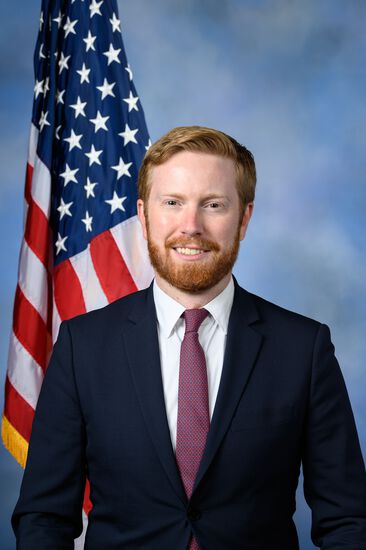
Rep. Peter Meijer
Sponsored bills
This bill allows expenditures from health savings accounts and flexible spending and health reimbursement arrangements for dietary supplements (i.e., products, other than tobacco, intended to supplement the diet that bear or contain either vitamins, minerals, herbs or other botanicals, or an amino acid, and are labeled as dietary supplements).
Working Dog Commemorative Coin Act This bill directs the Department of the Treasury to mint and issue 50,000 $5 gold coins, 500,000 $1 silver coins, and 750,000 half-dollar clad coins in commemoration of the service that working dogs provide to society. The designs of the coins minted under this bill shall be emblematic of the contributions of working dogs to society, including in detection, military service, therapy and assistance. Treasury may issue coins only during the one-year period beginning on January 1, 2023. All sales of coins shall include a surcharge, which shall be paid to America's VetDogs for general expenses associated with the fulfillment of its mission.
Improving Veterans Access to Congressional Services Act of 2021 This bill requires the Department of Veterans Affairs (VA) to permit a Member of Congress (upon request) to use a VA facility to meet with constituents. The VA and the General Services Administration must jointly identify available spaces in VA facilities for such purposes. The VA must prescribe regulations regarding such use of a VA facility by a Member of Congress.
Puppies Assisting Wounded Servicemembers for Veterans Therapy Act or the PAWS for Veterans Therapy Act This bill implements a program and a policy related to service dog therapy for veterans. Specifically, the bill requires the Department of Veterans Affairs (VA) to implement a five-year pilot program to provide canine training to eligible veterans diagnosed with post-traumatic stress disorder as an element of a complementary and integrative health program. Eligible veterans are those who are enrolled in the VA health care system and have been recommended for participation by a qualified mental health care provider or clinical team. The VA must seek to enter agreements containing specified elements with accredited nongovernmental entities that have demonstrated ability to provide canine training. Veterans who participate in the program are authorized to adopt the dog they assisted in training if their health provider determines it is in the best interest of the veteran. The VA must establish processes to document and track the progress of participating veterans with respect to health benefits and improvements. The Government Accountability Office must brief Congress and submit a report on the program. The bill also authorizes the VA to provide service dogs to veterans with mental illnesses, regardless of whether they have a mobility impairment.
This resolution condemns the President's failure to heed military and intelligence advisors about the speed and nature of the Taliban offense in Afghanistan and urges the President to commit to maintaining the evacuation operation as long as necessary to evacuate any U.S. citizen, lawful permanent resident, or Afghan partner who requests evacuation assistance .
This bill requires the Department of Defense (DOD) to report daily on the efforts to evacuate U.S. citizens and legal permanent residents from Afghanistan until the President certifies to Congress that all such individuals who sought evacuation have been evacuated. Until such certification is submitted, DOD may not use FY2021 funds for activity which would have the effect of reducing the total number of service members deployed to Afghanistan, except in specified circumstances.
Beaches Environmental Assessment and Coastal Health Act of 2021 or the BEACH Act of 2021 This bill reauthorizes through FY2026 and expands a program that awards grants to state and local governments to monitor the water quality at beaches and notify the public when water is not safe for recreational activities. The bill expands the program to allow the Environmental Protection Agency to award grants for researching and identifying specific sources of contamination at certain coastal recreation waters and taking actions to mitigate those sources.
Border Security for America Act of 2021 This bill addresses border security and related issues. For example, the bill requires the Department of Homeland Security (DHS) to resume all activities to construct a border barrier system along the U.S.-Mexico border that were underway or planned prior to January 20, 2021; requires DHS to deploy, in addition to physical barriers, tactical infrastructure and technology to achieve situational awareness and operational control of the southwest border; authorizes U.S. Customs and Border Protection (CBP) to carry out a program to acquire innovative commercial items through a competitive selection of proposals; imposes certain requirements for DHS border security technology acquisition programs that have a total expenditure of at least $300 million; requires CBP to implement certain technologies, including a program to establish a biometric exit data system at ports of entry; requires CBP to increase or maintain certain staffing levels for agents, officers, processing coordinators, and other positions; requires CBP to implement a workload staffing model for the U.S. Border Patrol and for CBP's Air and Marine Operations; and provides statutory authority through FY2026 for Operation Stonegarden, a Federal Emergency Management Agency program that provides grants to states and territories involved in certain active CBP border security operations.
Resilient Federal Forests Act This bill modifies and sets forth provisions regarding forest management activities on National Forest System, public, and tribal lands. The bill provides for, among other things the Departments of Agriculture (USDA) and Interior to conduct fireshed management projects in fireshed management areas, certain categorical exclusions for various purposes, the balancing of the short- and long-term effects of forest management activities while considering injunctive relief, USDA and Interior to establish their own discretionary arbitration pilot programs as an alternative dispute resolution process for forest management activities, increasing the maximum term for a stewardship end result contract to 20 years, demonstration projects to support the development and commercialization of biochar on Indian forest lands or rangelands and in nearby communities by providing reliable supplies of feedstock from federal lands, the decommissioning of certain Forest Service Roads within designated high fire-prone areas, repealing of the Eastside Screens requirements on National Forest System lands, making the Northwest Forest Plan Survey and Manage Mitigation Measure Standards and Guidelines inapplicable to any National Forest System lands or public lands, development of a protection plan for giant sequoia trees on National Forest System lands and public lands, and permanent rights of access to the Oregon and California Railroad grant lands and the Coos Bay Wagon Road grant lands for private landowners issued reciprocal road rights-of-way.