

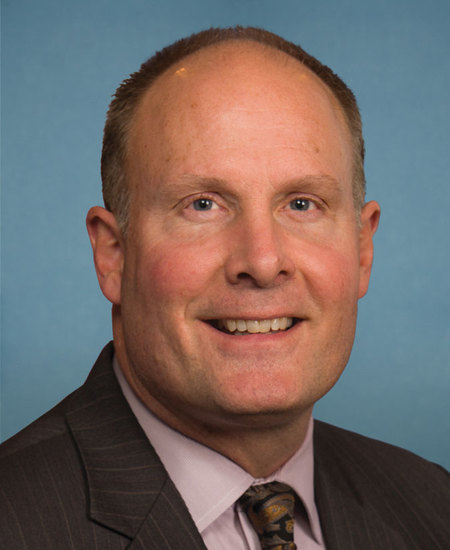
Photo of John R. Moolenaar
R United States House · District 2 · Michigan On the 2026 ballot

Rep. John R. Moolenaar

Compare
Total votes
2,837
all sessions
Attendance
100%
9 missed
Higher than 89% of chamber peers
With party
95%
of cast votes
Higher than 76% of chamber peers
Bipartisan score
3%
crosses aisle rarely
Lower than 77% of chamber peers
Sponsored
1,119
bills & resolutions
Near the chamber average
Committees
4
assignments
1,119 bills and resolutions

Sponsored bills

Total
1,119
Primary
92
Co-sponsor
1,027
This page
1,119
matching current filters
Co-sponsor HR 539
In committee · United States House · Co-sponsor
Chiropractic Medicare Coverage Modernization Act of 2025

Chiropractic Medicare Coverage Modernization Act of 2025 This bill expands Medicare coverage of chiropractic services to include all services provided by chiropractors, rather than only subluxation corrections through manual manipulation of the spine.

In committee Jan 16, 2025 1 co-sponsor
Co-sponsor HR 516
In committee · United States House · Co-sponsor
To amend the Internal Revenue Code of 1986 to modify the railroad track maintenance credit.

This bill increases the annual limit on the tax credit for qualified railroad track maintenance expenses (also referred to as the short line railroad tax credit) and expands eligibility for claiming the credit. Under current law, the tax credit is limited each tax year to $3,500 multiplied by the sum of the number of miles of railroad track owned or leased by the taxpayer (miles owned or leased) and the number of railroad track miles assigned to the taxpayer by a Class II or III railroad (miles assigned). This bill increases the annual limit to $6,100 multiplied by the sum of miles owned or leased and miles assigned. The $6,100 amount used in the calculation of the tax credit limit is adjusted for inflation for tax years beginning after 2025. The bill also expands eligibility for the tax credit to include gross expenses for maintaining railroad tracks owned or leased as of January 1, 2024. Under current law, the tax credit is limited to gross expenses for maintaining railroad tracks owned or leased as of January 1, 2015.

In committee Jan 16, 2025 1 co-sponsor
Primary HR 524
In committee · United States House · Lead sponsor
NO GOTION Act

Maddy summaryHR 524, the "NO GOTION Act," blocks U.S. green energy tax credits for companies tied to specific countries. It amends tax law to deny benefits under sections like 30C, 45, and 48 to any "disqualified company" - defined as entities created in, controlled by, or linked to China, Russia, Iran, or North Korea. The law directly affects corporations with ties to these nations that seek federal tax incentives for clean energy projects. The policy takes effect for tax years after the bill's enactment, removing eligibility for these companies without altering other tax rules.

In committee Jan 16, 2025 0 co-sponsors
Co-sponsor HJRES 19
In committee · United States House · Co-sponsor
To acknowledge the courage and sacrifice of veterans of the Vietnam war and formally apologize for the treatment they received upon returning home.

This joint resolution recognizes the sacrifice of veterans of the Vietnam War and commends them for their sacrifice to the United States. The joint resolution also urges the President to formally acknowledge the widespread mistreatment of such veterans as part of the ongoing Vietnam War Commemoration and issue a formal apology to the veterans and their families. Additionally, the joint resolution expresses urgent support for increased education to better reflect the sacrifice and treatment of Vietnam veterans.

In committee Jan 15, 2025 1 co-sponsor
Co-sponsor HR 404
In committee · United States House · Co-sponsor
Hearing Protection Act

Maddy summaryHR 404, the "Hearing Protection Act," reclassifies firearm silencers (devices that reduce gunfire noise) as firearms for federal tax and regulatory purposes. It imposes a 10% federal tax on silencers, requires the destruction of all existing federal silencer registration records within one year, and preempts state laws that tax or regulate silencers. The bill clarifies that silencers are treated as firearms under federal law, including for licensing and marking requirements, and defines "firearm silencer" to include specific components. Note: The bill’s title is misleading - it addresses firearm silencer regulation, not hearing protection for people.

In committee Jan 15, 2025 1 co-sponsor
Primary HR 444
In committee · United States House · Lead sponsor
Native American Health Savings Improvement Act

Maddy summaryThis bill changes tax rules to allow Native Americans receiving care through the Indian Health Service (IHS) to qualify for Health Savings Accounts (HSAs). Previously, individuals using IHS services might have been disqualified from HSAs solely because of that care. The law amends the tax code to explicitly state that IHS eligibility does not disqualify someone from an HSA. The change takes effect for tax years starting after December 31, 2024.

In committee Jan 15, 2025 0 co-sponsors
Co-sponsor HR 413
In committee · United States House · Co-sponsor
CHILD Act of 2025

Maddy summaryHR 413, the CHILD Act of 2025, increases the annual tax benefit limit for dependent care assistance programs from $5,000 to $10,000 (with $2,500 to $5,000 for single filers) for taxpayers using employer-sponsored dependent care accounts. It adds automatic annual cost-of-living adjustments to these limits based on inflation, rounding increases to the nearest $50. The bill also removes an outdated provision (previously referenced as subparagraph (D)) from the tax code. These changes directly affect working parents and caregivers who use dependent care benefits, applying to tax years beginning after December 31, 2024.

In committee Jan 15, 2025 1 co-sponsor
Co-sponsor HR 401
In committee · United States House · Co-sponsor
No Taxpayer Funding for the World Health Organization Act

Maddy summaryHR 401, the "No Taxpayer Funding for the World Health Organization Act," prohibits the U.S. government from providing any assessed or voluntary contributions to the World Health Organization (WHO) starting on the day the bill becomes law. This directly affects the WHO, which would lose U.S. funding through these specific channels, and the U.S. government, which would no longer allocate taxpayer money for this purpose. The key mechanism is a statutory ban that overrides existing law, requiring immediate cessation of such payments without needing additional authorization. The bill does not impact other U.S. international health programs or the WHO's broader operations.

In committee Jan 14, 2025 1 co-sponsor
Co-sponsor HCONRES 3
In committee · United States House · Co-sponsor
Expressing support for the Geneva Consensus Declaration on Promoting Women's Health and Strengthening the Family and urging that the United States rejoin this historic declaration.

Maddy summaryHCONRES 3 is a symbolic congressional resolution expressing support for the Geneva Consensus Declaration, an international agreement signed by 39 countries that affirms women’s health, family protection, and opposes international abortion rights. It urges the U.S. to rejoin the declaration, which emphasizes that no country has an obligation to fund or facilitate abortion and that families are foundational to society. The resolution does not create new laws but reaffirms existing U.S. policies prohibiting federal funding for abortions or coercive family planning abroad. It directly affects U.S. foreign policy direction but has no binding effect on government actions.

In committee Jan 13, 2025 1 co-sponsor
Co-sponsor HR 284
In committee · United States House · Co-sponsor
GLRI Act of 2025

Maddy summaryThis bill reauthorizes the Great Lakes Restoration Initiative (GLRI) through fiscal year 2031, providing $500 million annually for Great Lakes cleanup and restoration projects. It directly affects federal agencies (like the EPA), state governments, tribes, and environmental groups working on Great Lakes water quality, habitat restoration, and pollution prevention. The key provision extends existing funding levels for five additional years (2027-2031), ensuring continued support for projects addressing invasive species, toxic pollutants, and coastal wetlands restoration across the Great Lakes region. This is a funding authorization bill, not a policy change to the program's scope.

In committee Jan 10, 2025 1 co-sponsor
Showing 341 to 350 of 1,119 bills
Previous 1 … 34 35 36 … 112 Next