

Maddy summaryThe Streamlining Federal Grants Act of 2023 requires federal agencies to simplify grant application and reporting processes, with a focus on improving access for underserved communities, rural areas, and historically excluded organizations like faith-based groups. Key mechanisms include designating senior agency officials for grants, creating a Grants Council to coordinate improvements, and mandating plain-language notices of funding opportunities under 500 words. Agencies must develop annual plans to streamline procedures, ensure language accessibility for limited-English speakers, and report progress to Congress. The bill directly affects federal agencies managing grants and their recipients, aiming to reduce administrative burdens while expanding equitable access to federal funding.
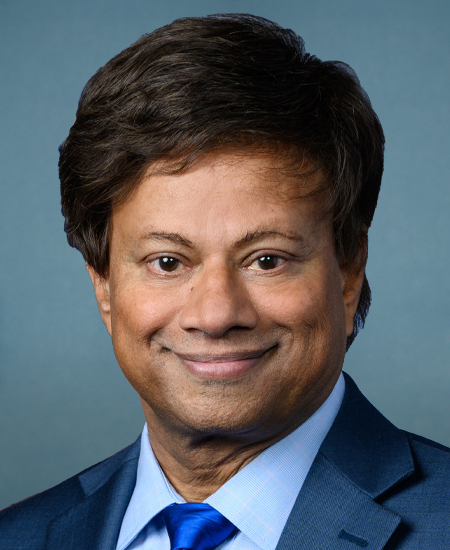
Rep. Shri Thanedar
Sponsored bills
Maddy summaryThe Environmental Health Workforce Act of 2023 addresses critical staffing shortages in environmental health by requiring the U.S. Department of Health and Human Services (HHS) to develop model standards for credentialing workers and create a national workforce development plan. It directs HHS to provide states with technical assistance for credentialing, establish performance measures for workforce programs, and submit a comprehensive plan to Congress within two years. The bill also mandates a report examining best practices in six states (three with and three without credentialing requirements) to identify effective training and certification approaches for public health workers who investigate environmental hazards. Additionally, it expands federal student loan forgiveness eligibility to include full-time environmental health workers meeting state credentialing standards. This legislation directly affects state/local health agencies, Tribal programs, and environmental health workers across the U.S.
Maddy summaryThis bill amends the federal tax code to exclude strike benefits from taxable income for union members. Specifically, it adds a new tax code section (139J) stating that compensation paid to members of labor organizations (under section 501(c)(5)) as replacement for lost wages during a strike is not counted as gross income. This directly affects union members who receive such benefits during work stoppages. The change applies to benefits received after January 1, 2023, making these payments tax-free under current law.
Maddy summaryHR 5895 amends the Higher Education Act to allow historically Black colleges and universities (HBCUs) to use existing grant funds for specific arts-related activities. The bill adds new provisions enabling HBCUs to provide financial assistance to arts students, establish arts outreach programs, offer wraparound student services (like mentorship and career advising), maintain Black art collections, and create paid arts internships through partnerships. This directly affects HBCUs by expanding how they can allocate current funding to strengthen their arts programs and support Black artists. The key mechanism is modifying Section 323 of the Higher Education Act to include these new uses, with optional partnerships with the National Endowment for the Arts.
Maddy summaryThe Rail Worker and Community Safety Act establishes a minimum 2-person crew requirement for most freight trains (with exceptions for smaller carriers or specific low-risk operations), mandates new safety regulations for hazardous materials transportation including advance notification to emergency response agencies, and requires rail carriers to provide employees with earned paid sick time (1 hour for every 30 hours worked). The bill also sets a minimum requirement of 425 federal rail safety inspectors with specialized expertise across various safety domains, along with additional funding for hiring and compensation. These provisions directly affect rail carriers, rail workers, and communities near rail operations, aiming to enhance rail safety and worker protections through concrete policy changes.
Maddy summaryHR 5653, the "No Budget, No Pay Act," requires Congress to pass a budget plan by April 15 and all annual funding bills by September 30 each year, or members lose pay for the period starting the day after each deadline until the bills are approved. It directly affects all voting Members of Congress (including delegates) during the specified penalty periods, excluding the Vice President. The bill imposes a financial consequence for missing these budget deadlines, aiming to incentivize timely fiscal planning by withholding compensation for the duration of the delay. This is a procedural mechanism focused on budget process deadlines, not on substantive policy changes.
Maddy summaryHR 2577 establishes the DHS Suicide Prevention and Resiliency for Law Enforcement Act, requiring all Department of Homeland Security (DHS) law enforcement components - including U.S. Customs and Border Protection, Immigration and Customs Enforcement, the Secret Service, TSA, and others - to implement new mental health programs. The law creates a central "Law Enforcement Mental Health and Wellness Program" under the Chief Medical Officer to coordinate suicide prevention, reduce stigma, and provide confidential support, including peer-to-peer networks, annual training for officers, and resources for families. Key mechanisms include mandatory annual confidential surveys of personnel, data collection on suicides (while protecting privacy), and requiring DHS components to improve mental health programs by removing barriers to seeking help and ensuring no adverse actions for officers who access counseling. The bill mandates annual congressional briefings on implementation through 2027.
Maddy summaryHR 5827, the Tenants’ Right to Organize Act, grants tenants in federally assisted housing the right to form and join tenant organizations to address housing issues without fear of retaliation. It directly affects tenants receiving tenant-based rental assistance (like Section 8 vouchers) and tenants in low-income housing tax credit (LIHTC) properties. Key provisions require public housing agencies and property owners to recognize tenant organizations, allow protected activities (such as leafleting and door-to-door outreach), and prohibit retaliation - while establishing an enforcement protocol for complaints and quarterly reporting to Congress. The bill also mandates annual notifications to tenants about their organizing rights and includes specific protections for LIHTC properties through owner compliance requirements and fines for violations.
Maddy summaryThe CEDS Act requires state and local governments receiving federal economic development funds to include affordable, quality care services - such as child care, early education, disability care, and elder care - in their economic development plans. It directs the Commerce Secretary to issue implementation guidance within one year, explaining how to integrate these care services into existing development strategies. Existing approved plans will only need updates during scheduled reviews, not immediately upon the law's enactment. This change directly affects communities and organizations using federal grants under the Public Works and Economic Development Act of 1965.
Maddy summaryHR 5667, the Pay Our Military Act, ensures continued pay and allowances for active-duty military members, reservists, Department of Defense civilians, and qualifying contractors during any government funding gap in fiscal year 2024. It appropriates funds from the Treasury to cover these payments if regular appropriations bills aren't passed before the end of the fiscal year. The funding automatically terminates once regular appropriations are enacted or by January 1, 2025, whichever comes first.