

Maddy summaryThis bill updates federal research funding by directing the National Science Foundation (NSF) to prioritize two new areas of study: the impact of harmful childhood experiences (like abuse or neglect) and how toxic stress affects youth mental health. It amends existing law to require NSF-funded suicide prevention research to include these specific topics. The bill directly affects NSF research programs and grants focused on youth mental health, ensuring future studies systematically examine these factors. The change is limited to research priorities - no new funding or direct services are created.
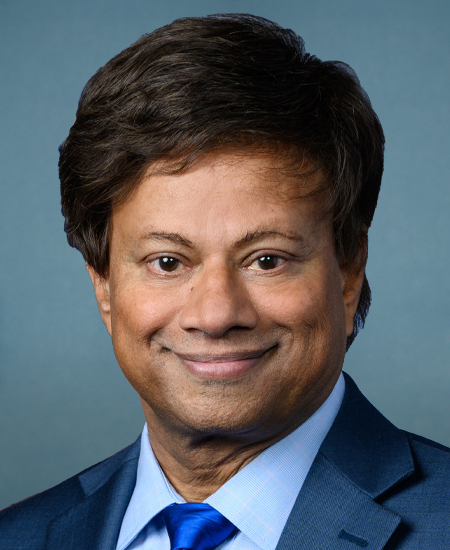
Rep. Shri Thanedar
Sponsored bills
Maddy summaryHRES 1217 is a symbolic House resolution supporting the designation of May 10, 2024, as "National Asian American, Native Hawaiian, and Pacific Islander Mental Health Day." It directly affects the AANHPI community, which faces significant mental health disparities (including 63.7% of those needing care not receiving it and higher youth suicide rates). The resolution does not create new policies or funding but encourages federal, state, and local agencies to improve mental health awareness and culturally appropriate services for this community. It emphasizes recognizing cultural heritage as beneficial to mental health and aligns with existing May observances for AANHPI Heritage and Mental Health Awareness.
Maddy summaryHR 8353, the Preparing Election Administrators for AI Act, requires the Election Assistance Commission (EAC) to create voluntary guidelines for state and local election offices within 60 days of the bill's enactment. These guidelines must address AI risks and benefits in election administration, cybersecurity threats from AI, how AI impacts election information accuracy, and strategies to combat AI-generated disinformation. The EAC will develop these guidelines in consultation with the National Institute of Standards and Technology (NIST). The bill directly affects election administrators by providing non-binding tools to manage AI technology use in elections.
Maddy summaryHR 8336 amends the Transition Assistance Program (TAP) to create a dedicated counseling pathway specifically for members of the reserve components of the Armed Forces. The bill adds language to Section 1142(c)(1) of Title 10, requiring military departments to include this reserve-focused pathway within TAP services. This change directly affects reserve service members transitioning from military to civilian life by providing tailored counseling resources. The bill modifies an existing program structure without creating new benefits or funding.
Maddy summaryThis bill directs the Health and Human Services Secretary to fund research on early detection and treatment of uterine fibroids, with a focus on reducing health disparities. It authorizes grants to states for screening programs (including advanced imaging), patient navigation services, and public education campaigns - prioritizing areas with socially vulnerable populations at higher risk. States receiving funds must implement evidence-based strategies to improve access to early intervention. The bill also requires regular reports to Congress on grant outcomes and research findings related to fibroid treatment disparities and related conditions like Asherman’s Syndrome.
Maddy summaryThis bill provides $280 million in funding for the Department of Education's Office for Civil Rights (OCR) for fiscal year 2024, with funds available through September 2025. The OCR investigates school discrimination complaints related to race, sex, disability, and other protected characteristics. This funding directly supports the OCR's ability to handle civil rights cases involving students and schools nationwide, without creating new student requirements or altering existing laws.
Maddy summaryThis bill creates grants to support mental and behavioral health graduate programs at minority-serving institutions like historically Black colleges, tribal colleges, and other institutions serving communities of color. It requires at least 5% of grant funds to provide scholarships for students from health professional shortage areas. The grants can help institutions establish or improve programs that train professionals to provide culturally responsive and trauma-informed care. The goal is to increase the number of mental health professionals serving in underserved communities and diversify the mental health workforce.
Maddy summaryHR 8231, the James Earl Jones Congressional Gold Medal Act, authorizes a Congressional Gold Medal to be awarded to actor James Earl Jones in recognition of his distinguished career in theater and film, and his role in advancing inclusion and equal opportunities for people of all backgrounds in the entertainment industry. The Treasury will strike the medal with an image and inscription of Jones, and may produce and sell bronze duplicates to cover costs, with proceeds deposited into the U.S. Mint's public enterprise fund. This bill serves as a ceremonial honor with no new legal requirements or policy changes.
Maddy summaryThe Captive Primate Safety Act prohibits the import, export, sale, transport, breeding, or possession of certain nonhuman primates - including chimpanzees, gorillas, monkeys, and their hybrids - in interstate or foreign commerce. It directly affects private owners, breeders, and commercial traders of these animals, with limited exceptions for pre-enactment animals (requiring registration with the U.S. Fish and Wildlife Service and restrictions on breeding/sale) and registered research facilities. The law amends the Lacey Act to add these primates to prohibited species lists, effective upon enactment, with regulations to be issued within 180 days. Enforcement remains active even if regulations are delayed, ensuring immediate prohibitions on commercial trade and possession.
Maddy summaryThis resolution symbolically recognizes April 11-17, 2024, as the seventh annual "Black Maternal Health Week." It highlights the disproportionately high maternal mortality and morbidity rates faced by Black women in the U.S., citing data showing Black women are 2-3 times more likely to die from pregnancy-related causes than White women. The resolution emphasizes systemic racism, healthcare inequities, and barriers like limited access to care as key factors contributing to these disparities. It calls for policy action - including support for the Black Maternal Health Momnibus Act - but does not create new laws or allocate funding.