

Maddy summaryHR 9051, the Compassionate Assault Response and Empathy Act of 2024, requires state, tribal, and local law enforcement agencies to implement trauma-informed training for officers handling sexual assault cases. The bill provides federal grants to fund this training, mandating at least eight hours for new officers during academy training and four hours annually for existing officers. Training must focus on preventing retraumatization, supporting victims, and include diverse trainers with inclusive representation. Agencies must report annually to Congress on grant usage and program effectiveness, with the Department of Health and Human Services maintaining an online directory of qualified trainers.
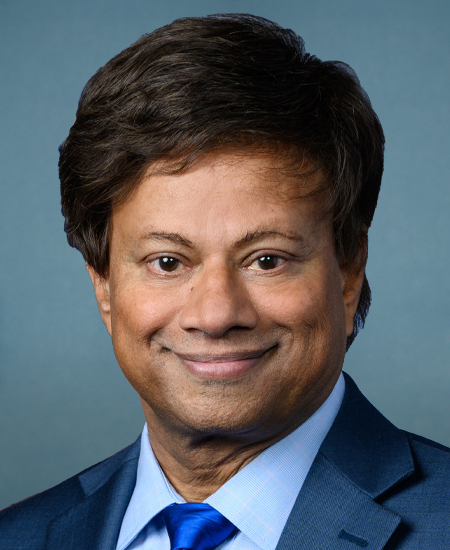
Rep. Shri Thanedar
Sponsored bills
Maddy summaryHR 4581, the Maternal and Child Health Stillbirth Prevention Act of 2024, amends Title V of the Social Security Act to explicitly allow federal funds to support stillbirth prevention efforts. The bill directs states receiving Title V maternal and child health funds to use these resources for evidence-based programs and research aimed at reducing stillbirths, including tracking fetal movements, screening for growth issues, smoking cessation, and community support. It directly affects state maternal health programs by clarifying that existing funding can now cover specific stillbirth prevention activities previously not explicitly permitted. The law changes how Title V funds may be spent, adding clear provisions for research and programs targeting stillbirth reduction. This is a policy change that updates funding guidelines without creating new programs or mandates.
Maddy summaryHR 9023 would extend temporary work authorization (OPT) for foreign students with STEM degrees from 29 to 48 months after graduation, allowing applications up to 180 days before completion. It increases the annual H-1B visa quota for STEM graduates from 20,000 to 30,000 and requires the H-1B lottery to prioritize applicants with STEM degrees. The bill applies to foreign students who earned STEM degrees from accredited U.S. colleges or universities. A report on the bill's impact must be submitted to Congress within one year of enactment.
Maddy summaryHR 9005, the Teacher, Principal, and Leader Residency Access Act, amends the Higher Education Act to allow Federal Work-Study funds to support paid residency programs for aspiring teachers, principals, and school leaders. The bill enables schools to use these funds for compensation during residency training and travel, prioritizing students eligible for Federal Pell Grants. It defines a "residency program" as a structured, year-long apprenticeship where participants work alongside mentor educators while completing coursework in teaching or leadership skills, culminating in full state certification. This directly affects school districts facing teacher shortages, especially in high-need subjects and schools serving low-income or minority students, by expanding access to a proven model that increases educator retention. The policy change focuses on funding mechanisms rather than outcomes, making residency participation financially feasible for participants and institutions.
Maddy summaryThis bill allows individuals to deduct auto insurance payments for household members from their income when applying for federal or state assistance programs like SNAP or Medicaid. It directly affects people seeking benefits by reducing their calculated income, potentially making them eligible for more aid. The deduction applies to payments made for passenger vehicles registered under state law, covering all household members. This change modifies how income is calculated for eligibility, without altering the benefits themselves.
Maddy summaryHRES 1355 is a non-binding resolution supporting the designation of July 10 as Journeyman Lineworkers Recognition Day. It honors lineworkers who maintain electrical infrastructure under hazardous conditions, including during disasters, and commemorates Henry Miller, the first president of the International Brotherhood of Electrical Workers, who died on July 10, 1896, while troubleshooting an electrical outage. The resolution encourages public recognition of these workers' contributions but does not create new laws or policies.
Maddy summaryHR 8981, the Supporting Trauma-Informed Education Practices Act of 2024, provides $50 million annually (2025-2029) to fund grants for schools and tribal educational agencies. It directly supports students, teachers, and school staff by connecting them with community mental health services through evidence-based programs. Key provisions require grantees to develop trauma-informed school environments, offer culturally competent professional development, engage families, and establish partnerships with mental health agencies. The bill mandates that federal funds supplement - not replace - existing local or state funding for these services.
Maddy summaryThe SHIELD Act (HR 8980) establishes a federal grant program to improve access to legal representation for people facing deportation. It authorizes $100 million annually for fiscal years 2025-2026 to fund workforce development and legal services infrastructure through competitive grants to states, local governments, and community organizations. The program will support recruitment, training, and retention of legal professionals to provide high-quality, culturally competent representation to immigrants in deportation proceedings. Grantees must report on services provided, outcomes achieved, and unmet needs to ensure accountability and measure the program's impact on addressing the current shortage of legal representation in immigration court.
Maddy summaryHR 8825, the Right to Vote Act, establishes a fundamental right for all citizens of legal voting age to vote in federal elections. It directly affects voters across all states and territories by prohibiting government actions that make voting harder (like restrictive ID laws or reduced polling places) unless those actions are the least restrictive way to serve a significant government interest. The bill creates two legal standards: "retrogression" (diminishing voting access) and "substantial impairment" (making voting significantly harder), allowing voters to sue in federal court to challenge such restrictions. Courts must expedite these cases, and the law applies to all federal elections occurring on or after September 1, 2024.
Maddy summaryHCONRES 118 is a symbolic congressional resolution recognizing the wage disparity faced by Black women in the U.S. It specifically highlights that Black women earn 69 cents for every dollar earned by White, non-Hispanic men, as noted in Census Bureau data. The resolution marks July 9, 2024, as Black Women’s Equal Pay Day to symbolize how long into 2024 Black women must work to earn what White men earned in 2023. It does not create new laws or policies but formally acknowledges this disparity and reaffirms congressional support for equal pay for equal work.