

Maddy summaryHR 2818, the Early Childhood Nutrition Improvement Act, updates federal child care nutrition program rules to improve administration and reduce burdens. It requires annual eligibility reviews for for-profit child care centers (Section 2), overhauls how "serious deficiency" findings are handled (Section 3), and allows up to 3 meals per day for children in extended care (Section 4), including a study on third-meal reimbursement. The bill also creates an advisory committee (Section 6) to reduce paperwork for providers, parents, and states, focusing on streamlining applications, digital documentation, and eliminating duplicative State requirements. These changes directly affect child care centers, family day care homes, and state agencies administering the program.
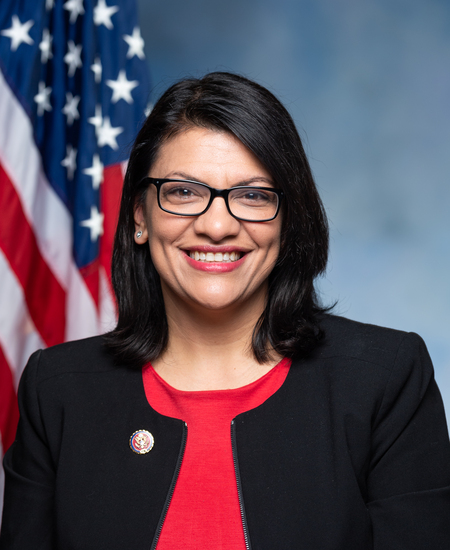
Rep. Rashida Tlaib
Sponsored bills
Maddy summaryHR 2881, the COAST Anti-Drilling Act of 2025, prohibits the federal government from issuing new oil and gas leases in four specific coastal planning areas: the North Atlantic, Mid-Atlantic, South Atlantic, and Straits of Florida. This directly affects the Department of the Interior (specifically the Secretary) and oil and gas companies seeking to explore or develop resources in these regions. The bill amends the Outer Continental Shelf Lands Act to ban all new leasing authorizations in these areas, as defined by the 2024-2029 leasing program notice. It does not affect existing leases or operations but prevents future development in these designated coastal zones.
Maddy summaryThe Vote at Home Act of 2025 requires states to mail ballots to all registered voters for federal elections at least two weeks before Election Day, eliminating unnecessary barriers like notary requirements or excuses for voting by mail. It ensures ballots are accessible to voters with disabilities and provides free postage for all mail-in ballots, making voting more convenient for rural voters, those with disabilities, and people with scheduling conflicts. The bill also expands automatic voter registration through motor vehicle offices, streamlining the process while protecting against errors in registration. These changes aim to increase accessibility and participation in federal elections while reducing election administration costs, with states required to comply for elections beginning in 2026.
Maddy summaryThis bill prevents the U.S. government from diverting, delaying, or reassigning federal funds specifically designated for the National Weather Service and Great Lakes programs without new congressional approval. It directly affects NOAA’s operations in these areas by requiring that existing appropriations cannot be altered without explicit new legislation referencing this bill. The law mandates annual certification from NOAA’s Administrator to five congressional committees confirming compliance with these funding protections. This is a procedural measure focused on safeguarding current funding streams, not creating new programs or altering weather service operations.
Maddy summaryHR 2857, the "Drain the Swamp Act," makes Executive Order 13989 a permanent law requiring all executive branch employees to submit annual ethics commitments. This directly affects federal workers in the executive branch, including department heads and agency staff, by mandating formal ethics disclosures as a legal requirement. The key provision codifies an existing executive order - previously changeable by presidential decree - into binding law, ensuring these ethics rules persist across administrations. This change shifts the enforcement of ethics commitments from executive policy to statutory obligation without altering the content of the requirements.
Maddy summaryHR 2843 establishes an Advisory Committee to review and recommend renaming Federal land units (such as national parks, forests, and wildlife refuges) with names containing racial slurs, honoring individuals who held racist views or committed atrocities against minorities, or perpetuating stereotypes. The Committee will gather public input, propose new names, and submit recommendations to the Board on Geographic Names, which must act on these proposals within three years. This process aims to replace offensive names with equitable alternatives across all federal lands, following defined criteria for "offensive place names." The bill creates a structured, public review mechanism to address historically insensitive geographic names without altering existing federal land management authority.
Supplemental Oxygen Access Reform Act of 2025 or the SOAR Act of 2025 This bill establishes certain requirements with respect to the payment and provision of supplemental oxygen and related services under Medicare. For example, the bill provides for separate payments, indexed to inflation, of oxygen and related equipment, supplies, and services under Medicare (rather than under the competitive acquisition program). It also specifically covers services that are provided by respiratory therapists under Medicare and provides for an additional payment adjustment for these services. Additionally, the bill (1) requires the Centers for Medicare & Medicaid Services to develop an electronic template for providers to use when prescribing oxygen and related equipment, supplies, and services; and (2) establishes certain rights for beneficiaries receiving these items and services, such as the right to choose their suppliers and to receive clear communications and be informed about the services provided.
Maddy summaryThis resolution (HRES 315) is a purely commemorative measure that formally recognizes the 159th anniversary of the Civil Rights Act of 1866. It acknowledges the historical significance of the 1866 Act as the first federal law defining citizenship and affirming equal legal protection for all Americans, regardless of race. The resolution highlights the Act's role as a foundational precedent for the Thirteenth and Fourteenth Amendments. As a ceremonial resolution, it has no legal effect or policy impact on any individuals or groups.
Maddy summaryHRES 317 is a non-binding resolution urging the U.S. government to lead global efforts to halt and reverse the nuclear arms race. It calls on the President to pursue negotiations with nuclear-armed states to reduce arsenals, end the U.S. policy allowing first use of nuclear weapons, eliminate immediate launch readiness, stop developing new weapons, and support communities affected by nuclear programs. The resolution emphasizes diplomatic action over military modernization to reduce nuclear risks and prevent catastrophic conflict.
Maddy summaryHRES 187 is a resolution of inquiry requesting the President to provide the House of Representatives with complete, unedited documents within 14 days. It specifically asks for records related to federal employees placed on administrative leave, removed, terminated, or reassigned following actions by Elon Musk, the DOGE agency team, or the Trump administration. The resolution also seeks documents about workforce reductions affecting Diversity, Equity, and Inclusion (DEI) staff and communications regarding the removal of inspectors general. This procedural request aims to obtain transparency on executive branch actions, not to enact new policy.