

Maddy summaryThis bill requires the Transportation Security Administration (TSA) to create and update guidance within 90 days (and every five years) to ensure hygienic handling of breast milk, baby formula, infant water, juice, and cooling accessories during airport security screening. The guidance must be developed with maternal health organizations and set standards to minimize contamination risks when these items undergo re-screening or additional testing. It also mandates a one-year audit by the DHS Inspector General to assess TSA compliance and evaluate how screening technologies impact the processing of these infant items. The bill directly affects traveling parents and caregivers who transport these essential supplies.
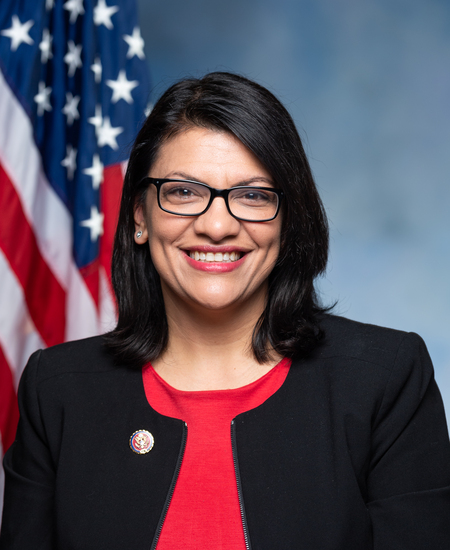
Rep. Rashida Tlaib
Sponsored bills
Maddy summaryHR 4303 establishes a new Special Envoy for Humanitarian Aid Workers within the State Department, appointed by the President and reporting to the Secretary of State. The envoy investigates deaths or detentions of U.S.-supported aid workers, advocates for better security coordination between aid groups and foreign forces, and reports annually to Congress on security challenges and U.S. humanitarian aid distribution. The bill also prohibits U.S. security assistance to countries that unlawfully kill or fatally injure aid workers unless those countries investigate violations and implement corrective actions. Key provisions include mandatory reports to Congress on aid worker safety, coordination with the UN, and requirements for a 90-day investigation into aid worker deaths or detentions. This directly affects U.S. humanitarian aid workers operating in conflict zones and foreign governments receiving U.S. security assistance.
Maddy summaryThis bill requires online contact lens sellers to provide a secure electronic method for customers to transmit their contact lens prescriptions, directly affecting online retailers. It mandates that such electronic transmissions comply with HIPAA privacy rules and that any protected health information sent via email must be encrypted. The law updates existing rules to modernize prescription verification for online sales while maintaining privacy protections.
Maddy summaryThe Expanding Access to Mental Health Services in Schools Act of 2025 creates a federal grant program to help high-need schools hire and retain mental health professionals like counselors, psychologists, and social workers. It targets schools in the top 15% of need (based on student poverty or counts) that lack required staff ratios, such as one counselor per 250 students. Grants fund recruitment incentives (e.g., student loan repayment), retention programs, and evidence-based mental health services, with recipients required to contribute 25% of costs from non-federal funds. Schools must report annually on staff numbers, student-to-staff ratios, and retention rates to track progress toward improved mental health access.
Maddy summaryHRES 550 is a non-binding House resolution recognizing June 2025 as LGBTQIA+ Pride Month. It formally encourages all U.S. citizens to celebrate Pride Month to learn about LGBTQIA+ history, including the Stonewall Inn and Compton's Cafeteria uprisings. The resolution affirms that LGBTQIA+ rights are human rights and emphasizes the ongoing struggle for equality. It has no legal effect but serves as a symbolic statement of support for the LGBTQIA+ community and its history.
Maddy summaryThe Syria Sanctions Relief Act (HR 4241) would repeal two U.S. laws that imposed sanctions on Syria: the Syria Human Rights Accountability Act of 2012 and the Caesar Syria Civilian Protection Act of 2019. By removing these legal foundations, the bill would eliminate specific sanctions targeting Syrian government officials, entities, and transactions with Syria. This would directly affect Syrian officials and businesses previously restricted by these sanctions, as well as U.S. companies and individuals barred from engaging with Syria under these laws. The bill focuses solely on repealing existing sanctions legislation, not on creating new policies or altering broader U.S. foreign policy toward Syria.
Maddy summaryThe GLOBE Act of 2025 aims to advance global LGBTQI human rights by requiring the U.S. State Department to document and report on violence and discrimination against LGBTQI people worldwide. It establishes a permanent Special Envoy for LGBTQI rights at the State Department and creates an interagency group to coordinate U.S. government responses to threats against LGBTQI populations. The bill authorizes sanctions against foreign individuals responsible for human rights violations against LGBTQI people, including banning them from entering the United States. It also includes provisions to improve U.S. foreign assistance programs to better protect LGBTQI rights and makes changes to immigration policy to better protect LGBTQI asylum seekers.
Treat and Reduce Obesity Act of 2025 This bill expands Medicare coverage of intensive behavioral therapy for obesity. Specifically, the bill allows coverage for therapy that is provided by (1) a physician who is not a primary care physician; or (2) other health care providers (e.g., physician assistants and nurse practitioners) and approved counseling programs, if provided upon a referral from, and in coordination with, a physician or primary care practitioner. Currently, such therapy is covered only if provided by a primary care practitioner. The bill also allows coverage under Medicare's prescription drug benefit of drugs used for the treatment of obesity or for weight loss management for individuals who are overweight.
Maddy summaryThis bill would provide $20.7 million in compensation ($10.398 million compensatory and $10.398 million punitive) to the two remaining living survivors of the 1921 Tulsa Race Massacre - Viola Ford Fletcher and Lessie Benningfield Randle - as of May 1, 2025. It requires the Treasury Secretary to pay this amount within 30 days of verifying survivors' identities through a birth certificate, using the Judgment Fund. The payments would fully satisfy all federal claims related to the massacre, preventing future compensation for this specific harm. The bill cites historical precedents like Japanese internment reparations and 9/11 victim compensation to justify the approach, following the survivors' 2024 Oklahoma Supreme Court case dismissal.
Maddy summaryThe No Secret Police Act of 2025 requires U.S. Immigration and Customs Enforcement (ICE) and other Department of Homeland Security officers working on border security or immigration enforcement to visibly display their official badges or uniforms and provide identification during detentions or arrests. It prohibits officers from wearing face coverings that conceal their face during these interactions. The bill also mandates that the Department report to Congress about tactical gear policies and research technology to improve badge visibility in different conditions like weather or lighting. These changes aim to increase transparency in immigration enforcement encounters.