

Maddy summaryHCONRES 42 is a symbolic congressional resolution recognizing the persistent wage gap between Black women and White, non-Hispanic men in the U.S. It highlights that Black women earn 66 cents for every dollar earned by White, non-Hispanic men working full-time year-round, with the gap taking over 200 years to close at current rates. The resolution emphasizes how this disparity - rooted in both racial and gender discrimination - impacts Black women’s ability to afford essentials like education, childcare, and housing. It does not create new laws or policies but formally acknowledges the issue on Black Women’s Equal Pay Day (July 10, 2025) and reaffirms support for equal pay.
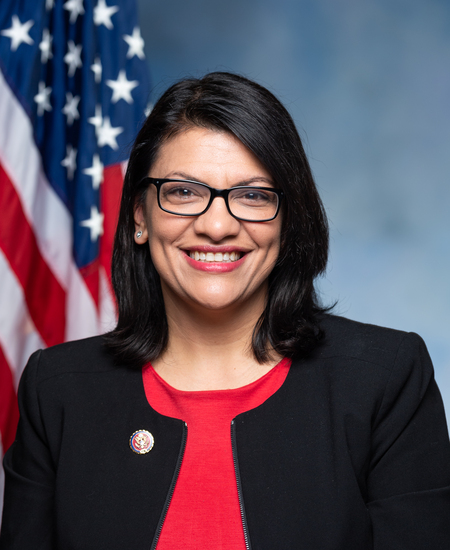
Rep. Rashida Tlaib
Sponsored bills
Maddy summaryHRES 569 is a non-binding House resolution affirming that diversity, equity, inclusion, and accessibility (DEIA) are fundamental U.S. values and emphasizing the need to address ongoing discrimination in workplaces, schools, government programs, the military, and society. It does not create new laws but calls on federal, state, local governments, educational institutions, and businesses to adopt DEIA initiatives to remove barriers faced by marginalized groups, including Black, Latino, AANHPI, Indigenous, women, LGBTQI+, and disabled individuals. The resolution cites data showing persistent discrimination - such as wage gaps, housing segregation, health care disparities, and underrepresentation in leadership - to underscore how systemic inequities cost the economy trillions and limit opportunity. It encourages organizations to foster inclusive environments where all people can achieve their potential, without prescribing specific policy changes.
Maddy summaryThis is a non-binding House resolution (HRES 568) that recognizes climate change as a critical public health threat in the U.S. It does not create new laws but expresses congressional support for coordinated action. The resolution specifically urges the Department of Health and Human Services (HHS) to improve climate resilience in healthcare systems, prioritize funding for underserved communities (including Tribal nations and rural hospitals), and reinstate climate-focused offices like the Office of Climate Change and Health Equity. It also recommends HHS develop better data tools on climate-health impacts and support worker protections against heat exposure. The resolution focuses on guiding federal agency actions, not mandating specific policy changes.
Maddy summaryHRES 575 is a symbolic resolution designating July 10th as "Journeyman Lineworkers Recognition Day." It honors lineworkers who face significant risks daily - working at heights near live wires and responding to disasters like hurricanes and wildfires. The resolution specifically references Henry Miller, an early leader of the International Brotherhood of Electrical Workers, who died on July 10, 1896, while troubleshooting an outage. It encourages the public to recognize these workers' contributions but does not create new laws or allocate funding.
Maddy summaryThe Head Start for Our Future Act amends Section 441(c)(1) of the Higher Education Act of 1965 to replace "literacy training" with "child development and early learning (including Head Start programs and Early Head Start programs carried out under the Head Start Act), literacy training." This technical change formally integrates Head Start and Early Head Start programs into the federal definition of early learning initiatives under the Higher Education Act, while maintaining a separate reference to literacy training. The bill directly affects how federal grants for early childhood education are categorized and administered under the Higher Education Act. It does not alter funding levels, program requirements, or operations but updates administrative terminology to explicitly include Head Start services.
Maddy summaryThis bill requires the FDA's Office of Food Chemical Safety to reassess the safety of at least 10 food additives or related substances every three years starting in 2026. It specifically prioritizes substances like titanium dioxide, red dye 40, BHA, BHT, and sodium nitrite for initial review. If reassessments find substances unsafe, the FDA must update regulations, revoke approvals, or require new pre-market notifications. The law affects food manufacturers by mandating regular safety reviews of additives already in use, with results made public through FDA notices.
Maddy summaryThis bill prohibits federal agency personnel from using physical force, detaining, or interfering with Members of Congress while they conduct official oversight activities on federal property. It requires Members to identify themselves with valid congressional ID and confirms the law does not override standard security procedures or prevent action against immediate physical threats. The bill specifically protects oversight activities like investigations, reviews of federal programs, or site visits at government-owned or leased facilities (including detention centers), ensuring Congress can carry out its constitutional oversight role without physical obstruction.
Maddy summaryThe Clean Shipping Act of 2025 sets new federal standards to reduce greenhouse gas emissions from commercial shipping in U.S. waters. It requires vessels over 400 gross tons operating on covered voyages (between U.S. ports or U.S. ports and foreign ports) to gradually lower the carbon intensity of their fuel, aiming for 100% reduction by 2050 through phased targets (e.g., 30% reduction by 2030, 58% by 2034). Ship owners must report annual fuel carbon intensity and emissions data, while the EPA must develop consistent reporting methods aligned with international standards. The law applies directly to commercial shipping companies operating eligible vessels and includes flexibility for feasibility adjustments if technological or economic challenges arise.
Maddy summaryHR 4351 amends the Family and Medical Leave Act (FMLA) to shorten the employment duration required for spouses of active-duty military members to qualify for leave. It reduces the qualifying time from 12 months to 90 calendar days with the employer. This change directly affects spouses of service members on covered active duty, making it easier for them to access FMLA leave for their partner’s military service. The bill achieves this by revising the FMLA’s definition of "eligible employee" to include this new 90-day requirement for military spouses.
Maddy summaryThe PBM Reform Act of 2025 aims to increase transparency and fairness in pharmacy benefit manager (PBM) operations within Medicare Part D and Medicaid programs. The bill requires Medicare Part D plans to allow any pharmacy meeting standard terms to join their networks, establishes "essential retail pharmacies" in underserved areas (with limited pharmacy access), and mandates detailed reporting on drug pricing, rebates, and reimbursement rates. It creates a process for pharmacies to report PBM violations of reasonable contract terms and prohibits "spread pricing" in Medicaid, where PBMs retain the difference between what they pay pharmacies and what they charge plans. These provisions aim to improve pharmacy access for Medicare beneficiaries and ensure fairer reimbursement practices for pharmacies.