

Maddy summaryThe End Solitary Confinement Act would prohibit most solitary confinement in federal prisons and detention centers, requiring all incarcerated people to have at least 14 hours daily of out-of-cell group interaction in shared spaces. It establishes strict limits on when solitary confinement can be used (only for brief counts, emergencies as a last resort, or medical isolation), with specific protections for vulnerable populations including youth, the elderly, people with disabilities, pregnant people, and LGBTQ+ individuals. The bill creates a community monitoring body to oversee implementation, requires detailed reporting on confinement practices, and provides incentives for states to adopt similar standards through funding adjustments. It also includes due process protections for placement in restrictive housing and prohibits punitive practices like limiting access to services or confiscating personal property.
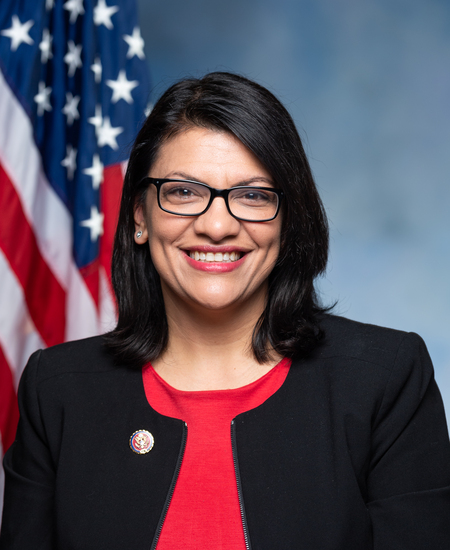
Rep. Rashida Tlaib
Sponsored bills
Maddy summaryThe Corporate Crime Database Act of 2025 requires the Bureau of Justice Statistics to create a public database tracking federal enforcement actions related to corporate crimes. Federal agencies must submit data on corporate offenses - such as violations committed by businesses or employees acting in their job roles - and include details like the business involved, the offense type, relevant laws, enforcement agency, and outcome. The database will be searchable online, updated annually, and include historical and future enforcement actions. This affects federal agencies that handle enforcement and makes corporate crime data accessible to the public for transparency.
Maddy summaryThis bill adds "spotted lanternfly control" as a priority research area under federal agricultural funding, authorizing grants to develop and share tools for combating the invasive spotted lanternfly pest (Lycorma delicatula). It directly affects farmers, agricultural communities, and state departments of agriculture in states like Pennsylvania where the pest causes significant crop damage. The key provision amends existing law to allow research grants focused on creating effective treatments and management strategies for the pest. The bill also extends the funding period for all high-priority research initiatives through 2030.
Maddy summaryThe RAP Act of 2025 amends federal evidence rules to generally prohibit the use of a defendant's creative or artistic expression (such as music, poetry, or visual art) as evidence in criminal or civil trials. It directly affects defendants whose artistic works might otherwise be presented against them, making such evidence inadmissible unless the government proves specific conditions by "clear and convincing evidence." These conditions require showing the expression was intended literally, directly relates to the specific facts of the case, is uniquely relevant, and has distinct probative value not available through other admissible evidence. If admitted under the exception, courts must redact the evidence and provide special jury instructions. The law aims to protect artistic expression from being misused in legal proceedings.
Resident Physician Shortage Reduction Act of 2025 This bill increases the number of residency positions eligible for graduate medical education payments under Medicare for qualifying hospitals, including hospitals in rural areas and health professional shortage areas. The bill provides for an additional increase of 2,000 positions per fiscal year from FY2026-FY2032; during this period, each hospital may receive up to 75 additional positions in total under the bill and current law. Additionally, one-third of the positions that are made available under the bill must be allocated to hospitals that are already operating above applicable resident limits. The bill also requires the Government Accountability Office to report on strategies to increase the diversity of the health professional workforce, including with respect to representation from rural, low-income, and minority communities.
Maddy summaryThis bill would require states to adopt ranked choice voting for elections of U.S. Senators and Representatives, with specific rules for how the voting system would work, including ballot design and tabulation methods. It mandates the use of multi-member districts in states with six or more representatives (with districts electing 3-5 representatives each) and requires states with five or fewer representatives to elect all representatives at-large. The bill also establishes new nonpartisan criteria for congressional redistricting, including requirements for population equality, Voting Rights Act compliance, and measures to prevent partisan gerrymandering. States would receive federal funding to implement these changes, with the requirements taking effect for elections following the 2030 census.
Maddy summaryThe End Polluter Welfare Act of 2025 eliminates federal subsidies for fossil fuel production by repealing tax incentives, increasing royalty rates, and prohibiting federal funding for fossil fuel projects. It directly affects oil, gas, and coal companies by terminating tax credits like the enhanced oil recovery credit (Section 43), ending special tax treatments for fossil fuel activities, and increasing offshore royalty rates to 18 3/4 percent. The bill prohibits U.S. International Development Finance Corporation and Export-Import Bank funding for fossil fuel projects, ends interest payments on royalty overpayments, and terminates tax provisions allowing accelerated depreciation for fossil fuel infrastructure. These changes apply to taxable years beginning after the bill's enactment date, with specific provisions targeting coal, petroleum, and natural gas production.
Maddy summaryH.J. Res. 108 proposes a constitutional amendment to remove legal immunity for federal officials, including the President, from criminal prosecution for actions taken while performing official duties. It would prohibit the President from granting pardons to themselves and eliminate the defense that "official authority" excuses violations of federal or state law (with limited exceptions for certain congressional actions). If ratified, this amendment would require Congress to pass implementing laws to enforce these changes. The proposal is currently in the House Judiciary Committee and requires approval by three-fourths of state legislatures to become part of the Constitution.
Maddy summaryHR 4606, the Ally’s Act, requires private health insurance plans (including employer-sponsored plans and individual coverage) to cover hearing implants and related services. It directly affects people with hearing loss who need cochlear implants, bone conduction devices, or external sound processors, as determined by a physician or audiologist. The bill mandates coverage for devices, maintenance, repairs, upgrades every 5 years, hearing assessments, surgery, and rehabilitation - without separate cost-sharing or stricter limits than other medical services. Insurers cannot deny coverage if a provider deems the service medically necessary. The law applies to all applicable health plans and takes effect for plan years beginning January 1, 2026.
Maddy summaryThis bill prohibits life, disability, and long-term care insurers from denying coverage, canceling policies, or increasing premiums based solely on a person's status as a living organ donor. It directly protects living organ donors by preventing insurance discrimination unrelated to actual health risks. The bill also requires the Health and Human Services Secretary to update public educational materials about organ donation benefits, risks, and insurance impacts within six months of enactment. These materials will include information on the new insurance protections established by the bill. The law relies on state insurance regulators for enforcement of the insurance provisions.