

Maddy summaryThe Eviction Right to Counsel Act of 2025 establishes a $100 million annual federal fund (2026-2030) to support legal representation for low-income tenants facing eviction. It directly affects tenants with incomes at or below 200% of the federal poverty line in eviction cases or housing subsidy terminations. The bill provides grants to states, localities, or tribal governments that already have laws guaranteeing free legal counsel for these tenants, prioritizing jurisdictions with additional tenant protections like longer eviction notice periods or emergency rental assistance. Funds can cover attorney training and implementation costs but do not require new federal mandates - eligibility depends on pre-existing state/local "right to counsel" laws.
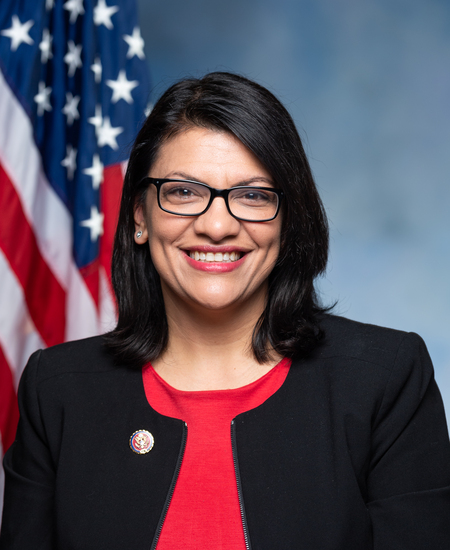
Rep. Rashida Tlaib
Sponsored bills
Maddy summaryThe ACHE Act of 2025 requires the National Institute of Environmental Health Sciences to study health impacts of mountaintop removal coal mining on communities in Kentucky, Tennessee, West Virginia, and Virginia. It imposes a temporary moratorium on new federal permits for such mining until the study concludes, while mandating ongoing pollution monitoring (water, air, soil) at existing sites with public reporting of results. Coal mining companies must pay a fee to cover federal costs for the study and monitoring program. The bill directly affects coal mining operations in the specified Appalachian regions and the communities living near them, focusing on evidence-based health research and transparency.
Maddy summaryHR 4719, the Freedom to Move Act, would create $5 billion in federal grants to help cities, counties, and transit agencies make public transportation free and improve service quality. Local governments applying for these grants must demonstrate how they will redesign bus routes to prioritize low-income and minority neighborhoods, eliminate criminal penalties for fare evasion, and address transit gaps in underserved communities. The grants cover lost fare revenue and fund specific improvements like safer bus stops, dedicated bus lanes, and better service frequency. This directly affects transit agencies and riders in communities currently lacking reliable, affordable transportation options.
Maddy summaryHCONRES 45 is a symbolic congressional resolution recognizing barriers to physical access in federally funded facilities for people with disabilities. It reaffirms support for the Americans with Disabilities Act (ADA) and the Architectural Barriers Act of 1968, and pledges to prioritize inclusive design in future infrastructure projects. The resolution does not create new legal requirements or funding but formally acknowledges ongoing accessibility challenges faced by over 70 million Americans with disabilities. It cites recent data on disability prevalence and existing federal guidelines for pedestrian access, emphasizing the need for equal access to public facilities.
Maddy summaryThis bill would prohibit the detention of pregnant women, lactating women, and postpartum mothers (within one year of childbirth) in immigration custody, requiring their immediate release except in rare circumstances involving public safety threats. It bans the use of physical restraints on these individuals during pregnancy, labor, delivery, and postpartum recovery, with only extremely limited exceptions. The bill mandates that facilities provide comprehensive reproductive health care including prenatal care, labor and delivery services, postpartum care, and access to abortion services. It requires facilities to maintain medical records, obtain informed consent for medical procedures, and conduct weekly reviews of any detained individuals under exceptional circumstances. The bill also establishes reporting requirements for facilities and creates transparency through public reporting of detention practices.
Maddy summaryHR 4627 amends the Foreign Assistance Act of 1961 to update U.S. foreign aid programs combating HIV/AIDS. It specifically adds funding for HIV pre-exposure prophylaxis (PrEP) medications as a covered activity and designates all HIV prevention efforts - including those targeting at-risk populations identified by the World Health Organization - as "core life-saving humanitarian assistance." This change ensures such prevention activities receive priority funding under U.S. foreign aid programs. The bill directly affects how U.S. government agencies allocate resources for global HIV/AIDS prevention initiatives.
Maddy summaryThis bill amends the National Labor Relations Act to recognize college athletes as employees eligible for collective bargaining rights. It directly affects athletes receiving athletic scholarships (grant-in-aid) who perform services for their institution, including those at public and private universities. Key provisions establish that athletes meeting specific criteria (receiving compensation for athletic participation) are employees, allow multiemployer bargaining units across athletic conferences, and prohibit waivers of these rights in scholarship agreements. The bill explicitly states it will not change tax treatment of athletic compensation or affect eligibility for federal financial aid.
Maddy summaryHR 4696 amends Section 249 of the Immigration and Nationality Act to update eligibility for a registry program that provides a pathway to legal status for long-term residents. It changes the requirement from entering the U.S. before January 1, 1972, to entering at least 7 years before the application date. This adjustment bases eligibility on a rolling 7-year window instead of a fixed historical cutoff, allowing more recent long-term residents to qualify. The bill directly affects individuals who entered the U.S. after 1972 but maintained continuous residence for at least seven years prior to applying.
Maddy summaryThis bill requires landlords of multifamily housing (5+ units) with federally backed mortgages to obtain tenant consent to report positive rent payments to credit bureaus, including up to 24 months of payment history. It directly affects tenants in these properties who pay rent on federally backed loans, as their rent payments will become part of their credit history. The law mandates that credit bureaus include these payments when evaluating mortgage applications under the National Housing Act, and covers administrative costs for landlords through the enterprises managing the mortgages. The Director must also submit a 5-year report to Congress on the program's implementation.
Maddy summaryThis bill prohibits companies from using automated systems to set prices or wages based on surveillance data about consumers or workers. It bans "surveillance-based price setting" (personalized pricing based on consumer tracking) and "surveillance-based wage setting" (using personal data to determine worker pay), with limited exceptions for standard discounts like student or senior citizen rates when properly disclosed. Companies must publish clear procedures about how their automated systems work, including how data is used and how consumers/workers can challenge inaccuracies. The Federal Trade Commission and Equal Employment Opportunity Commission will enforce the law, and individuals can file lawsuits to challenge violations. The bill also prohibits pre-dispute arbitration agreements that would prevent class action lawsuits.