

Maddy summaryThe FAIR Fund Act of 2023 requires large financial institutions (with over $1 billion in assets) to defer 50% of senior employees' annual compensation above 7 times the median employee's pay into a dedicated fund. This fund must first cover civil or criminal fines imposed on the institution, and if the institution fails, it must protect depositors' funds before using federal insurance. Senior employees include those earning over $1 million annually or holding top executive roles at institutions with $50 billion+ in assets. The deferral period ranges from 2 to 8 years, depending on the institution's size, and unrepayable deferred compensation is canceled if the fund lacks sufficient funds.
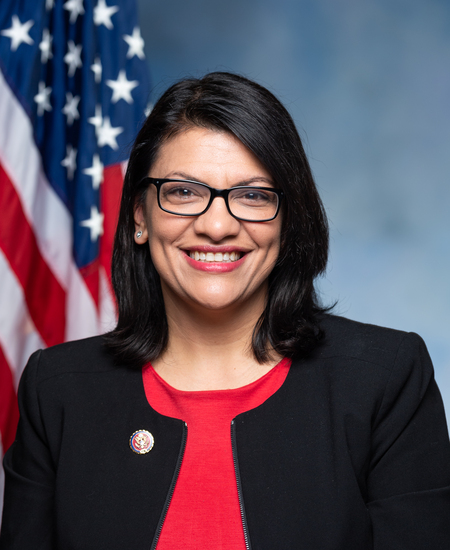
Rep. Rashida Tlaib
Sponsored bills
Maddy summaryHR 4121, the Right to Contraception Act, establishes a federal statutory right for individuals to access contraceptives and contraception services without government restriction or coercion, directly affecting all people seeking reproductive care and health care providers. The bill prohibits state or federal laws that limit access to contraceptives (defined broadly to include devices, drugs, and fertility methods), prevent individuals from obtaining or using them, or allow providers to refuse services based on personal beliefs. It preempts conflicting state laws, requires any restrictions to be justified by "clear and convincing evidence" of advancing access with no less restrictive alternative, and allows private lawsuits to challenge violations. The Act applies nationwide to all health care providers and individuals, protecting access regardless of factors like race, income, or location.
Maddy summaryHR 4052, the National Infrastructure Bank Act of 2023, would establish a federally chartered National Infrastructure Bank to address the estimated $2.6 trillion infrastructure financing gap identified by the American Society of Civil Engineers. The bank would provide loans, loan guarantees, and blended financing for infrastructure projects in transportation, energy, environmental systems, broadband, and community development, with a total loan limit of $5 trillion. Projects must demonstrate public benefits including economic growth, job creation, environmental improvements, and community development, with priority given to disadvantaged communities and projects meeting specific criteria. The bank would be capitalized with up to $500 billion through the purchase of Treasury securities and other means, operating under a 25-member Board of Directors with oversight mechanisms to ensure accountability.
Maddy summaryHR 4061 requires the Health and Human Services Secretary to create a voluntary health registry for people affected by the 2021 Red Hill fuel spill at Pearl Harbor, Hawaii, which contaminated the community water system. It mandates a 20-year epidemiological study to assess health impacts from the contaminated water, including annual reporting on enrollment, health data collection, and interim findings. The bill directs coordination with Defense, Veterans Affairs, and community experts to identify affected individuals, refer them to services, and protect privacy during data collection. All findings and reports must be publicly shared annually and upon study completion, with funding provided by the Department of Defense for fiscal years 2024-2030.
Maddy summaryHR 4024, the Clean Shipping Act of 2023, requires commercial vessels over 400 gross tons to gradually reduce the carbon intensity of their fuel. Starting in 2027, vessels must cut fuel carbon intensity by 20% compared to a 2024 baseline, increasing to 100% (zero emissions) by 2040. The bill mandates annual reporting of fuel carbon intensity and emissions for covered voyages (commercial trips between US ports or to foreign ports) and allows fleet averaging under common ownership. Vessels operating fewer than 30 days annually are exempt, and standards may be adjusted if technological or economic feasibility is challenged.
This resolution expresses the sense of the House of Representatives that the federal government should begin a large-scale effort to reduce incarceration rates and reshape the American legal system by consulting with communities and individuals directly impacted by the justice system; decriminalizing certain behaviors, increasing diversion opportunities, revising sentencing laws, and reducing practices that contribute to recidivism; ending practices that advantage the wealthy and prohibiting private companies from profiting from the criminal justice system; and ending militarized policing practices, investing in other safety services, and implementing policies that address the needs of communities most affected by high rates of incarceration.
Maddy summaryHR 4183, the Economic Inclusion Civil Rights Act of 2023, amends federal civil rights law to expand protections against economic discrimination. It defines "economic activity" broadly to include everyday actions like shopping, housing, hiring, and accessing loans, and requires that all people have "full and equal benefit and enjoyment" of these activities compared to white citizens. Key mechanisms include shifting the burden to businesses to justify practices that disproportionately harm protected groups (e.g., requiring proof of "substantial business necessity" without pretext), expanding who can sue (including non-contract parties), and ensuring jury trials for violations. This bill directly affects individuals facing discrimination in economic opportunities, making it easier to challenge practices in courts under a new standard of equal access.
Lady Liberty Act of 2023 This bill sets a floor of 125,000 for the maximum number of refugees who may be admitted into the United States each fiscal year. Under current law, the President sets the annual cap on refugee admissions at the beginning of each fiscal year. (The cap for FY2023 was 125,000, but in some years it had been lower. For example, the cap for FY2021 was 15,000.)
Maddy summaryHR 4184 repeals legal protections for gun manufacturers and sellers under the Protection of Lawful Commerce in Arms Act. It allows victims of gun violence to use gun trace data from the ATF's Firearms Trace System in civil court cases. This data, previously protected from discovery, can now be subpoenaed, admitted as evidence, and relied upon in lawsuits against gun sellers or manufacturers. The bill directly affects victims seeking legal recourse and gun industry defendants in civil litigation.
Maddy summaryHR 4166, the Support UNFPA Funding Act, authorizes annual U.S. funding for the United Nations Population Fund (UNFPA) over five years. It directly supports UNFPA’s global programs serving women and girls in over 150 countries, particularly focusing on reducing preventable maternal deaths, expanding access to contraception, ending gender-based violence, and addressing harmful practices like female genital mutilation and child marriage. The bill specifically directs funding toward UNFPA’s core work in developing nations, humanitarian crises (such as in Ukraine and Yemen), and rebuilding health systems post-pandemic, without altering UNFPA’s existing operations or policies.