

Maddy summaryHR 3709, the Keeping Pets and Families Together Act, requires animal shelters (both public and private organizations contracted by local governments) to microchip dogs and cats before returning them to original owners, adopting them out, or transferring them to other shelters. The bill establishes a federal program that provides $5 million annually (2024-2028) through cooperative agreements to help these shelters implement microchipping. It mandates a 2028 report assessing the program's effectiveness and recommending whether to extend funding. This directly affects shelters that handle dog and cat adoptions or transfers, focusing on improving pet identification and reunification.
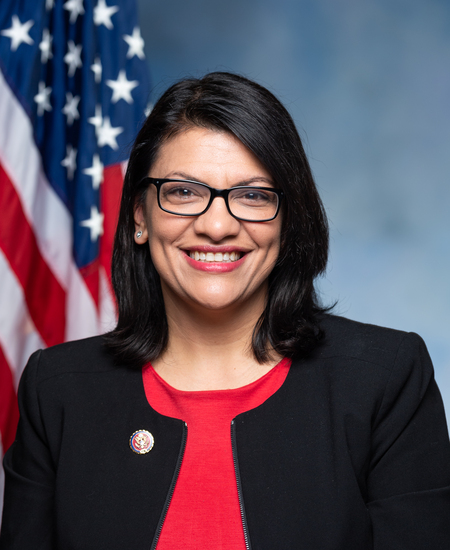
Rep. Rashida Tlaib
Sponsored bills
Maddy summaryHR 3519, the Hot Foods Act of 2023, amends the Food and Nutrition Act of 2008 to allow Supplemental Nutrition Assistance Program (SNAP) benefits to be used for hot foods or hot food products ready for immediate consumption at participating retailers. This change directly affects SNAP recipients who purchase such hot foods and retailers that sell them. The key provision removes the previous exclusion of hot foods from SNAP eligibility, while adding a limit that no more than 50% of a retailer's total gross sales from SNAP can come from hot foods. The bill clarifies that hot foods can be purchased for home or immediate consumption, aligning SNAP rules with current retail practices for prepared foods.
Maddy summaryThe SAFE Act of 2023 extends a 2018 law that prohibits slaughtering animals for human consumption to include horses, donkeys, and other equine animals, such as ponies. It amends Section 12515 of the Agriculture Improvement Act of 2018 by updating the language to replace "dog or cat" with "dog, cat, or equine" in both the section title and the main prohibition. This change directly affects the livestock industry and slaughter facilities by banning the processing of equines for food. The bill modifies existing law without adding new enforcement mechanisms, closing a gap in animal protection.
This resolution expresses grave concern about the worsening treatment of religious minorities in India. It condemns human rights violations and violations of international religious freedom in India, including those targeting Muslims, Christians, Sikhs, Dalits, and Adivasis.
Maddy summaryHR 4285, titled the Protect Vulnerable Immigrant Youth Act, would amend the Immigration and Nationality Act to remove numerical caps on certain employment-based visas. Specifically, it changes two sections to add a new visa category (J) to the list of categories exempt from annual numerical limits, allowing more employment-based visas to be issued without current restrictions. This change would directly affect employers and foreign workers seeking employment-based visas under the newly designated category (J), though the bill does not specify what the (J) category entails. The bill focuses solely on adjusting visa allocation rules rather than addressing youth protection or other aspects implied by its title.
Maddy summaryThe LGBTQI+ and Women's History Education Act of 2023 would provide $2 million annually for five years to develop educational resources about women's and LGBTQI+ history for K-12 classrooms. The bill directs the Smithsonian's National Museum of American History to create inclusive teaching materials that address historical gaps where women and LGBTQI+ individuals, particularly those of color and with disabilities, have been underrepresented. These resources would include digital content, print materials, and professional development for teachers to help implement more comprehensive curricula. The bill aims to address findings showing only 13% of named historical figures in textbooks are women and that LGBTQI+ history is often omitted or marginalized in school curricula. The program would require annual reports to Congress on how funds are used, with the program set to sunset in 2028.
Maddy summaryThis bill creates a federal grant program to help low-income homeowners and affordable housing owners make their properties more resilient to climate-driven hazards like floods, wildfires, and extreme heat. It directs the Secretary of the Interior to award grants to states, tribes, and Native Hawaiian organizations to fund weatherproofing upgrades - including natural solutions like rain gardens - and requires strict eligibility rules (e.g., income ≤300% of poverty level, or properties with long-term affordability restrictions). Grantees must use funds for climate adaptation projects, provide outreach, and prohibit rent hikes for two years on multifamily buildings receiving funding. The program authorizes $250 million annually for 2024-2029 to implement these concrete resilience improvements.
Maddy summaryHR 4289 prohibits "buy now, pay later" financing for firearms classified as "assault weapons" under the bill. It bans such loans for consumers purchasing these weapons and makes it illegal for dealers, manufacturers, or importers to accept funds from these loans for assault weapon sales. The law defines assault weapons to include rifles with features like folding stocks, detachable magazines, or pistol grips, and pistols with specific attachments or capacity limits. Violations carry $100,000 civil penalties assessed by the Attorney General. This directly affects consumers seeking to finance these weapons and the businesses selling them.
Maddy summaryHJRES 76 proposes renaming the Robert E. Lee Memorial in Arlington National Cemetery to the "Arlington House National Historic Site." This procedural bill would replace all official references to the memorial with the new name and repeal two prior resolutions (1955 and 1972) that established the memorial. The change affects how the site is identified in federal laws, documents, and records but does not alter its management or historical significance. The bill focuses solely on the official designation, not on policy changes or historical interpretation.
Maddy summaryThis non-binding resolution (HRES 532) expresses congressional support for a "Third Reconstruction" to address systemic poverty and low wages affecting approximately 140 million Americans, with disproportionate impacts on communities of color, women, and essential workers. It proposes concrete policy shifts including establishing a living wage, guaranteeing universal healthcare and housing, expanding voting rights, ending debt burdens, and redirecting military spending toward social programs. The resolution frames poverty as a moral crisis - citing it as the fourth-leading cause of death - and calls for updating poverty measures to reflect modern costs of living. It does not create new laws but urges Congress to prioritize these changes through budget and legislative action.