

Maddy summaryThe Break the Cycle of Violence Act establishes federal grants to fund community-based violence intervention programs in areas disproportionately affected by gun violence, particularly communities of color. It authorizes $300 million for 2024, increasing to $700 million annually through 2031, for evidence-informed strategies including trauma-responsive care, violence interruption, and economic opportunities for opportunity youth (ages 16-25 not in school or employment). The bill requires grantees to implement culturally competent services targeting individuals at high risk of violence or victimization, with a focus on reducing gun violence without contributing to mass incarceration. It creates a National Community Violence Response Center to coordinate data collection, research, and best practices for community violence prevention. The legislation also includes provisions for job training and workforce development programs through the Department of Labor to connect opportunity youth with in-demand occupations.
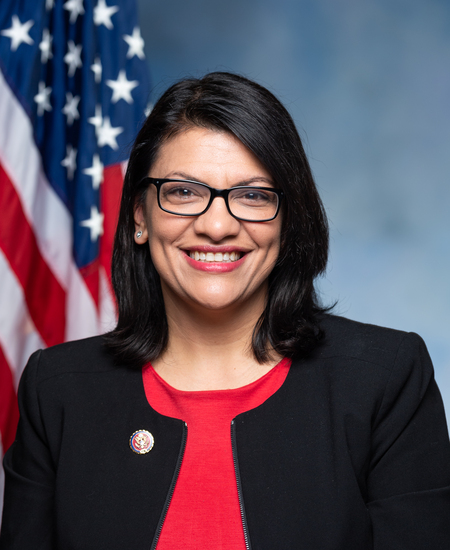
Rep. Rashida Tlaib
Sponsored bills
Maddy summaryHR 4965, the Kimberly Vaughan Firearm Safe Storage Act, requires the Attorney General to create voluntary best practices for safe firearm storage in homes, businesses, vehicles, and other locations within 180 days of enactment, with public input. Starting January 1, 2025, firearm manufacturers must include a "SAFE STORAGE SAVES LIVES" notice with each new handgun, rifle, or shotgun, directing buyers to the public website with these guidelines. The bill also establishes a $10 million annual grant program for states and tribes to fund public programs distributing safe firearm storage devices (like locked containers) and requires grantees to use at least 75% of funds for these programs. It does not mandate storage for individuals but provides resources and information to promote safer practices.
Maddy summaryThis bill establishes new federal requirements for employers to prevent heat-related illness and injury among workers. It mandates that employers provide safe work environments by implementing specific measures, including access to cool water, scheduled rest breaks in shaded areas, employer-paid cooling equipment, and training for employees and supervisors on recognizing heat illness symptoms. The Secretary of Labor must create these standards within one year, requiring employers in high-heat occupations (like construction, agriculture, and outdoor labor) to adopt engineering controls, administrative schedules, and health protocols. Key provisions include ensuring hydration, rest, and language-accessible training, while preserving existing safety protections and allowing for updates as scientific evidence evolves.
Nonrestrictive Offshore Wind Act or the NOW Act This bill repeals certain requirements that the Department of the Interior must meet before issuing a lease for offshore wind development. Under the Inflation Reduction Act of 2022, Interior may not issue a lease unless (1) an offshore oil and gas lease sale has been held in the year prior to issuing the lease, and (2) Interior offers a specified minimum acreage for offshore lease sales in the previous year. The bill repeals those requirements.
Comprehensive Legislation for Expanding and Advancing Nonrestrictive Energy Act or the CLEAN Energy Act This bill repeals certain requirements that the Department of the Interior must meet before issuing an onshore wind or solar right-of-way for wind or solar energy development on federal land. Under the Inflation Reduction Act of 2022, Interior may not issue a right-of-way for such development unless (1) an onshore oil and gas lease sale has been held in the 120 days prior to issuing the right-of-way, and (2) Interior offers a specified minimum acreage for oil and gas lease sales in the previous year. The bill repeals those requirements.
Maddy summaryHR 4900, the Fair College Admissions for Students Act, bans colleges receiving federal financial aid from favoring applicants based on family connections to donors or alumni. Specifically, it amends the Higher Education Act to prohibit institutions from giving preferential treatment in admissions to students whose parents or relatives donated money to the school or are alumni. This applies to all colleges participating in federal student aid programs under the Higher Education Act. The rule takes effect for the second award year starting after the bill's enactment date.
Maddy summaryThis bill would impose a progressive wealth tax on high-net-worth individuals and certain trusts, targeting those with substantial assets above a defined threshold. The tax would be calculated on the net value of taxable assets exceeding a threshold amount (1,000 times the greater of $50,000 or median household wealth), with rates increasing from 2% to 8% as asset value rises. The bill includes specific provisions for trusts, deceased individuals, non-residents, and expatriates, and would require new information reporting from financial institutions to enforce the tax. It would apply to calendar years beginning after the bill's enactment date. The legislation defines "taxable assets" as all property minus debts, with certain exclusions for assets under $50,000.
Maddy summaryHR 3933, the TAP Promotion Act, requires standardized presentations about Veterans Affairs (VA) benefits during military transition counseling for service members separating from the armed forces. These presentations must be approved by the VA, delivered by authorized veterans service organizations (VSOs), and include information on how VSOs assist with VA claims - without encouraging membership in specific organizations. The bill mandates a one-hour limit per presentation and requires the VA to submit annual reports to Congress detailing which VSOs presented, attendance numbers, and recommendations for improvement. This policy directly affects service members preparing for civilian life and the VSOs providing these transition resources.
Maddy summaryHR 1776, the End Tuberculosis Now Act of 2023, would amend U.S. foreign assistance law to strengthen global tuberculosis (TB) programs. The bill requires U.S. assistance to align with the World Health Organization's End TB Strategy, aiming to reduce TB deaths by 95% and incidence by 90% by 2035. It mandates annual reporting on TB diagnosis and treatment progress, prioritizes research for new diagnostics and treatments, and emphasizes integrating TB services into primary health care. The legislation affects U.S. government agencies, global health partners, and countries with high TB burdens, particularly focusing on low- and middle-income nations.
Maddy summaryThis bill directs the U.S. Treasury to mint commemorative coins marking the Marine Corps' 250th anniversary in 2025. It authorizes three coin types: $5 gold coins (max 50,000), $1 silver coins (max 400,000), and half-dollar coins (max 750,000), with surcharges of $35, $10, and $5 respectively. The surcharge proceeds will fund the Marine Corps Heritage Center's educational programs, with no net cost to taxpayers as the Treasury must recover all minting costs through the surcharges. The coins can only be issued during 2025, and the Treasury must ensure all costs are covered before distributing funds to the Heritage Foundation.