

Maddy summaryHRES 1495 designates September 2024 as "Sickle Cell Disease Awareness Month" to raise public education about sickle cell disease (SCD), which affects approximately 100,000 people in the U.S., predominantly in African American communities. The resolution urges the Department of Health and Human Services to address access barriers for SCD treatments in Medicare and Medicaid, calls for increased National Institutes of Health research funding, and proposes forming a federal interagency cabinet to coordinate SCD policy. It also encourages public events during September to highlight early detection, treatments, and preventative care for SCD complications. As a symbolic resolution, it does not create new laws but directs federal agencies to prioritize equitable access and research for SCD.
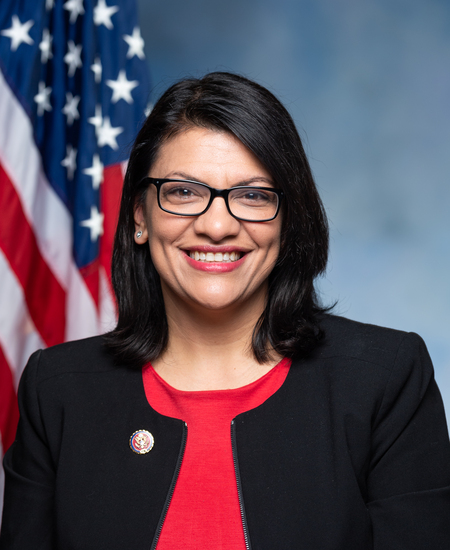
Rep. Rashida Tlaib
Sponsored bills
Maddy summaryHRES 1496 is a resolution supporting the designation of October 23, 2024, as "National Marine Sanctuary Day." It aims to raise public awareness about the National Marine Sanctuary System, which protects ocean, coastal, and Great Lakes areas. The resolution encourages community engagement with these protected sites and acknowledges their role in conserving biodiversity, supporting local economies, and providing recreational opportunities. As a non-binding resolution, it does not create new laws but formally recognizes the importance of marine sanctuaries.
Maddy summaryHRES 1494 is a non-binding resolution recognizing that air pollution and extreme heat disproportionately threaten maternal and infant health for pregnant Latinas in the U.S., citing systemic inequities that place them at higher risk than other groups. It expresses the House's sense that equitable interventions - such as bilingual air quality alerts, community air monitoring, expanded cooling access, and culturally tailored health education - must be rapidly developed to address these vulnerabilities. The resolution specifically calls for actions like improving heat guidelines at health facilities serving pregnant women and increasing access to affordable cooling solutions in Latino neighborhoods. As a statement of congressional opinion, it does not create new laws but aims to guide future policy and resource allocation.
Maddy summaryHRES 1499 is a symbolic resolution expressing concern about rising book bans in U.S. schools and libraries, citing PEN America data showing over 10,000 individual book bans in public schools between July 2023 and June 2024 - more than double the previous year. It highlights how bans disproportionately target books featuring LGBTQ+ themes, racial history, and marginalized voices (like *The Handmaid’s Tale*, *Maus*, and *Fry Bread*), while emphasizing students’ First Amendment rights to access diverse materials. The resolution calls on school districts and libraries to follow established best practices for handling book challenges and to protect students’ right to read widely, including works reflecting diverse perspectives. As a non-binding resolution, it does not create new law but urges local education entities to uphold free expression.
Maddy summaryThis bill removes barriers for parents who borrowed under Federal Direct PLUS loans for their children's education. It expands access to income-driven repayment plans (including Pay as You Earn and Saving on a Valuable Education plans) starting July 1, 2024, and adds eligibility for disability discharge if the student becomes disabled. It also extends public service loan forgiveness and automatic discharge provisions to Parent PLUS loans, which were previously excluded. These changes directly affect parents with PLUS loans made on behalf of dependent students, removing prior restrictions that limited their access to relief options.
Maddy summaryThe Student Food Security Act of 2024 would expand eligibility for the Supplemental Nutrition Assistance Program (SNAP) to include college students at institutions of higher education who meet specific financial criteria, such as having a student aid index of 0 or being eligible for a Federal Pell Grant. It requires the USDA to develop a strategy to increase awareness of SNAP eligibility among students and creates a demonstration program testing new ways for students to use SNAP benefits on campus, including purchasing prepared food at campus dining facilities. The bill authorizes $1 billion in grants over seven years to colleges to develop programs addressing students' basic needs like food and housing insecurity, with priority given to community colleges and institutions with high numbers of Pell Grant recipients. This legislation would directly affect college students, particularly those from low-income backgrounds, and institutions of higher education that would receive funding to support student basic needs.
Maddy summaryHRES 1484 is a symbolic resolution recognizing the value of evidence-based parenting and caregiving education in elementary and secondary schools. It encourages schools to promote such programs, which focus on teaching positive parenting practices like predictable routines, emotional warmth, and effective discipline strategies. These programs aim to support children's social-emotional development, reduce risks of child abuse and neglect, and improve long-term outcomes like academic success and mental health. The resolution does not create new programs or funding but highlights existing federal initiatives (like Head Start and CDC-backed research) that support this approach. It directly affects schools as implementers and families as beneficiaries of these educational resources.
Maddy summaryThis bill establishes a Diversity and Inclusion Administrator at the Department of Labor to increase African American participation in apprenticeship programs. It requires all new and renewing registered apprenticeship programs to submit plans for boosting African American enrollment, and authorizes competitive grants for programs targeting underrepresented groups in industries like construction, tech, and healthcare. Grant recipients must report on metrics including participant demographics, program completion rates, and job placement in related fields. The law directly affects African American youth and other underrepresented groups by mandating systemic changes to apprenticeship programs nationwide.
Maddy summary# Summary of Voter Empowerment Act Legislation This comprehensive legislation, titled the "Voter Empowerment Act," aims to significantly reform election administration across the United States to increase voter access, improve election security, and ensure equitable treatment of all voters. Key provisions include: 1. **Voter Access Enhancements**: - Requires states to provide voter-verified paper ballots for all voters - Mandates secure drop boxes for absentee ballots with specific accessibility requirements - Prohibits restrictions on curbside voting - Requires states to notify voters of polling place changes at least 7 days before elections - Allows use of sworn written statements or student ID cards to meet voter ID requirements 2. **Special Populations Accommodations**: - Requires accommodations for voters residing on Indian lands, including designated ballot pickup locations - Mandates bilingual voting materials for covered jurisdictions - Provides special provisions for military and overseas voters - Requires institutions of higher education to serve as voter registration agencies 3. **Election Administration Improvements**: - Requires states to establish contingency plans for natural disasters and public health emergencies - Establishes minimum standards for polling place operations to prevent unreasonable waiting times - Mandates states to provide sufficient poll workers and voting systems - Requires states to participate in post-election surveys 4. **Enforcement Mechanisms**: - Creates private rights of action for individuals to challenge violations - Authorizes the Attorney General to bring civil actions for enforcement - Establishes clear timelines for addressing violations - Prohibits campaign activities by chief state election officials 5. **Implementation Timeline**: - Most provisions apply to the 2026 election cycle or later - Some provisions apply immediately upon enactment The legislation is designed to modernize election administration while ensuring accessibility and security, with specific provisions addressing the needs of historically marginalized voting populations and creating new enforcement mechanisms to hold states accountable for compliance.
Maddy summaryHRES 1478 is a non-binding House resolution recognizing access to water, sanitation, electricity, heating, cooling, broadband, and public transportation as basic human rights. It declares these services must be accessible, affordable, climate-resilient, and safe for all people, without discrimination. The resolution does not create new laws or funding but affirms principles like banning utility shutoffs for non-payment and ending privatization of water systems. It urges federal action to support public utilities and address affordability crises, but has no legal force.