

Maddy summaryHR 10210 establishes a National Plan for Epilepsy to coordinate federal efforts in preventing, diagnosing, treating, and curing epilepsy. It requires the Secretary to create an Advisory Council with patient representatives, caregivers, medical experts, and researchers, and mandates annual assessments and reports to Congress on progress and recommendations. The law directly affects millions of people with epilepsy in the U.S. (nearly 3 million adults and 456,000 children) and directs federal agencies like NIH and CDC to share data and improve services. Annual reports will track progress toward reducing uncontrolled seizures, improving care access, and addressing disparities in epilepsy care.
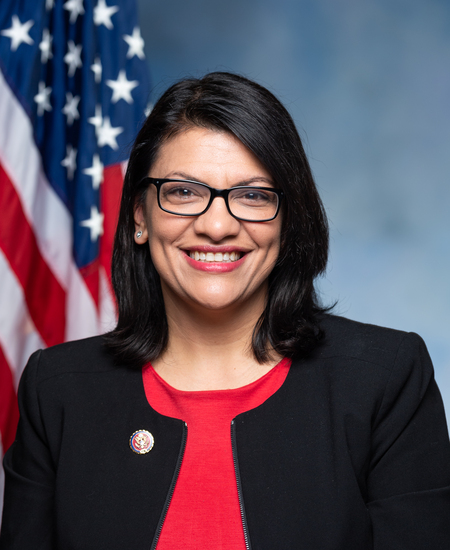
Rep. Rashida Tlaib
Sponsored bills
Maddy summaryThis bill requires the Secretary of Energy to determine if proposed natural gas exports to foreign countries are "consistent with the public interest" before approving them. To make this determination, the Secretary must evaluate three specific assessments: (1) climate impacts using full lifecycle emissions data and methane's 20-year warming potential, (2) economic effects on specific consumer groups like low-income households and manufacturers, and (3) environmental justice concerns affecting vulnerable communities. The Secretary must complete this review within one year of receiving the Federal Energy Regulatory Commission's environmental impact statement. The law also mandates public participation opportunities and treats export approvals as "major Federal actions" under environmental law.
Maddy summaryThis bill establishes federal grants to expand training and support services for unpaid caregivers of people with Alzheimer's disease or related dementia. It authorizes funding for organizations like senior centers, area agencies on aging, and community health centers to provide direct caregiver support, requiring at least 50% of grant funds to go directly to services (not administration) and limiting administrative costs to 10%. Priority is given to nonprofit organizations serving underserved communities, including minority, low-income, and disability communities. The program, funded for fiscal years 2025-2029, aims to improve access to culturally appropriate caregiver resources nationwide.
Maddy summaryThe Our Homes, Our Votes Act requires landlords and public housing agencies managing federally assisted housing (including public housing, Section 8, and supportive housing programs) to include voter registration forms in lease agreements. When tenants sign their lease, it automatically serves as a voter registration application for federal elections, unless they opt out. Landlords must ensure forms include basic eligibility information, provide language access for limited-English speakers, and submit completed forms to election officials within 10 days. This applies to all tenants in covered housing units, streamlining registration without requiring separate action.
Maddy summaryThe Minority Diabetes Initiative Act (HR 10193) creates a federal grant program to improve diabetes care in minority communities. It authorizes the Secretary of Health and Human Services to fund public and nonprofit health providers - including community health centers, tribal health departments, and community organizations - to deliver specific diabetes services. These grants must cover routine care, prevention education, eye/foot care, and treatment for complications like kidney disease, while requiring services to be culturally appropriate and offered in accessible languages. The program is funded through annual appropriations for fiscal years 2025-2030. This bill directly affects minority communities with high diabetes rates by expanding access to comprehensive, culturally responsive care through eligible health providers.
Maddy summaryHRES 1588 is a House resolution supporting Transgender Day of Remembrance (TDoR) by recognizing the epidemic of violence against transgender people and memorializing those killed between October 1, 2023, and September 30, 2024. It specifically honors 38 transgender or gender-nonconforming individuals whose lives were lost to violence during that period, highlighting that transgender women of color face disproportionate risks. The resolution acknowledges systemic issues like underreporting, barriers to healthcare, and higher rates of homelessness and suicide within the community. It calls for the U.S. government to prioritize solutions to this violence while affirming transgender people's right to dignity and safety. As a symbolic resolution, it does not create new laws or policies but formally recognizes these issues for congressional record.
Maddy summaryThis resolution supports the United Nations' second International Decade for People of African Descent (2025-2034) and urges the U.S. Department of State to advance global efforts to combat racial discrimination. It specifically calls for U.S. backing of the UN Declaration on human rights for people of African descent, funding for the UN Expert Mechanism on racial justice, and collaboration with civil society to address systemic racism in areas like education, health, and justice. The resolution emphasizes a gender-focused approach, including support for Afro-descendant women, LGBTQIA+ individuals, and other marginalized groups. As a non-binding resolution, it directs U.S. foreign policy priorities without creating new legal obligations.
Maddy summaryThis bill creates a federal commission to address racial and gender biases in school discipline and improve mental health support for students of color. The commission will develop guidelines for tracking restorative practices, define key terms like "restorative justice," create training materials for school staff on culturally competent approaches, and recommend student-to-counselor ratios for schools receiving federal funds. The commission, composed of 13 members including federal agency representatives, advocates, and students of color, will report annually for five years on progress, including how training reduced disproportionate discipline. The bill directly affects elementary and secondary schools, school personnel, and students of color by establishing a structured process for implementing equitable practices.
Maddy summaryThis bill prohibits Medicaid from covering conversion therapy for any enrollee. It amends federal law to block Medicaid payments for any therapy aimed at changing a person's sexual orientation or gender identity (defined as "conversion therapy" in the bill), starting in the first full quarter after the law takes effect. The prohibition applies to all Medicaid providers who offer such therapy for compensation, but explicitly excludes support for gender transition, acceptance-based care, and interventions focused on safety or unlawful conduct. It directly affects Medicaid recipients seeking therapy and providers who previously billed for conversion therapy services.
Maddy summaryThe Half-Century Update for Water Access and Affordability Act establishes a federal program to provide financial assistance to low-income households struggling to pay water bills. It requires states and water utilities to implement programs that offer direct bill discounts, debt relief, water efficiency upgrades, and crisis assistance to households earning up to 200% of the poverty level or 80% of local median income. The bill prohibits disconnections for non-payment, allows automatic enrollment for households already receiving other federal assistance, and mandates data collection to track program impacts on water service access. The legislation authorizes $20 billion annually from 2025-2035 to fund this assistance, with specific requirements to ensure universal access and prevent discrimination in program implementation.