

Maddy summaryThis bill clarifies and authorizes U.S. government assistance programs focused on humanitarian demining and conventional weapons destruction. It directly affects U.S. agencies (State, Defense, USAID) and partner countries receiving aid, with over 120 nations benefiting since 1993. Key mechanisms include funding for clearing landmines and explosive remnants to return land to agriculture and development, securing weapons stockpiles to prevent diversion to terrorists, and providing community risk education. The bill specifies that these programs aim to save lives, reduce instability, support food security, and build security partnerships - using concrete examples like clearing 60,200 acres of land in 2022. It does not create new funding but formally defines the purposes of existing assistance under the Department of State Authorities Act.
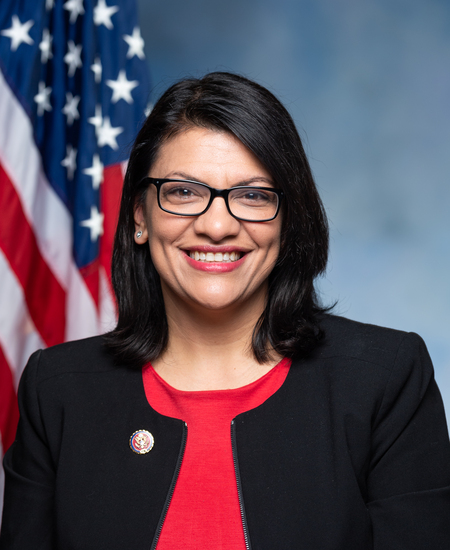
Rep. Rashida Tlaib
Sponsored bills
Maddy summaryThis bill extends funding for the existing Public Health Service Act program focused on raising public awareness about Alzheimer's disease and related dementias. It authorizes $33 million annually for fiscal years 2025 through 2029 to support public health education and outreach initiatives. The program directly affects public health organizations and community groups that develop and distribute educational materials about Alzheimer's prevention, diagnosis, and care. The key provision is the multi-year funding extension, ensuring continued support for nationwide awareness efforts without altering the program's core structure.
Maddy summaryHR 10335, the Clean Water Justice Act, increases criminal penalties for water pollution violations under federal law. It raises maximum fines from $5,000 to $25,000, $50,000 to $250,000, and $100,000 to $500,000 for specific offenses. The bill also establishes an annual adjustment mechanism where these penalties automatically increase each year based on the Consumer Price Index, as published by the Department of Labor. These changes directly affect businesses or individuals found guilty of violating federal water pollution regulations. The adjustments will be published in the Federal Register and apply to violations occurring after the adjustment date.
Maddy summaryHR 10303, the DAMS for Beavers Act, creates a federal grant program to fund nonlethal projects that reduce property damage caused by beavers while maintaining their habitat. The program awards competitive grants to eligible entities like tribes, state agencies, local governments, nonprofits, and property owners, requiring all funded projects to use only nonlethal methods (such as fencing, flow devices, or tree protection) for beaver damage mitigation. Grantees must maintain nonlethal approaches for the project duration, with limited exceptions for health/safety or flood control needs, and the federal government covers up to 75% of project costs. The bill authorizes $3 million annually from 2025-2029 and mandates annual reports to Congress on funded projects and program effectiveness.
Maddy summaryHR 6751 authorizes the U.S. Mint to produce commemorative coins honoring Roberto Clemente, a Hall of Fame baseball player and humanitarian, including 50,000 $5 gold coins, 400,000 $1 silver coins, and 750,000 half-dollar coins. The coins must feature Clemente's image and inscriptions like "Roberto Clemente" and "2027," with all sales including a surcharge ($5-$35 per coin) paid to the Roberto Clemente Foundation. The foundation, which supports youth sports, education, and disaster relief programs, will use these funds for its mission, while the U.S. Treasury must recover all production costs. The coins will be sold exclusively in 2027, with no net cost to the government.
Maddy summaryThe Jeanette Acosta Invest in Women’s Health Act of 2024 would expand access to preventive cancer screenings (including breast, cervical, ovarian, and uterine cancer screenings) for women, with a focus on low-income women, women of color, rural communities, and underserved populations. It authorizes $20 million annually for grants to health care providers - such as family planning centers - to increase screenings and establishes a training program for health care providers on best practices and cultural competency to address racial disparities. The bill also mandates a study analyzing cancer screening rates and disparities by race, income, geography, and insurance status, with reports to Congress every five years. These provisions aim to improve early detection, reduce mortality, and address systemic barriers in women’s cancer care.
Maddy summaryHRES 1604 designates December 3 as National Chemical Disaster Awareness Day to commemorate the 40th anniversary of the 1984 Bhopal chemical disaster and promote public awareness of chemical safety risks. This non-binding resolution does not create new laws but calls for the House to recognize Bhopal survivors' advocacy, urge the Department of Justice to address the Bhopal case (including actions related to Dow Inc. and India), and engage with survivors to improve understanding of chemical disaster prevention. The resolution highlights ongoing risks from hazardous facilities and disproportionate impacts on vulnerable communities, emphasizing human rights and anti-discrimination principles in U.S. foreign policy. It serves as a symbolic gesture to honor victims and encourage proactive safety measures, without imposing regulatory requirements.
Maddy summaryThis House resolution supports the goals of World AIDS Day by encouraging efforts to end the HIV epidemic by 2030, aiming for zero new infections, zero discrimination, and zero AIDS-related deaths. It specifically urges sharing of U=U (Undetectable=Untransmittable) information and PrEP (pre-exposure prophylaxis) to prevent transmission, and calls for increased funding for HIV prevention, treatment, and research - particularly for communities disproportionately affected by HIV, such as racial minorities, men who have sex with men, and transgender individuals. The resolution commends existing programs like PEPFAR and the Ryan White CARE Act while advocating for expanded testing, antiretroviral treatment, and comprehensive prevention services, including a National PrEP Program.
Maddy summaryThe Working Dog Commemorative Coin Act (HR 807) directs the U.S. Treasury to mint three types of commemorative coins honoring working dogs' service: $5 gold coins, $1 silver coins, and half-dollar coins with specific weight and composition requirements. Each coin will carry a surcharge ($35 for $5 coins, $10 for $1 coins, $5 for half-dollars) that will be paid directly to America's VetDogs to support their programs providing service dogs for veterans, the disabled, and others. The coins will be issued in 2027 with designs reflecting working dogs' roles in military, detection, therapy, and assistance work. The legislation specifies that all surcharge revenue must fund America's VetDogs' operations without creating new government programs. This is a commemorative measure focused on honoring working dogs' contributions through coin sales, with all surcharge funds going to a specific nonprofit organization.
Maddy summaryThis bill establishes a Truth and Healing Commission to investigate the history and impacts of U.S. Indian Boarding School policies on Native American communities, including cultural, emotional, and physical effects on survivors, descendants, and tribal communities. The Commission will document these impacts through research, public meetings, and testimony, working with two advisory committees focused on Native American perspectives and Federal agency coordination. The Commission will operate for six years, with annual reports to Congress and a final report containing recommendations for Federal action. The bill also includes provisions for managing burial sites related to boarding schools and ensures the Native American Graves Protection and Repatriation Act applies to remains found on Federal lands related to these schools.