

Maddy summaryHRES 1617 is a non-binding resolution expressing the House of Representatives' view that the federal government should dramatically expand and strengthen the care economy. It calls for federal investments to address systemic gaps in care infrastructure, including universal access to affordable childcare, elder care, paid family leave, and mental health services, while prioritizing higher wages and union protections for care workers - particularly women of color and immigrants. The resolution emphasizes repairing historical inequities rooted in exclusion from labor protections and connecting care infrastructure to broader goals like climate justice and economic equity. It does not create new law but urges future legislation to adopt these principles as a foundation for policy. The resolution directly affects millions of care workers, families relying on care services, and communities facing systemic barriers to care access.
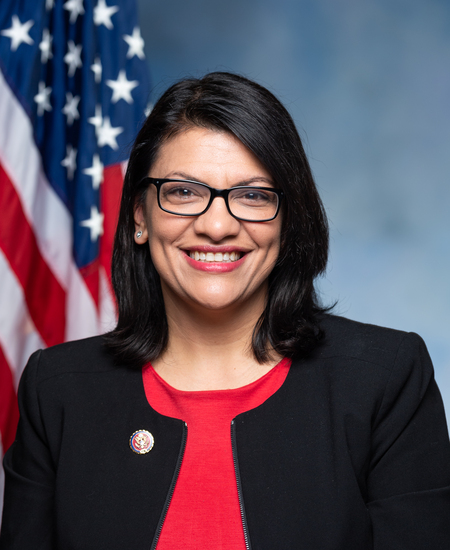
Rep. Rashida Tlaib
Sponsored bills
Maddy summaryHR 10456, the SAFE SEX Workers Study Act, requires the Department of Health and Human Services and the Department of Justice to study the impacts of the SESTA/FOSTA law on sex workers and human trafficking investigations. The HHS study will examine how the loss of online platforms (like Backpage) affected sex workers' health, safety, economic stability, and access to harm reduction services. The Justice Department will assess how SESTA/FOSTA changed human trafficking investigations, prosecutions, and law enforcement practices. Both reports must be completed within one year of the bill's enactment and made publicly available.
Maddy summaryThis bill increases compensation for people wrongfully convicted and imprisoned. It raises the base damages from $50,000 to $70,000 under federal law and requires annual adjustments for inflation using the Consumer Price Index. The changes directly affect individuals exonerated after serving time for crimes they didn't commit. The key mechanism ensures compensation keeps pace with rising living costs over time.
Maddy summaryThis bill requires states to prohibit physicians from performing specific non-emergency surgeries on foster children under age 6 who have variations in sex characteristics (commonly called intersex traits), unless the procedure addresses an immediate life threat. It targets procedures like clitoral reduction, gonadectomy, and vaginoplasty that are often done without consent on infants. States must enforce this through licensing penalties, and it applies only to children in foster care as a condition for receiving federal foster care funding. The bill explicitly states it does not restrict medically necessary surgeries or procedures for transgender youth.
Maddy summaryThis bill (HR 10237) requires U.S. Customs and Border Protection (CBP) to create new guidelines within 180 days for handling personal belongings of individuals arrested, restrained, or confined by CBP. The guidelines must ensure detainees can keep as much property as operationally feasible, return all stored items upon release, and specify essential categories like medical devices, IDs, phones, and legal documents that must remain with or be returned to the individual. CBP must also provide written receipts for stored items, detail circumstances for discarding property, and track compliance through annual reports to Congress. The bill mandates consultation with advocacy groups and includes oversight by the Comptroller General to review implementation and effects on CBP operations.
Maddy summaryThe Comprehensive Dental Reform Act of 2024 would expand dental coverage under Medicare and Medicaid by adding "oral health services" as a covered benefit. Starting in 2025, Medicare would cover 100% of preventive dental services and 80% of other services. Medicaid would require states to cover oral health services for adults (with some exceptions), including mobile dental services to overcome access barriers, and would increase federal funding for these services by 15 percentage points. The bill also creates new programs to expand the dental workforce through training, loan repayment, and partnerships with dental schools, with specific provisions for veterans, prisoners, and Indian Health Service.
Maddy summaryThe Health Over Wealth Act requires private equity firms that own or control health care entities (including hospitals, clinics, nursing facilities, and mental health providers) to submit detailed annual reports to the government about their financial structure, staffing practices, political spending, and patient care metrics. It establishes a task force to monitor private equity's impact on health care access and quality, and creates new requirements for hospitals planning to close or discontinue services, including advance notice and mitigation plans. The bill also prohibits certain real estate transactions that could weaken health care entities and mandates licensing for private equity firms investing in health care, with penalties for non-compliance.
Maddy summaryThe Pharmacists Fight Back Act (HR 9096) sets new rules for Pharmacy Benefits Managers (PBMs) working with federal health care programs like Medicare Part D and Medicaid. It requires PBMs to reimburse in-network pharmacies at a rate covering the drug's actual cost plus a small fee (capped at $25), and to reduce patient cost-sharing by at least 80% of rebates received from drug manufacturers. The bill bans PBMs from steering patients to specific pharmacies, charging patients more than pharmacies are paid, or using rebates to lower pharmacy payments after claims are processed. It also mandates public reporting of drug pricing data to improve transparency, ensuring patients and pharmacies receive fairer treatment under federal health programs.
Maddy summaryHR 8796, the "Stop Comstock Act," removes outdated restrictions from federal law that previously banned the distribution of materials related to contraception and abortion as "obscene" or "indecent." The bill amends Title 18 and the Tariff Act by deleting references to "indecent," "immoral," "unlawful abortion," and "procuring abortion" from provisions governing obscene materials. It clarifies that the law only prohibits "obscene materials" in commerce, eliminating broad restrictions on reproductive health information. This directly affects internet platforms, healthcare providers, and individuals sharing reproductive health resources by removing legal barriers to their distribution.
Maddy summaryThis bill requires Medicare Advantage plans to implement electronic prior authorization systems by 2027 and publish detailed data on their approval and denial rates for medical services by 2026. It directly affects Medicare Advantage plans (private insurers offering Medicare coverage) and their enrollees (seniors 65+), mandating transparency about prior authorization decisions, processing times, and appeal outcomes. Key provisions include requiring plans to report annual statistics on request approvals/denials, average processing times, and use of technology, with this data published publicly by the Centers for Medicare & Medicaid Services. The bill also sets timelines for plan responses to prior authorization requests and mandates reports to Congress on implementation and impacts.