

Washington, D.C. Admission Act This bill provides for the establishment of the State of Washington, Douglass Commonwealth, and its admission into the United States. The state is composed of most of the territory of the District of Columbia (DC), excluding a specified area that encompasses the U.S. Capitol, the White House, the U.S. Supreme Court building, federal monuments, and federal office buildings adjacent to the National Mall and the U.S. Capitol. The excluded territory shall be known as the Capital and serve as the seat of the government of the United States, as provided for in Article I of the Constitution. The state may not impose taxes on federal property except as Congress permits. The bill provides for the DC Mayor to issue a proclamation for the first elections to Congress of two Senators and one Representative of the state. The bill eliminates the office of Delegate to the House of Representatives. The bill applies current DC laws to the state. DC judicial proceedings and contractual obligations shall continue under the state’s authority. The bill also provides for specified federal obligations to transfer to the state upon its certification that it has funds and laws in place to assume the obligations. These include maintaining a retirement fund for judges and operating public defender services. The bill establishes a commission that is generally comprised of members who are appointed by DC and federal government officials to advise on an orderly transition to statehood.
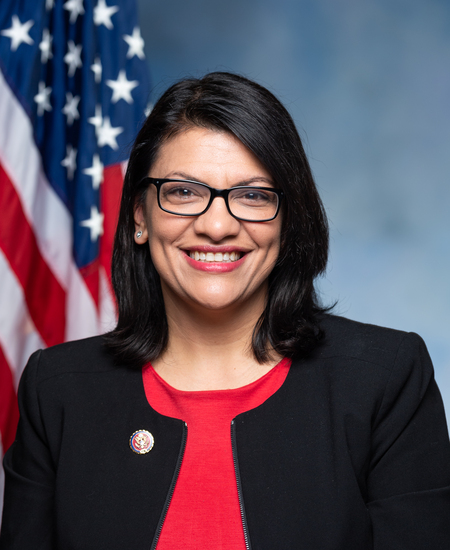
Rep. Rashida Tlaib
Sponsored bills
Maddy summaryThe Fair Lending for All Act establishes a new Office of Fair Lending Testing within the Consumer Financial Protection Bureau to proactively test creditors for compliance with the Equal Credit Opportunity Act (ECOA). It expands ECOA protections to explicitly prohibit discrimination based on ZIP code, census tract, public assistance income, sexual orientation, gender identity, and marital status, while replacing "applicant" with "person" throughout the law. The bill adds criminal penalties for violations, including fines up to $50,000 or 1 year in prison for individuals and up to $100,000 per violation for patterns of discrimination, with personal liability for executives. It also requires the Bureau to review loan application processes for ECOA compliance and updates mortgage data collection to include protected characteristics like sexual orientation and gender identity. This directly affects creditors (banks, lenders) and consumers seeking credit.
Maddy summaryThis resolution (HRES 1627) is a ceremonial measure honoring the late former President Jimmy Carter, Jr. It expresses the House's appreciation for his public service and deep sympathy to his family following his death on December 29, 2024. The resolution does not create new laws or policies; it simply directs the Clerk to transmit a copy to Carter's family. It commemorates his life, legacy, and work as a diplomat, Nobel Peace Prize winner, and advocate for human rights, without implementing any concrete policy changes.
Maddy summaryThe Treat and Reduce Obesity Act of 2023 expands Medicare coverage for obesity treatment by allowing a wider range of healthcare providers - including nurse practitioners, dietitians, psychologists, and community-based counseling programs - to deliver intensive behavioral therapy for obesity, provided they coordinate with primary care providers. It also adds Medicare Part D coverage for medications used to treat obesity or for weight loss management in overweight individuals with related health conditions like diabetes or high blood pressure. These changes directly affect Medicare beneficiaries, particularly older adults (65+), who face higher obesity rates and associated costs, including $50 billion annually in Medicare spending for obesity-related care. The bill requires annual reports to Congress on implementation to improve coordination of obesity care across federal health programs.
Maddy summaryThe Autism CARES Act of 2024 reauthorizes and enhances federal programs supporting individuals with autism spectrum disorder. It requires the National Institutes of Health to expand research to include more fields like gerontology and psychiatry, and to ensure research reflects the full range of needs of people with autism, including those with co-occurring conditions. The bill mandates regular reports to Congress on progress, mental health needs, and transition services for young adults with autism, while increasing funding for autism-related programs from fiscal year 2025 through 2029. This legislation directly affects individuals with autism, their families, caregivers, and healthcare providers by improving access to evidence-based services and research.
Maddy summaryThe Stop Campus Hazing Act requires colleges and universities to publicly report hazing incidents involving student organizations. It defines hazing as intentional acts causing physical or psychological harm during initiation or membership in student groups, including activities like forced substance consumption, sleep deprivation, or sexual acts. Institutions must include hazing statistics in annual security reports and publish a "Campus Hazing Transparency Report" on their websites by July 1, 2025, detailing findings about organizations violating hazing policies. The reports must include organization names, violation descriptions, and key dates while excluding personally identifiable student information. This applies to all colleges participating in federal student aid programs.
Maddy summaryThis bill amends the Federal Reserve Act to redefine "maximum employment" as a labor market where job seekers can find work, involuntary part-time work is minimal, median wages rise with productivity, and disparities in unemployment and pay across racial, gender, and other groups are at their lowest practicable level (Section 2). It requires the Federal Reserve to appoint leaders reflecting gender diversity, racial/ethnic diversity, and consumer/labor advocacy experience, and mandates annual reports on applicant demographics to Congress (Section 3). The bill also requires the Fed to conduct new studies on inflation targets, unemployment estimates, and the demographic impact of monetary policy, including analysis of how policies affect groups with higher unemployment rates (Section 4). These changes aim to reshape the Fed’s policy focus toward equitable labor market outcomes through specific metrics and transparency measures.
Maddy summaryThis bill extends multiple conservation programs through 2030, primarily adjusting expiration dates from 2025 to 2030. It creates a new "Black Vulture Livestock Protection Program" allowing state Farm Bureau organizations to obtain statewide permits for controlled black vulture management to protect livestock, with requirements for permit applications, reporting, and a study on sustainable population levels. Other provisions include extending funding for the Chesapeake Bay Program ($92 million annually through 2030), the North American Wetlands Conservation Act, and the Chronic Wasting Disease Task Force. The bill also modifies administrative details for fish habitat partnerships, reporting requirements, and technical corrections to existing conservation laws.
Maddy summaryThis bill creates a task force within Homeland Security to reunite children separated from parents or guardians at the U.S.-Mexico border between January 20, 2017, and January 20, 2021, under the Zero-Tolerance Policy. The task force must identify all affected children, recommend legal pathways for reunification (including parole, visas, or services like mental health support), and consult with affected families and organizations. It must report to Congress every 60 days and will sunset within 120 days of all reunifications or by January 20, 2039, whichever comes first. The bill directly affects children separated during that specific policy period and requires federal agencies to coordinate on practical solutions.
Maddy summaryThe Keep It in the Ground Act of 2023 prohibits the U.S. government from issuing new leases or renewing/reinstating nonproducing leases for fossil fuels (including oil, gas, coal, tar sands, and oil shale) on federal lands and waters. It specifically bans new offshore leasing in the Arctic, Atlantic, Pacific, and Gulf of Mexico oceans, as well as onshore leasing under the Mineral Leasing Act. The bill directly affects fossil fuel companies seeking federal leases by blocking new development and preventing extensions of inactive leases. Key provisions require the Secretary of the Interior to cancel certain existing offshore leases in the Beaufort Sea, Cook Inlet, and Chukchi Sea within 60 days of enactment. Exceptions only apply for imminent national security threats or to avoid breaching existing lease contracts.