

Maddy summaryThe Empowering and Enforcing Environmental Justice Act of 2025 establishes a new Office of Environmental Justice within the Department of Justice to address environmental health disparities. This Office will develop strategies, coordinate enforcement efforts, and administer a $50 million annual grant program for state, local, and Tribal governments to improve environmental enforcement in affected communities. The grants will fund staff training, hiring for investigations, and community engagement programs focused on low-income, Tribal, and Indigenous populations facing disproportionate environmental risks. The bill directly impacts the Department of Justice, state/local/tribal governments, and communities experiencing environmental justice challenges.
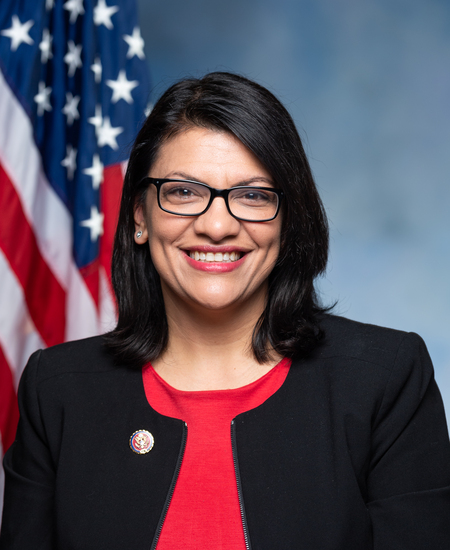
Rep. Rashida Tlaib
Sponsored bills
Maddy summaryEthan's Law requires gun owners to store firearms securely in homes where minors live or where residents are legally prohibited from owning guns. It makes it unlawful to leave firearms unsecured if a minor or ineligible person could access them, with fines of $500 per violation and harsher penalties if injury or death occurs. The bill creates a federal grant program to help states implement similar secure storage laws and treats unsafe storage as negligence in legal cases. It directly affects households with children or residents who cannot legally possess firearms, aiming to reduce accidental shootings and unauthorized access.
Maddy summaryHRES 160 designates January 2025 as "National Mentoring Month" to highlight the positive impact of mentoring relationships on young people. The resolution emphasizes how mentoring improves academic performance, mental health, career readiness, and social skills - particularly for underserved youth - and addresses the "mentoring gap" where one in three young people lacks a supportive adult outside their family. It calls for expanding mentoring programs in schools, communities, and workplaces without creating new laws or funding. As a symbolic resolution, it aims to raise public awareness and encourage participation in existing mentoring initiatives.
Maddy summaryHRES 159 is a symbolic resolution expressing the U.S. House of Representatives' support for designating February 24-28, 2025, as "Public Schools Week." It does not create new laws or allocate funds but aims to highlight the importance of public schools in communities. The resolution cites reasons such as public schools serving 90% of U.S. students, fostering critical thinking, and requiring equitable funding - though these are context, not policy changes. It directly affects public schools and their communities by raising awareness of their role in education. As a non-binding resolution, it has no direct impact on school operations or funding.
New Era of Preventing End-Stage Kidney Disease Act This bill establishes regional centers of excellence, postgraduate fellowships, and training for health professionals relating to the diagnosis and treatment of rare kidney disease. It also requires the Department of Health and Human Services (HHS) to conduct various studies on rare kidney disease. Specifically, it authorizes the National Institute of Diabetes and Digestive and Kidney Diseases to award funding to public and private nonprofit entities for establishing regional centers of excellence that will increase public awareness, conduct research, and develop resources for diagnosing and treating rare kidney diseases. A center may receive such funding for up to five years, unless extended by the institute. The bill also requires health professions schools receiving a grant from the Health Resources and Services Administration (HRSA) Centers of Excellence program to award fellowships for training on preventing, diagnosing, and treating rare kidney disease in disproportionately impacted populations. Also, the bill expands the priorities of HRSA’s Primary Care Training and Enhancement program to include training for health care workers to care for individuals with kidney disease. Additionally, HHS must conduct several studies and report to Congress on topics such as treating rare kidney disease in disproportionately affected populations, eliminating the need for dialysis or kidney transplants, and increasing public awareness of rare kidney disease.
Maddy summaryThis bill requires the Comptroller General to produce a report analyzing actions taken by the Department of Government Efficiency (created by an executive order). The report must evaluate how those actions - like reducing civil service staff, ending or pausing federal programs - affect the U.S.'s long-term financial, public health, and safety interests. It also must check if the department followed privacy laws (Privacy Act of 1974) and federal program rules. The report must be submitted to Congress by December 31, 2025. The bill directly affects the Department of Government Efficiency and Congress through this mandated oversight.
Dentist and Optometric Care Access Act of 2025 or the DOC Access Act of 20 25 This bill prohibits private health insurance plans from setting rates for items and services, except for dental cleanings, provided by a doctor of optometry, of dental surgery, or of dental medicine (or an employer of such a doctor) for which the plan does not pay a substantial amount. Additionally, an agreement between a plan and such a doctor for limited scope dental or vision benefits may last longer than two years only with the prior acceptance of the doctor for each term extension. Plans also may not restrict such a doctor's choice of laboratories or suppliers. Such doctors may elect to waive the application of the payment amount and choice of laboratories provisions of this bill. The bill does not supersede state laws regarding health insurers and dental or vision benefit plans.
Maddy summaryHR 1544, the LEASH DOGE Act, requires the Department of Government Efficiency (DOGE) to report detailed information about its employees and operations to Congress. Specifically, it mandates a report listing all DOGE employees with their roles, background check results, security clearances, and conflict of interest disclosures; appearances before congressional committees; and a public website updated weekly with employee data, funding reductions, and contact information for public inquiries. The bill sets a March 31, 2025, deadline for compliance, with penalties including restrictions on using federal funds for DOGE activities or new DOGE Agency Teams until requirements are met. It directly affects DOGE leadership, its employees, and congressional oversight committees. The law focuses on transparency about DOGE’s staffing and budget decisions, not policy outcomes.
Maddy summaryHR 1457, the "IDs for an Inclusive Democracy Act," requires the Social Security Administration to issue free federal identification cards within three years. These cards would be accepted as valid ID for the same purposes as state driver's licenses, including gender identity options (male, female, or X) chosen by the applicant. The bill establishes a process for applying via the U.S. Postal Service, with options for in-person service, online, or mail-in applications. It also mandates a public education campaign and special validity rules for minors (under 18) and seniors (65+), ensuring the ID remains valid without renewal after age 65.
Maddy summaryHR 1449, the Energy Resilient Communities Act, creates a federal grant program to fund clean energy microgrids that support critical community infrastructure like hospitals, schools, and emergency facilities. Eligible entities - including states, local governments, nonprofits, and tribal agencies - can apply for grants covering up to 90% of costs for technical assistance, community outreach, or microgrid projects in environmental justice communities. Key provisions prioritize projects that reduce emissions, lower energy costs for low-income residents, minimize land use impacts, and ensure 40% of construction labor comes from local residents meeting specific criteria (e.g., displaced workers, environmental justice community members). The program authorizes $1.5 billion over 10 years, with at least 10% reserved for community-owned microgrid projects, and requires annual reporting on project outcomes and labor practices.