

Maddy summaryHR 3238, the Affordable Housing Credit Improvement Act of 2023, updates the Low-Income Housing Tax Credit (LIHTC) program to increase the availability of affordable housing across the United States. The bill makes several key changes including increasing state funding formulas, modifying tenant eligibility rules to better serve vulnerable populations (such as domestic violence victims and students), and expanding credit eligibility for projects in rural and Native American communities. Specific provisions raise the credit for properties serving extremely low-income households, clarify rules around tenant income increases, and require housing providers to protect victims of domestic violence. The bill also updates terminology from "low-income" to "affordable" throughout the tax code and enhances program transparency through data sharing requirements. These changes aim to make the LIHTC program more effective at creating and preserving affordable housing units for low-income households nationwide.
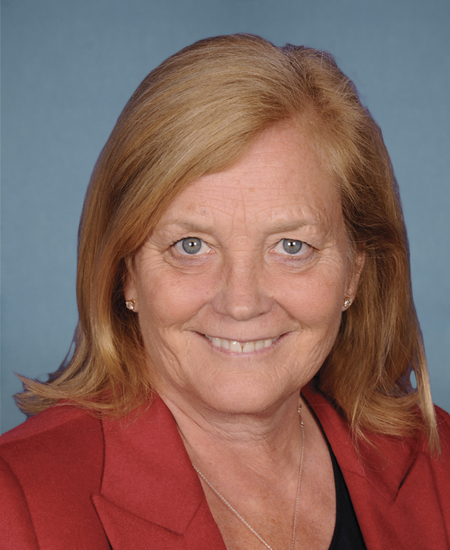
Rep. Chellie Pingree
Sponsored bills
Maddy summaryThe Beagle Brigade Act of 2023 establishes a National Detector Dog Training Center to train dogs and handlers for detecting foreign pests and diseases threatening U.S. agriculture and natural resources. The Center will collaborate with agencies like U.S. Customs and Border Protection and state agriculture departments to safeguard farms and ecosystems. It requires annual funding for operations and mandates a congressional report within one year detailing pest threats, Center effectiveness, and recommendations for improving detection capabilities. The law directly affects agricultural protection efforts by enhancing canine-based prevention of invasive species.
Maddy summaryHR 676, the Coastal Communities Ocean Acidification Act of 2023, amends the 2009 Federal Ocean Acidification Research and Monitoring Act to improve collaboration on ocean acidification efforts. It requires the federal Advisory Board to establish ongoing input mechanisms with coastal stakeholders, fishery councils, indigenous knowledge groups, and non-Federal experts, and mandates two Indian Tribe representatives on the Board. The bill also updates definitions to specifically include "Indian Tribe" and strengthens coordination with Tribal organizations for vulnerability assessments and research planning. These changes directly affect coastal communities, fisheries, Tribal nations, and local governments managing ocean acidification impacts. The law focuses on integrating diverse stakeholder input into federal research and monitoring activities.
Maddy summaryThe Transit to Trails Act establishes a federal grant program to fund transportation projects connecting critically underserved communities - defined as areas lacking adequate park access, low-income, communities of color, or environmental justice areas - to public lands and recreational spaces. Eligible entities, including states, local governments, tribal organizations, and park districts, can apply for grants to develop transportation connectors (like bus routes) and culturally appropriate education materials, with priority for projects using low-emission vehicles and offering discounted fares for low-income riders. Grants range from $25,000 to $500,000, with federal funding covering up to 80% of costs, and recipients must report on demographics served and project outcomes. The program is funded at $40 million annually in its fifth year, aiming to improve mobility to parks and recreation in communities historically excluded from such access.
Maddy summaryHCONRES 37 is a non-binding congressional resolution expressing that Congress views climate change as an emergency requiring a massive national mobilization. It states that human-caused climate change severely impacts U.S. economic well-being, health, safety, and national security, and urges the President to use existing authorities to accelerate climate action. The resolution does not create new laws or funding but emphasizes the need for urgent, equitable efforts to reduce emissions, address environmental injustice, and support vulnerable communities disproportionately affected by climate impacts. It cites rising global temperatures, extreme weather costs ($165 billion in U.S. disasters in 2022), and the Inflation Reduction Act as context, while clarifying it does not declare an actual national emergency.
Maddy summaryThis bill allows states to implement a statewide program under the National School Lunch Act, enabling all schools in the state to receive federal reimbursement for free meals without needing to individually verify student poverty levels. It removes the previous requirement that schools must meet a minimum percentage of low-income students (setting the threshold to zero) and simplifies eligibility by calculating student need across the entire state instead of per school district. Schools in participating states would no longer need to conduct individual student eligibility screenings for free meal programs, streamlining access. The policy directly affects public school districts and students in states that adopt this statewide approach, ensuring all enrolled students receive free meals without administrative barriers.
Defending the Human Rights of Palestinian Children and Families Living Under Israeli Military Occupation Act This bill limits U.S. assistance to Israel and establishes reporting requirements related to Israel's activities in the West Bank and its expenditures for offshore procurement. (Offshore procurement involves spending U.S. security assistance from the Foreign Military Financing program on Israeli-origin rather than U.S.-origin defense articles.) Specifically, the bill prohibits the use of any funds that are made available for assistance to Israel to support (1) military detention, interrogation, abuse, or ill treatment of Palestinian children; (2) seizure, appropriation, or destruction of Palestinian property and forcible transfer of civilians in the Israeli-controlled West Bank; or (3) certain activities to facilitate unilateral annexation by Israel of West Bank territory. The Department of State must report on the nature and extent of such activities carried out by Israel. Further, the Government Accountability Office must submit to Congress a report on related topics, such as (1) identifying specific programs and items to which funds for offshore procurement in Israel have been allocated, (2) identifying all end-use monitoring to which Israel is subject with respect to U.S.-origin defense articles, and (3) assessing the extent to which offshore procurement funds have supported illegal Israeli settlement activity in the occupied West Bank.
Maddy summaryHR 2965, the Autism Family Caregivers Act of 2023, establishes a federal pilot program to provide free or low-cost evidence-based skills training for family caregivers of children (ages 0-9) with autism spectrum disorder or other developmental delays. It authorizes $10 million annually to fund grants for eligible organizations (like nonprofits, health centers, and community groups) to teach caregivers practical strategies for communication, social engagement, daily living skills, and managing challenging behaviors. The program requires local stakeholder committees - including caregivers, healthcare providers, and community representatives - to ensure cultural relevance, and mandates annual evaluations to assess impacts on children's well-being and caregiver support.
Maddy summaryThe SAFE Banking Act of 2023 would protect banks and financial institutions that provide services to state-legal marijuana businesses and hemp-related businesses by preventing federal regulators from taking adverse actions against them solely for serving these businesses. It clarifies that income from state-legal marijuana businesses can be considered for mortgage applications, and requires regulators to update guidance on suspicious activity reports related to these businesses. The bill does not require financial institutions to serve these businesses, but ensures they won't face penalties for doing so. It extends similar protections to hemp-related businesses, which have faced banking challenges despite being federally legal under the 2018 Farm Bill.
Maddy summary# Summary of EDUCATORS for America Act Provisions This comprehensive legislation makes significant changes to educator preparation, certification, and support systems, with a strong focus on loan forgiveness and retention of educators in high-need settings. ## Key Provisions: 1. **Enhanced Loan Forgiveness Programs**: - Creates new "Educator Loan Forgiveness Programs" under sections 428J and 460 of the Higher Education Act - Provides 100% loan forgiveness for educators who complete 5 years of qualifying service in high-need schools or early childhood education programs - Offers monthly loan forgiveness/cancellation during the service period (in addition to annual forgiveness) 2. **Expanded Eligibility**: - Defines "high need school" as schools where: * Over 30% of students meet poverty measures * School is identified for comprehensive support * School is Bureau of Indian Education funded * School is operated by Tribal educational agencies - Includes Tribal early childhood programs, Native Hawaiian education systems, and Bureau of Indian Education programs as eligible settings - Special rule for educators providing instruction in Native American languages 3. **"Qualifying Educator" Definition**: - Includes elementary/secondary teachers (with full certification) - Includes school leaders (with full certification) - Includes early childhood educators and program directors - Includes educators working in Native American language instruction regardless of certification status 4. **New Support Programs**: - Centers of Excellence for teacher preparation at institutions serving underrepresented populations - Recruitment and completion grants for underrepresented students in education - Resiliency grants for technology integration and educator workforce partnerships - Doctoral fellowships to diversify faculty in high-need education areas 5. **Implementation Details**: - Monthly loan credit program for eligible educators in income-driven repayment plans - Allows counting of partial service years under specific conditions - Prevents double benefits with other service programs - Allows for promotions within qualifying schools without losing eligibility This legislation aims to create a more diverse, stable, and well-prepared educator workforce by reducing financial barriers to entering and remaining in the education profession, particularly in high-need schools and early childhood education settings.