

Processing Revival and Intrastate Meat Exemption Act or the PRIME Act This bill exempts from federal inspection requirements animals and meats that are slaughtered and prepared at custom animal slaughter facilities for distribution within the state. Under current law, a custom slaughter exemption applies if the meat is slaughtered exclusively for personal, household, guest, or employee uses. Specifically, the bill expands the federal inspection exemption to include the slaughter of animals or the preparation of carcasses, meat, and meat food products that are slaughtered and prepared at a custom slaughter facility in accordance with the laws of the state where the facility is located; and prepared exclusively for distribution to household consumers in the state or restaurants, hotels, boarding houses, grocery stores, or other establishments in the state that either prepare meals served directly to consumers or offer meat and food products for sale directly to consumers in the state. The bill does not preempt any state law concerning (1) the slaughter of animals or the preparation of carcasses, meat, and meat food products at a custom slaughter facility; or (2) the sale of meat or meat food products.
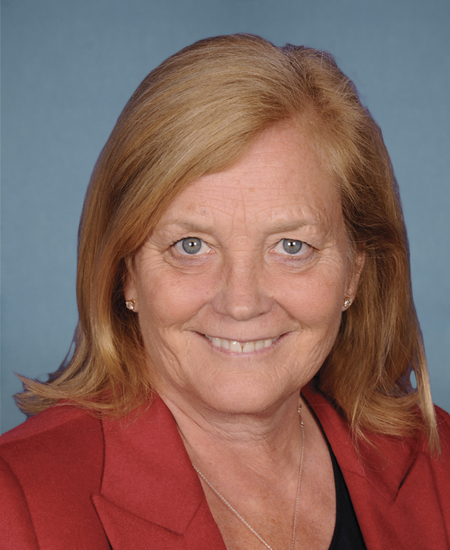
Rep. Chellie Pingree
Sponsored bills
AANAPISI Opportunity Act This bill requires the Department of Agriculture (USDA) to establish a scholarship grant program for covered Asian American and Native American Pacific Islander-serving institutions (AANAPISIs) to provide scholarships in agriculture-related fields. Covered institutions include community colleges, colleges, or universities that (1) have a student body consisting of at least 10% Asian American or Native American Pacific Islander students; and (2) offer associate, bachelors, or other accredited degree programs in agriculture-related fields. USDA may only award the grants to AANAPISIs that have established a competitive scholarship awards process for individuals who intend to pursue a career in agriculture, including in the agricultural disciplines of business, engineering, technology, food science, forestry, home economics, nutrition, soil conservation, non-medical biological sciences, and computer science. This bill also allows USDA to provide competitive grants for up to five years for integrated agricultural research, education, and extension projects at covered AANAPISIs to address U.S. agriculture priorities. The project grants include a 50% matching funds requirement that USDA may waive if certain requirements are met.
Maddy summaryThe FIGHT Act (HR 2742) amends the Animal Welfare Act to specifically target animal fighting events, such as cockfighting, by defining "rooster" as any male chicken over six months old and banning the live broadcasting (simulcasting) of such events. It prohibits using the postal service or interstate transport to move roosters for animal fighting purposes and adds civil enforcement tools allowing citizens to sue violators after a 60-day notice period. Fines up to $5,000 per violation may be imposed, and property used in animal fighting ventures can be seized. These changes strengthen enforcement against animal fighting by expanding legal remedies for the public and authorities.
Maddy summaryHR 2719 establishes a competitive grant program to help farmers adopt climate-friendly agricultural practices. The bill authorizes $13 million annually for 4-year grants (capped at $400,000 per institution) to eligible land-grant colleges (including historically Black and tribal colleges). These institutions must partner with groups like nonprofits or state agencies to increase outreach to farmers by 25%, host workshops, provide technical assistance, and fund soil testing - while limiting administrative costs to 30% of grant funds. The program directly affects participating colleges and the farmers they assist, focusing on practices that improve soil health, reduce emissions, and enhance water management.
Maddy summaryHR 2723 (Local Farms and Food Act of 2023) reforms the Local Agriculture Market Program to support local food systems. It extends funding periods to 2024-2028, increases annual funding to $75 million for program grants and $30 million for partnerships, and creates simplified application processes for projects under $100,000. The bill defines "food hub" to include businesses aggregating and distributing local food products, and adds new project categories like farmers market staff support and food safety equipment. It directly affects small local farms, food hubs, and rural communities by improving access to grants and reducing administrative barriers for market development.
Maddy summaryThe Strengthening Organic Agricultural Research (SOAR) Act of 2023 increases annual funding for organic agricultural research and extension programs, directly supporting organic farmers, researchers, and institutions. It authorizes $60 million in 2024, rising to $100 million annually after 2028, for the Organic Research and Extension Initiative, and creates a new $10-20 million annual program to study transitioning from conventional to organic farming. This new program requires grants to prioritize partnerships with organic producers and specific educational institutions (1890/1994 colleges, Hispanic-serving institutions) while focusing on barriers, ecosystem benefits, and improved transition methods. Finally, the bill mandates a USDA economic impact analysis of organic agriculture, examining effects on rural economies, labor, environment, and community dynamics, to be completed within three years of enactment.
Targeting Resources for Equitable Access to Treatment for Long COVID Act or the TREAT Long COVID Act This bill requires the Department of Health and Human Services to award competitive grants to create or expand the capacity of clinics that treat patients with persistent, long-term symptoms following recovery from acute COVID-19 (i.e., Long COVID) and associated conditions. Eligible recipients include federally qualified health centers, rural health clinics, urban Indian health centers, and state and local health departments.
Maddy summaryThe PAST Act of 2023 amends the Horse Protection Act to ban specific devices used to cause pain (soring) in horses at shows, particularly affecting Tennessee Walking Horses, Racking Horses, and Spotted Saddle Horses. It defines prohibited "action devices" (like boots or chains causing friction) and requires licensed, conflict-free inspectors at events to enforce rules. The bill increases penalties for violations to up to $5,000 fines or 3 years in jail, and mandates longer disqualifications for repeat offenses (180 days → 1 year → 3 years). Horse show organizers, exhibitors, and participants must comply with these new inspection and penalty requirements.
Affordable Pricing for Taxpayer-Funded Prescription Drugs Act of 202 3 This bill requires companies that receive federal funding for research (or a license of the rights to a patent or regulatory test data) for a biomedical product or service to agree to set reasonable prices for the resulting biomedical product or service. The Department of Health and Human Services (HHS) must determine a reasonable price based on a formula that ensures the U.S. price for the product or service is not more than the median price for the product or service in Canada and six other reference countries with, based on specified criteria, large economies and high incomes. Companies entering these agreements also must report to HHS certain financial information related to the biomedical product or service involved.
Maddy summaryHR 3213, the Rural Education Investment Act, creates grants to establish teaching residency programs in rural school districts. It defines "rural local educational agencies" as schools meeting criteria under existing federal programs (Small, Rural School Achievement or Rural and Low-Income School Programs). The bill requires that a minimum percentage of grant funds - based on the proportion of K-12 students in rural areas - must be awarded to partnerships involving these rural schools. This directly affects rural school districts and their higher education partners seeking to train and retain teachers.